






B2B field marketing involves working with sales to plan events and campaigns for a specific region, customer segment, or group of target accounts, often through in-person experiences.
That could be a hands-on workshop, an executive dinner, or meetings around an industry conference. The job involves choosing experiences people want to attend, creating opportunities for useful conversations, and helping the team turn those conversations into lasting relationships and sales opportunities.
Key Takeaways (TL;DR)
- Start with the people you want to reach. Choose your audience and goal before deciding whether to host a dinner, sponsor a show, or run a workshop.
- Give people a reason to participate. Useful advice, access to experts, and conversations with peers make an invitation worth accepting.
- The role combines planning, relationship-building, and measurement. Field marketers work closely with sales and connect their programs to business results.
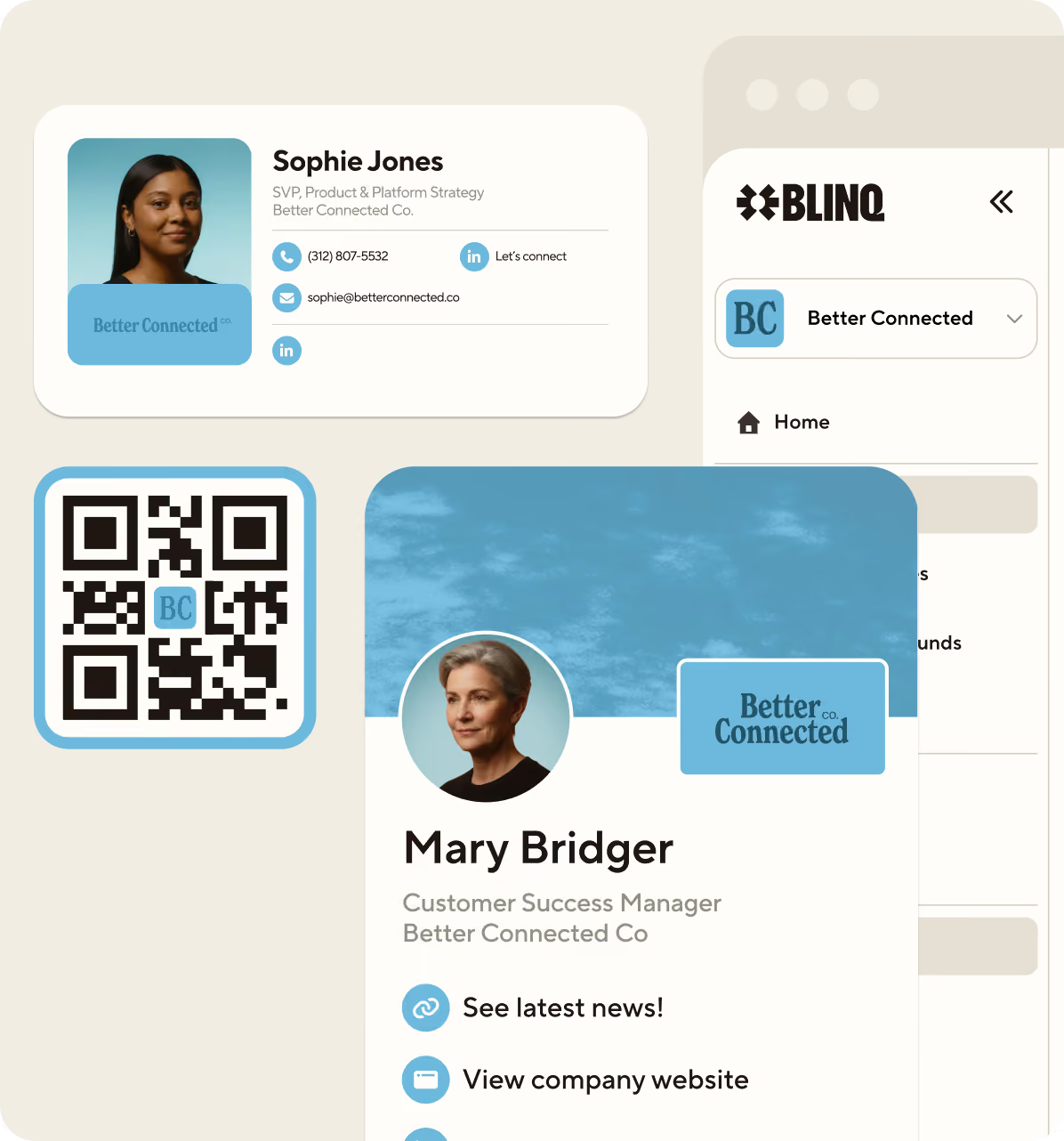
- Turn in-person conversations into relevant follow-up. Blinq's event lead capture helps your team scan badges and business cards, save conversation notes, and sync contacts to your CRM, so sales can follow up on what each person actually discussed.
What does field marketing mean in B2B?
B2B field marketing adapts a company's marketing to the needs of a specific market or set of accounts. A regional team might help a business establish relationships in a new city. A team focused on enterprise accounts might bring buyers together to discuss a challenge they share.
In-person events are a common part of the work, alongside webinars, partner campaigns, direct mail, and targeted digital activity. The mix depends on the audience and what the team hopes to achieve.
Field marketing also has a consumer-marketing meaning, covering activities such as product sampling, in-store demonstrations, and merchandising. This guide focuses on B2B.
How is field marketing different from event marketing, demand generation, and ABM?
Field marketing focuses on a particular region, segment, or group of accounts. Event marketing focuses on experiences delivered through events. Demand generation builds interest and sales opportunities across channels, while account-based marketing (ABM) coordinates activity around selected companies.
A field marketer chooses events and campaigns around the needs of a region or account group. That might mean skipping a major trade show and hosting a small workshop for customers in that market.
These disciplines overlap. A dinner for named accounts can be a field marketing program, an event, and part of an ABM strategy.
Responsibilities vary by company. A large business may have a corporate events team and several regional field teams. At a smaller company, one marketer might cover both.
Field sales is a separate role focused on customer relationships and sales opportunities. For the sales side of capturing contacts and organizing follow-up, see our guide to field sales lead capture.
What does a field marketing manager do?
A field marketing manager turns a region's or segment's priorities into a practical marketing plan. They work with sales to understand the accounts they want to reach, choose suitable programs, manage the budget, and assess what those programs achieve.
A working week might include discussing customer needs with account executives, shaping a workshop with a technical expert, reviewing invitations, and coordinating a venue. After an event, the manager checks that contacts and conversation notes reached the right people and reviews the follow-up.
A Verkada enterprise field marketing job ad describes the hire as the “CMO” for its enterprise business line. The remit includes shaping the segment's marketing strategy as well as delivering its programs.
Field marketing titles and career progression
Titles vary, but roles can range from coordinator or specialist through manager, senior manager, and director. A manager title does not always mean managing people; it may mean owning a territory or program.
GitLab's published job family illustrates the distinction: it includes associate, manager, senior, and staff field marketing roles, alongside team-management positions. Its associate responsibilities include campaign setup, logistics, and reporting, while more senior roles add broader planning and mentoring.
What skills do employers look for?
Our November 2026 review of 20 B2B tech field and regional marketing job postings found a combination of sales collaboration, event delivery, and commercial measurement.
We reviewed 20 selected job postings at 19 B2B software companies on November 12, 2026, counting responsibilities and qualifications explicitly mentioned in each role description.
Sales collaboration, events, and pipeline appeared most often. Two postings also named marketing-qualified leads (MQLs), reinforcing the value of asking how a prospective employer measures success.
In practice, those requirements call for clear communication, project and budget management, audience understanding, and confidence discussing results with sales. If you're moving from content marketing, your experience shaping a useful topic and writing a compelling invitation can transfer well. You may need more experience with event operations and sales reporting.
Pallet's field marketing job ad makes the scope particularly clear: the role is likely unsuitable for someone who “sees field marketing primarily as attending events, hosting dinners, and managing on-site logistics.” Planning, audience selection, analysis, and follow-through are part of the job too.
Travel and evening events are also worth discussing before accepting a role. Ask about the actual calendar and staffing arrangements, as well as the travel percentage in the job description.
Questions to ask before taking a field marketing role
- Which sales team, region, or accounts will I support?
- Will success mean creating new sales opportunities, helping existing deals progress, or both?
- How will my programs receive credit when several teams contribute to a deal?
- What involvement can I expect from account executives in invitations, attendance, and follow-up?
- What budget and support will I have for logistics, content, and reporting?
How much does a field marketing manager make?
Pay depends on location, seniority, company, and whether a quoted range includes variable compensation. In our November 2026 sample, Pallet's Field Marketing Manager role advertised US$100,000 to US$140,000 in base salary, while JetBrains' US Regional Field Marketing Manager role listed US$165,000 to US$180,000. Compare the role's location, scope, and compensation structure when using these advertised ranges to assess an offer.
Field marketing strategies and examples
Choose a format that fits the audience's needs and your goal. A technical buyer evaluating a product may benefit from a working session; an executive exploring a new challenge may value a discussion with peers.
In Forrester's Q1 2026 survey of over 400 B2B event decision-makers, a majority planned more intimate networking events and in-person events with fewer than 200 attendees. Audience fit should guide your choice.
An executive dinner around a shared challenge. A cybersecurity company could invite security leaders to discuss how they evaluate AI vendors. A moderator helps guests exchange experiences. Account teams follow up with relevant resources or a further conversation where there is interest.
A workshop for technical buyers. A data platform company could run a hands-on session in three cities. Participants work through a realistic problem with an engineer. Those evaluating the product can arrange a technical follow-up or trial; others leave with something they can apply.
Meetings alongside a conference. A field team could schedule conversations with customers and prospects who will already be at an industry event. Each invitation explains who they will meet and what they can discuss. Our guide to pre-event outreach covers planning those invitations.
For a documented example, GitLab's Regional Marketing team reports running over 500 events in fiscal 2026. Its handbook describes executive roundtables and executive meetings around conferences, showing how focused programs can form part of a larger regional plan.
How to plan a field marketing program
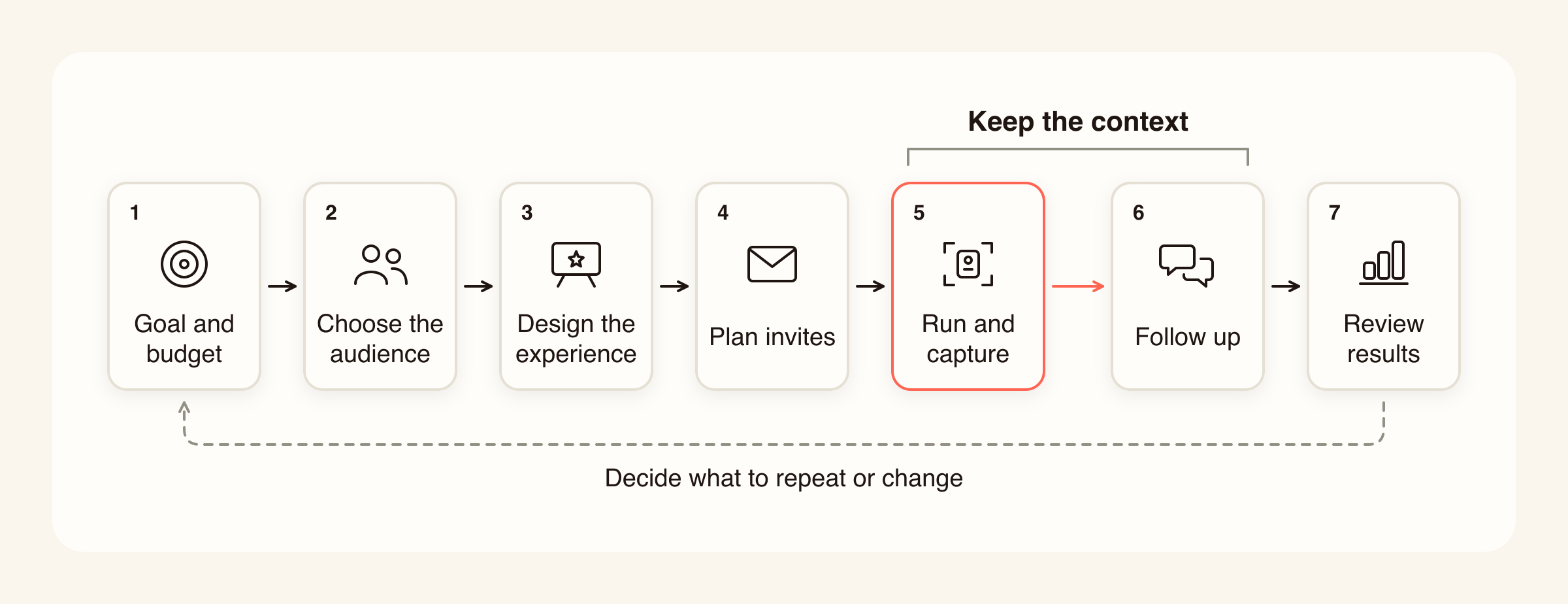
- Agree on the goal and budget. Decide whether the priority is new relationships, product evaluation, customer engagement, or progress on existing sales opportunities.
- Choose the audience with sales. Identify the accounts and people you want to reach, what matters to them, and who already knows them.
- Design the experience. Choose a format, topic, and contributors that make participation worthwhile.
- Plan invitations and follow-up. Assign responsibilities, confirm capacity, and decide how contacts and notes will reach the appropriate team member.
- Run the program and capture context. Record the person's interests, relevant questions, and any next step they agree to.
- Continue the conversation. Send the promised resource or arrange the relevant introduction. Match the response to the discussion.
- Review results. Look at attendee feedback, follow-up, and business outcomes, then decide what to repeat or change.
Make the invitation worth accepting
Before booking a venue, finish this sentence: “Someone should give us an hour of their time because…”
A useful answer names something specific: a chance to compare approaches with peers, solve a technical problem, or speak to an expert. Use that promise to shape the agenda and the invitation.
For limited-capacity events, send invitations in stages, confirm attendance, and maintain a waitlist. For trade shows, arrange relevant meetings ahead of time while leaving room for conversations that happen on the day. Our trade show preparation guide covers the practical planning.
Keep the context when you hand over a contact
Two common points where field marketing loses momentum are recording the conversation and handing it to the person who will follow up.
A name and email address won't explain why someone stopped to talk. Smaller gatherings may have no formal lead-capture process, leaving useful details in separate notes or someone's memory.
Agree on a few details to save: what the person is working on, what interested them, and what you promised to send. Make the follow-up owner and timing clear.
With Blinq's event lead capture, teams can capture contacts with AI notes and custom qualifying questions, enrich their details, and sync them to a connected CRM with event tagging. The person following up has the context to pick up the conversation. Our guide to following up on trade show leads covers what to say next.
How is field marketing measured?
Measure a program against the goal you set for it. Pipeline matters, but attendee feedback, stronger customer relationships, and progress within target accounts can also help explain what worked.
Useful measures include:
- Target-account attendance and engagement: whether you reached the intended people and how they participated.
- Meetings booked and held: track both, including the proportion of booked meetings that take place.
- Pipeline sourced: the value of new sales opportunities credited to the program under your attribution rules.
- Pipeline influenced: the value of opportunities that had a qualifying interaction with the program. Define that interaction and report influenced pipeline separately from sourced pipeline.
- Cost per held meeting or opportunity: useful for comparing programs with similar goals.
- Pipeline to spend: the value of sales opportunities attributed to the program per dollar spent.
Using illustrative conversion assumptions, suppose your goal is $1 million in new pipeline and your average sales opportunity is worth $50,000. You need 20 opportunities. If one in three held meetings becomes an opportunity, you need 60 held meetings. With a 75% meeting attendance rate, that means booking 80.
Use your own conversion history to build a realistic plan.
GitLab's Staff Regional Marketing Manager posting specifies a 10x spend contribution to sales pipeline. That is one company's target for a specific role. If your team adopted the same ratio, a $1 million pipeline goal would imply $100,000 in spend.
Agree on attribution rules and a reporting window before comparing results. A short reporting window may miss deals that develop over several months. For a closer look at costs and returns, see our guide to measuring event ROI.
Make the next conversation easier
A useful field program gives people a reason to meet and a reason to stay in touch. Start with an audience you understand, create an experience that respects their time, and make the next step relevant to the conversation.
From executive dinners to busy trade shows, Blinq's event lead capture helps your team leave with contacts with context: who they met, what they discussed, and what should happen next. With those details synced to your CRM, sales can pick up the conversation while it's still fresh.


