

.avif)


If you're new to trade shows, let me officially welcome you to one of the biggest forms of marketing in B2B. By 2028, the US trade show market alone is expected to surpass $17 billion for the first time (source: Statista). That tracks with how companies actually spend: on average, they commit almost a third of their entire marketing budget to trade shows (source: Trade Show Labs).
That may seem like a lot until you learn that trade shows contribute around 33% of new business to companies each year on average (source: Trade Show Labs). A third of the marketing budget driving a third of new business is exactly why knowing how to prepare for a trade show is worth getting right.
James Baker, a former US Secretary of State, was fond of the Five Ps principle: Prior Preparation Prevents Poor Performance. In my experience, he could have coined it after working a trade show. I've been an exhibitor at booths for some companies and helped organize booths for others. Once you're in the event space, it becomes very clear which brands prepared and which ones didn't.
To help companies and individuals get ready, I've drawn on my own experience and that of others to pull together expert tips for exhibitors. That includes investing in proper trade show lead capture software. Whether you're gearing up for your company's first ever trade show, fine-tuning your planning, or trying to improve your event marketing performance, this guide can help.
Key Takeaways (TL;DR)
- A trade show is a business-focused event where companies showcase their products and services with the intent of meeting potential customers and capturing leads.
- Choose shows by audience fit first, not headline attendance. Match attendee seniority and industry to your ICP, then weigh cost, reputation and expected ROI.
- Start planning at least 2-3 months out, and 3-6 months for large or first-time shows. Only 28% of exhibitors plan even one to two months ahead, so starting early puts you ahead of most of the floor.
- Budget for the whole show, not just the booth. Displays alone run $600 to $1,500, while total cost to exhibit usually lands between $10,000 and $30,000.
- Set measurable KPIs up front (leads captured, meetings booked, pipeline influenced) and align internally on what success looks like, so spend can be defended on outcomes.
- Choose your booth team before you train them. Mix sales, technical and PR strengths, then train reps on engagement, lead qualification and your elevator pitch.
- Build a ranked target list (hot, warm, cold) from the attendee list and invite high-value prospects personally before the show.
- Equip reps with digital business cards and lead capture tech so they can swap details in seconds and push qualified contacts straight to your CRM, instead of losing leads between the booth and follow-up.
- Organize giveaways, games and competitions months ahead, and design an open booth that draws people in rather than walling them off behind tables.
- Build a packing checklist (signage, tech, cables, products, giveaways, water and comfortable shoes), test every piece of gear a week out, and carry backups for anything you can't function without.
- Finalize your follow-up process before the show: a personalized sequence ready to send within 24 to 48 hours, ideally during the event.
What is a trade show?
A trade show is a business-focused event that typically centers on a single industry, bringing companies together to showcase their brands, products and services to potential clients (the attendees) with the goal of generating leads and new business. Trade shows can be B2B, B2C or a mix, and they tend to attract professionals and decision makers looking for brands to help them solve problems or grow.
On average, more than 80% of trade show attendees can make purchasing decisions for their companies, and over 90% are actively looking for new products and services (source: Trade Show Labs). That is what makes these events such fertile ground for lead generation, networking and brand building.
Trade shows usually revolve around one or more main exhibit floors. This is where companies set up booths to display goods, demonstrate services, promote their brand and engage people with interactive exhibits. Many also include presentations, panel talks, seminars and side events.
How to choose a trade show
Choosing the right trade show starts with three questions. Take your time and make sure all internal stakeholders are aligned.
- What are your company's goals?
- Who is your target audience?
- What is your budget?
Those three answers narrow a long list down to a handful of realistic candidates. From there, compare the shortlist on the factors below, but give some more weight than others rather than treating them as a flat checklist.
- Audience fit (do the attendees match your ICP by role, seniority and industry)
- Event size and estimated attendance
- Cost of exhibiting at a booth
- Event reputation and exhibitor retention (do companies come back year after year)
- Past performance, from your own data or other companies' write-ups
- Expected ROI
- Sponsorship and speaking opportunities
- Realistic chance of capturing qualified leads
The trap most first-time exhibitors fall into is chasing the biggest show. A 30,000-person event is worthless if only a sliver of the room can buy what you sell. Lead with audience fit: a smaller, tightly targeted show where most attendees match your ICP will almost always beat a giant general one. Then use cost and expected ROI as the tiebreaker between shows that clear that bar. If a show can't tell you who attended last year or won't share exhibitor retention, treat that as a red flag.
Trade show planning tips for exhibitors
We all work a little differently, so preparation methods vary. Still, some tips apply to almost everyone getting ready for a trade show. Here are the best practices I keep coming back to.
1. Start planning at least 2-3 months out
Only 28% of exhibitors start planning even one to two months before an event (source: Trade Show Labs). Start at the 2-3 month mark and you're already better prepared than most of the floor. If you count choosing and registering for events, the real runway can stretch up to a year.
For larger or first-time shows, some experts recommend starting 3-6 months ahead (source: Freeman). The more time you have, the better you can research the event, build an action plan, assign roles, design your booth, set your KPIs, and make sure your tech is ready.
2. Work out your budget and how it's distributed
Most exhibitors underestimate the real cost of a show because they budget for the booth and forget everything around it. Displays alone can run $600 to $1,500, while the average total cost to exhibit usually lands between $10,000 and $30,000 (source: IBTM World). The gap between those two numbers is the part people miss.
When budgeting, map every line item up front so you can distribute funds deliberately. Allocate for the common costs and any special additions, such as:
- Booth space
- Exhibit design
- Travel and accommodation
- Promotional materials
- Booth staff salaries
- Pre-event marketing salaries
- Post-event sales salaries
- Shipping
- Audio-visual equipment
- Event lead capture software or event-provided badge scanners
- Giveaways
- Guest appearances
3. Determine your KPIs for the event
Your key performance indicators are central to measuring and maximizing your event ROI. The point of setting them early isn't just to keep score. It's to get everyone aligned on what success looks like before you spend a dollar, so the budget can be defended on outcomes and every decision on the day, from booth staffing to which conversations to prioritize, optimizes toward the same goal.
Spend the time to decide which ROI components matter most. On average, B2B companies see a 4:1 return at trade shows, earning $400 for every $100 they spend (source: IH Global). Without agreed KPIs, you can't tell whether you hit that or missed it.
Some KPIs worth considering:
- Revenue sourced during the event
- Leads captured
- Revenue from captured leads
- Meetings booked with target accounts
- Sales-qualified leads (SQLs)
- Pipeline value influenced
Make the targets specific and measurable (for example, 250 leads during the event, or 50 meetings booked afterward). Clear numbers align the team and make it obvious, in real time, whether the show is working.
4. Scout the space where your booth will be set up
In-person events can be chaotic. Exhibitors often get less setup time than they need, then they're swamped at the booth, then they pack down exhausted. It all goes by in a blur.
If you wait until show day to see your booth space, you won't have time to make the most of it. Get onto the floor ahead of time, either the day before or during another event in the venue. You can read the foot-traffic flow, or at the very least confirm the space has decent Wi-Fi. A high-traffic location can meaningfully increase visibility.
Brent Wirth, Chief Creative Officer at Trilix, adds: "It's also a great idea to scout surrounding hotels, bars and restaurants where event attendees will stay and visit." You might spot a chance to host a meet-and-greet or side event somewhere more intimate.
5. Design your booth ahead of time
According to TSM Agency, the difference between booths that draw crowds and booths that struggle comes down to how well they influence behavior. An attractive, easy-to-read booth is what makes potential customers stop and become leads, so design it well before the event and lock it in early.
Don't leave design decisions for setup day. Work out the best layout for the space, then give your booth staff a guide for assembling it. Aim for an open layout that invites people in rather than blocking them out behind tables.
Other elements worth building into the design:
- Clear, prominent messaging
- Just enough information to spark interest without overwhelming people
- Visuals that reinforce your core message
- Space for live demos or interactive games
- Good flow for foot traffic (clear entry and exit points, natural pathways, zones for each stage of the attendee journey)
- Striking brand elements (colors, logos) to build recognition
6. Invest in pre-event marketing across multiple channels
It's far easier to draw people to your booth if they already know you'll be there. Don't show up unannounced. Use a mix of channels to promote the event and your booth, targeting both current clients and audiences outside your usual circle.
Start marketing at least 6-8 weeks out. That gives you enough time to build momentum without burning attention before the doors open.
Channels to consider:
- Social media (Instagram, LinkedIn, TikTok and so on)
- Email marketing
- Partner marketing with the event organizer
7. Build your target attendee list
Most shows publish an attendee list before the event, and it's one of your best planning assets. Use it to identify high-value prospects ahead of time, and watch for current clients you can email personally. Rank everyone hot, warm or cold so your follow-up is prioritized before the show even starts.
Once your list is built, reach out to your top prospects and invite them to visit your booth. Keep this first contact purely conversational. Avoid salesy language and don't pitch anything yet. The aim is simply to get them to stop by.
8. Choose your booth team strategically
The people at your booth represent your company and shape how attendees perceive your brand, so choose them deliberately. Look at individual skills and how they complement each other, and aim for a blend of sales pros, technical experts and PR-minded communicators. All of one type, or a gap in another, leaves weak spots across your booth.
9. Train your reps
This is where months of preparation pay off. Around 73% of event planners rank attendee engagement as their number one priority (source: AMW). What engages people most isn't pamphlets, games or imagery. It's other people. Your reps are the heart of your booth, so train them accordingly.
Training might take only a few weeks. If you're running multiple events at once and need staff across each, give yourself longer. It doesn't have to be exhausting or teach unnecessary skills. Focus on the core traits that help reps engage and connect with attendees:
- No over-eager scanning
- Not relying solely on scripts
- No gated conversations that demand a badge scan first
- No forcing demos on people
- Reading positive and negative body language
- Opening with conversation starters that aren't about conversion
- Asking the right questions
- Making genuine eye contact and using body language to create a welcoming space
- Holding a conversation with several people at once
- Sparking interest with games or scenarios
Good engagement means greeting people, asking open-ended questions, and not getting distracted by a phone. Make sure reps also know your lead-qualification criteria and your core elevator pitch.
10. Make sure your team is physically and mentally prepared
One thing companies and first-time exhibitors routinely underestimate is the physical and mental toll of these events. Reps spend hours on their feet, walking, talking, presenting and keeping the experience lively. It's hard on the body and the mind, and all that socializing drains people, especially introverts.
I'm not saying your reps need to train like athletes. But they should know how a show can fatigue them, understand it's fine to rest when needed, and get plenty of sleep in the days beforehand. Plan for this too: bring enough people that everyone can take proper breaks.
11. Organize giveaways, promotions, games or competitions
If you want giveaways, promotions, games or competitions at your booth, organize them months ahead. Promotions and prizes tap into the reciprocity principle: offering people genuine value, like a free trial of your product, before you ask for their details (source: Verywell Mind). They work well, but they need planning.
If you're giving things away, choose the items that offer real value to attendees. If you're running games or competitions, you may need multimedia displays, full sets (a game show or live quiz), virtual reality booths or gamification setups. Those take far longer to arrange.
12. Organize digital business cards for networking
Your priority at trade shows will usually be collecting attendees' contact details. But these events, especially the more intimate ones, are also great chances for your reps to network in their own right.
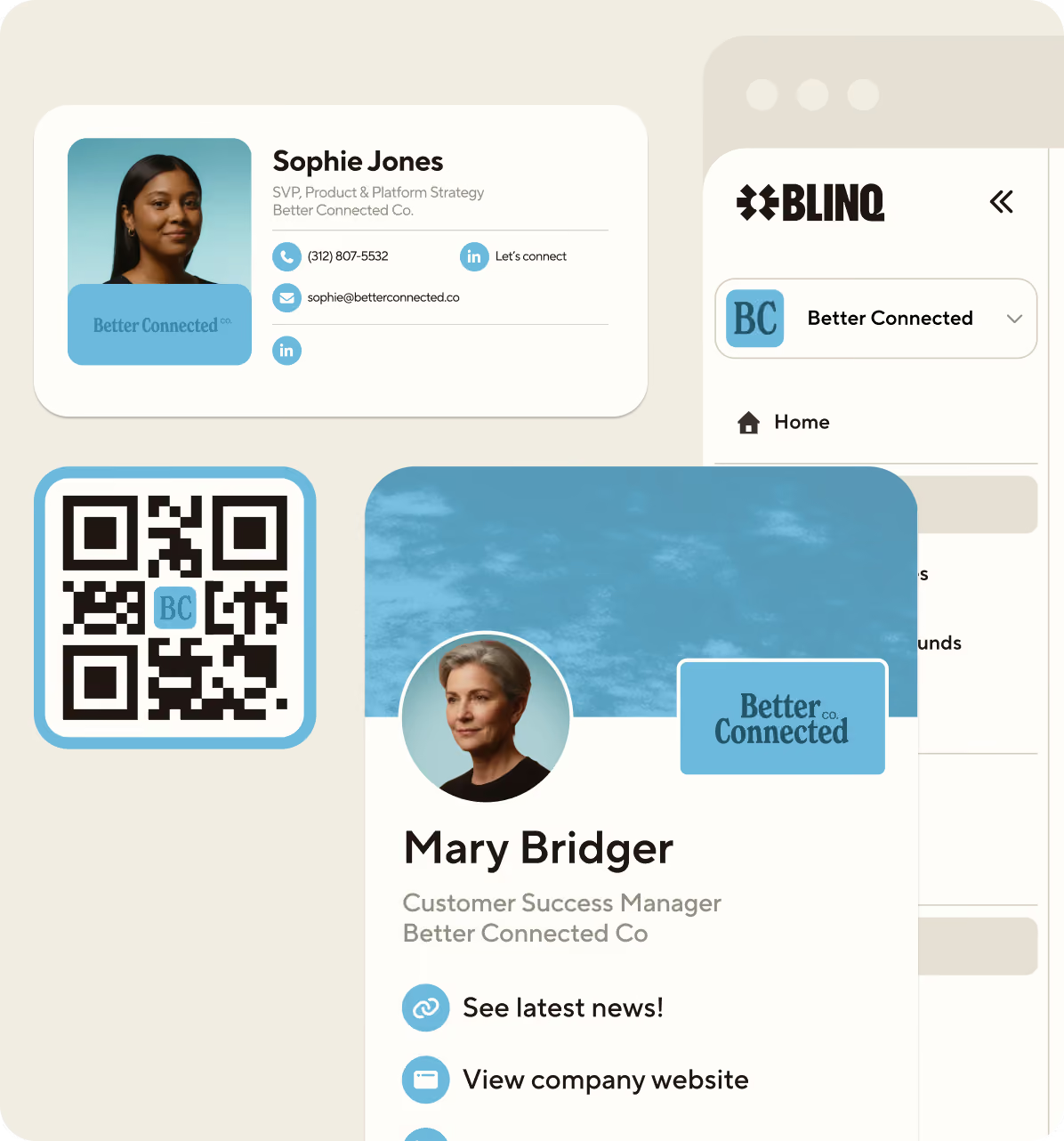
They'll naturally hit moments where they need to share their own details, and a digital business card makes that quick. Choose a provider that supports multiple ways to share, like QR codes, NFC, a widget, smart watch, email and text. You'll also want one you can customize to reflect your brand, with links to your core pages and social channels.
13. Create a checklist of everything you need to bring
I've turned up to a trade show, started setting up, and realized we'd forgotten something more than once. Usually we could make do, but making do shouldn't be the goal. Every time we forgot something, it was because we hadn't made a checklist. Every time we made one, nothing got left behind.
It isn't rocket science, but it's a step plenty of companies skip. Build a checklist of everything you need to bring: signage, multimedia displays, products, giveaways, tables and chairs, plus all your tech (lead capture devices, laptops, extension cords, presentation gear, chargers). Check it twice. Then check it again as you load the van or arrange shipping.
14. Invest in great event lead capture tech
About 72% of exhibitors attend trade shows to gain new leads (source: Trade Show Labs). Chances are you're one of them. But without proper trade show lead capture technology, you can lose up to 65% of the leads you collect (source: Blinq). Leads slip away thanks to the delays of pulling data off badge scanners or hand-keying it into your CRM.
A lead retrieval app is essential for logging attendee data fast. See our comparison of Blinq vs badge scanners for trade shows for more on where outdated tools fall down. If lead capture is your top priority, choosing the right tech should sit right next to it. Our guide to the best trade show lead capture apps in 2026 can help.
Blinq is built specifically for this. It helps teams capture, enrich and action every relationship that starts face to face, and it's the top-rated lead retrieval platform on G2. In practice, that means scanning any badge or business card, auto-filling qualification fields, generating conversation notes with AI, and pushing enriched contacts to Salesforce or HubSpot before the next attendee reaches your booth. Four million users across 500,000 companies use Blinq, including teams at 93% of the Fortune 500.
15. Finalize your post-show follow-up process
Your follow-ups happen after the show, but the process for them should be locked in beforehand. Get everyone aligned on workflow and responsibilities. At a minimum, have an automated email sequence ready to deploy within 24 to 48 hours of the event. Within 24 hours is better. Following up with leads during the show is better still.
Build personalization into the process. Personalized follow-ups that reference specific talking points can lift response rates by around 20% over generic outreach, which in turn improves conversion (source: Martal Group). Following up quickly keeps momentum and turns connections into long-term relationships, and engaging attendees on social media afterward keeps the conversation going.
16. Confirm inbound and outbound shipping (if necessary)
You won't always have to think about shipping, but when you do, over-organize. Line up a company you trust to handle inbound shipping of everything you need for the event, and outbound shipping back to your office or warehouse afterward.
17. Test everything before the show begins
About a week out, test every part of your booth that could malfunction: tech, games, displays, demos and any other multimedia. Testing a week ahead leaves time to fix problems. Then test again a day or two before the show, just to be certain.
18. Always have backups for crucial gear
Preparing for a trade show also means preparing for things to go wrong. In four-plus years of working shows, I've reached for backups far more often than I'd like. You don't need backups for everything, just the items you can't function without.
Trade show tips for exhibitors on the day
Almost 60% of companies consider personable sales representatives the best booth staff (source: Gushwork). That's how much the right people matter on event day. They also need to look after themselves to stay personable through long, taxing shows.
Quick tips your reps can use on the day:
- Dress smart, but not like a salesperson
- Wear comfortable shoes and take sitting breaks
- Avoid talking to groups of four or more at once (your message gets lost)
- Learn your lead retrieval app before the event (it takes about five minutes with Blinq, rated #1 for ease of use on G2)
- Learn to spot decision makers without asking pointed questions
- Drink plenty of water
- Conserve energy for the rush periods (lead capture software with event analytics can help you predict when those hit)
Trade show FAQs
How soon should you start preparing for a trade show?
Start at least 2-3 months out, and 3-6 months for larger or first-time shows. That's usually enough time to handle pre-event marketing, staff training, booth design, tech and shipping. Adjust the timeline to the size of the event and how much it matters to your business.
What should exhibitors bring to a trade show?
Bring everything your booth needs, which depends on your design and style. That often means signage, multimedia displays, products, giveaways, flyers, tables and chairs. Pack your tech too: lead capture tools, extension cords, laptops, presentation equipment and any VR or AR devices. Add the essentials for the people working it, like snacks, water and comfortable but professional clothing and shoes. Don't forget mobile phones if you're using a digital business card and lead capture app.
What are the biggest trade show preparation mistakes to avoid?
Starting too close to the event is the big one. Late planning leads to forgotten items, a rushed booth design, undertrained reps, missed pre-event marketing, and falling back on event-provided badge scanners instead of far more effective lead retrieval tech. The other common mistake is not defining your goals, such as leads and sales, in the first place.
How many exhibitors should you bring to a trade show?
It depends on the size of your booth and the event. Two or three people may be plenty for a small one-day show. For a large multi-day event, you might need five or more. Bring enough that people can take breaks, stay energized and handle the busy periods. Too few, and burnout leads to missed leads and sales.
How should you prepare reps before a trade show?
In the lead-up, your reps should know your event goals, brand, services and products inside out. They should also know how to genuinely engage attendees, use your lead capture software and qualify leads. Give them clear roles, such as who's running demos or interactive experiences, and equip them with scripts or talking points if it helps.
What social media strategies work best before a trade show?
Strategies that have worked well for me include early announcements across every channel and previews of your products and giveaways to build excitement. Behind-the-scenes content and exclusive pre-event demos help too. Use the event's hashtags to widen your reach, and consider a promo partnership with the organizer.
What is the best way to capture leads at a trade show?
Mobile-first lead capture apps are the best approach. They scan a range of IDs, including event badges, and they're faster and more intuitive thanks to customizable qualification forms, native CRM integrations with instant syncing, AI data enrichment and AI-generated conversation notes. Together that lets you qualify, prioritize and follow up with a personalized message in minutes instead of hours or days.
How early should exhibitors arrive to set up for a trade show?
Most exhibitors should arrive at least a day early. That allows time for setup and for troubleshooting any tech or design problems. Larger booths or custom installs may need more. If you can only set up on the day, get there as soon as the space opens.
What backup plans should you have for trade show issues?
Prepare for common problems like internet outages, damaged materials, delayed shipments and technical failures. Spare chargers, printed materials, backup devices, a small selection of products and an offline lead capture option all help.
Try Blinq for your next trade show
Trade show preparation isn't glamorous. It's the unglamorous work that makes everything else land: the right people, ready with the right tools, in a booth designed to draw people in rather than hold them at arm's length. Start earlier than you think you need to, build your lead capture process before the event rather than scrambling during it, and follow up before the momentum fades. The exhibitors who do this consistently are the ones who come back with pipeline that actually closes.
Ready to nail the lead capture side? Book a demo.