

.avif)

Following up on trade show leads is just as important as preparing for a trade show and perfecting your event lead capture on the day. Without effective trade show follow-up, you're going to struggle to convert leads into sales. Only 6% of exhibitors are actually confident they can do this at trade shows (source: Trade Show Labs). That means a lot of companies are struggling to get the most important result from these events: revenue.
For about three years I was part of a team following up on leads from events attended or run by city councils. Sometimes that meant cold calling or emailing. Other times it meant drawing on conversations saved from events to reconnect and re-engage someone.
During that time, and in the years since, I've picked up many different strategies for following up on leads. Some I learned myself through trial and error. Others I was fortunate to borrow from experts in this area. The purpose of this article is to put them all in one place and help everyone, including me, remember or learn how to best follow up and turn those leads into sales.
Key Takeaways (TL;DR)
- Effective trade show follow-up relies on modern event lead capture technology, a pre-event plan, consistent data storage, lead prioritization, speed, personalization and a multichannel approach.
- Be patient. It can take weeks or months to convert a lead into a sale.
- Provide genuine value and follow through on your promises when following up after an event.
- Consistent follow-ups with clear next steps produce the best results over time.
- Cap your email sequence at two or three follow-ups, then switch channels rather than sending a fourth email into the same silence.
- Tracking every touchpoint lets you analyze your follow-up performance at a granular level and see where to improve.
- Use AI-supported trade show lead capture apps to automate the workflow and make follow-ups faster, more personalized and more efficient.
- SPARK (Strategize, Prioritize personalization, Adjust, Relate, Keep track) is a quick checklist for the five things that matter most.
- If you haven't heard back after 48 hours, you can still re-engage, for example by reaching out on LinkedIn.
- Strong trade show follow-up email templates use personalization, acknowledge the attendee's needs and showcase your industry knowledge.
Trade show lead follow-up best practices
1. Start by choosing tech that supports your follow-up process
The lead capture app you use at trade shows plays an integral role in your success. The main question to answer: which method of lead capture do you want to use?
The two main options are event-provided badge scanners or an event lead capture mobile app. Badge scanners work fine for traditional lead retrieval, but they have a lot of limitations that can delay post-trade-show email follow-ups. Mobile apps offer the latest technology to support fast, automated, personalized and data-enriched follow-ups.
I recently wrote an article comparing Blinq's event lead capture software to badge scanners. It covers the challenges you can overcome with the right technology in your corner.
2. Map out your follow-up plan before the event
If you wait until after the trade show to create your follow-up plan, it's too late. This should be part of your trade show preparation.
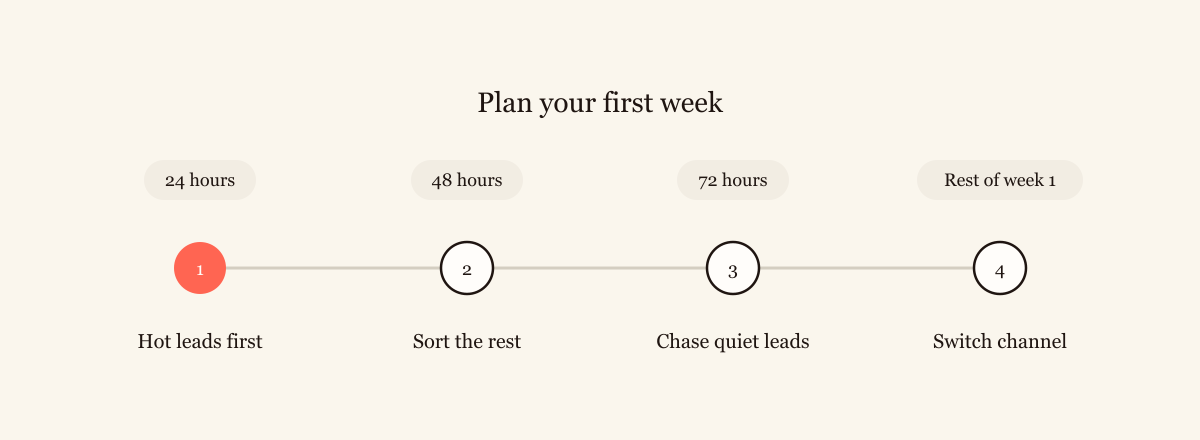
Work out your first-week follow-up plan and break it into windows covering the week after you collect someone's contact details. Each window should have a different approach, such as:
- 24 hours: Contact high-priority leads, picking up conversations where they left off.
- 48 hours: Sort remaining mid- and low-priority leads, contacting those with the highest value. Add other leads to passive marketing lists.
- 72 hours: Follow up with leads that haven't responded, starting with the highest value and moving down the list. Re-engage unresponsive leads with industry insights, success stories or other relevant updates.
- Rest of week one: Send final emails acknowledging the delay or lack of response and reiterating that you're there to support them if and when needed. Then, stop emailing and change channel. Move unresponsive leads to a phone call or a LinkedIn connection, and shift the rest into a longer nurture cadence.
Your follow-up plan will probably look a little different, and that's fine. As long as you've taken the time to create it before the event, you'll be on the right track.
Your plan should also include other elements of how you want to follow up after a trade show, such as:
- Qualifiers for determining lead priorities
- Follow-up channels (email, phone calls, social DMs)
- Staff roles and responsibilities
- Scripts and templates for follow-ups
3. Store all your data in one place
When I first started attending events for companies back in 2009, exhibitors would take notes on their own devices or capture contact data in different places. Sorting through all of it after the event was a nightmare. It chewed up valuable time and energy that could have been spent following up much faster.
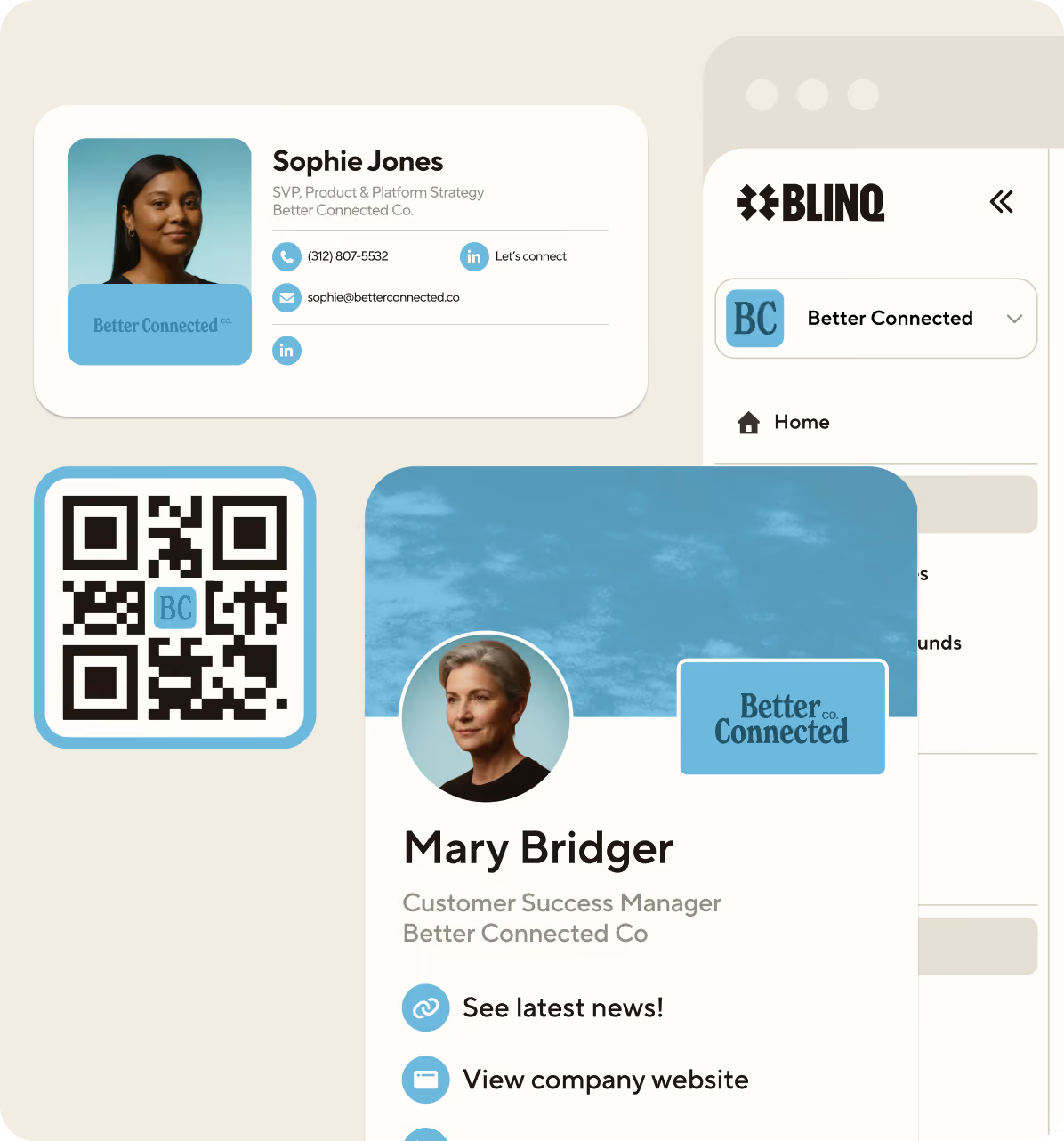
Immediate data organization is crucial to effective follow-ups. Gather it all in one place and have it sync immediately to your CRM. This is where lead capture apps stand out. They provide a single database with native CRM integration and instant syncing. The best platforms also use AI data enrichment to keep contact data complete and current. Some, such as Blinq, even provide conversation summaries sales teams can use to personalize follow-ups.
4. Prioritize leads during the event
Not everyone who comes to your booth presents the same opportunity or value. If you have a system for prioritizing valuable leads during the event, you'll be able to follow up with high-value prospects much faster and more easily. Waiting until after the event to grade everyone (hot, warm, cold) delays your follow-ups and can let new leads go cold.
Event lead capture tech helps you do this during the event. You can create custom qualification forms, and apply tags to captured leads to help with prioritization afterward.
Some qualifiers you could use:
- Expressed interest in a specific service or product
- Has decision-making authority
- Has shown a set purchase timeline
- Shared a potential project budget with you
- Fits your pre-determined ideal customer profile
- Operates within your region
5. Send your first follow-up as fast as possible
40% of trade show exhibitors wait three to five days to follow up with attendees (source: Trade Show Labs). That's too long if you want the best chance of converting these leads into sales.
When it comes to online leads, you're 21 times more likely to qualify a lead if you contact them within five minutes instead of 30, according to the landmark Lead Response Management study from InsideSales.com (now XANT) and MIT. Let an hour slip by and your odds of qualifying drop by more than six times. This applies to in person leads too - the longer you leave it, the steeper the decline.
Try to follow up as soon after your conversations as possible. That doesn't mean every conversation. Just the ones that scream high-value lead. Prioritize these within the first day at least. Mid-value leads can come after, but still shouldn't be left uncontacted for days.
6. Keep communication personal, not generic
Personalization has become a major driver of success when it's woven through every stage of the buyer journey. Brands with strong personalization have up to 45% higher conversion rates than those without (source: Sender). The same applies to post-trade-show communication.
Personalization begins with the attendee's name. Forget generic sales messages. Putting a name in the subject line lifted open rates by 29.3% on average in MarketingSherpa's analysis, rising above 40% in consumer products and travel. The same research found personalization pushed transaction rates up 49% and revenue per email up 73%.
But don't leave it there. Adding conversation context to follow-up messages and calls is a crucial part of personalization. We used to capture this manually, jotting down talking points to reference later. Now AI tools are making it much easier and automated. For example, Blinq's AI Notetaker provides conversation summaries from your booth that you can use to make your follow-ups more personalized and relevant.
7. Reach out through multiple channels
You can't just rely on a single channel when following up leads. A multichannel approach typically works best. Using three or more channels achieves up to 287% higher purchase rates than single-channel approaches (source: Omnisend research, via LandBase).
These days you have an assortment of channels to reach someone, including:
- Phone call
- Direct mail
- Text
You may not want to use all of these, but as the statistic above shows, three or more is where the returns really show up. Pick the three that best suit your buyers and your team's capacity.
Each channel has its own positives, negatives and ideal moments to use it. For example, it's best to text as a second or third follow-up rather than the first message. The first contact is best made by email or phone. Texting before you've had a phone conversation decreases the likelihood of the prospect converting to a lead (source: IRC Sales Solutions).
8. Practice patience
Following up on trade show leads takes time. It's important to contact leads quickly, but you shouldn't expect to close a sale after one email or call. For most companies, it takes just over three sales calls on average to close a trade show lead (source: Trade Show Labs).
That's already better than you'd get elsewhere. Leads that didn't come from an event take around 4.5 calls to close, and converting a trade show lead runs about 38% cheaper than working the phones cold. The face-to-face conversation you had at the booth is doing real work for you. Follow-up is how you collect on it.
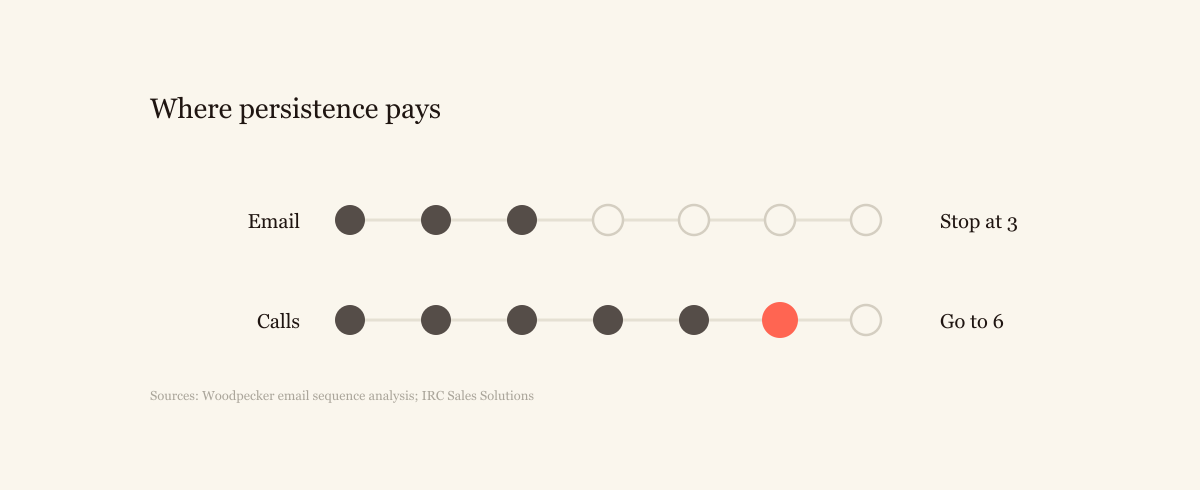
Just don't try to do all of it by email. Woodpecker's analysis of email sequences found two to three follow-up emails is the sweet spot, with the fifth, sixth and seventh adding almost nothing and putting your sender reputation at risk. Calls are where persistence pays: according to IRC Sales Solutions, 95% of converted leads are reached by the sixth call attempt, yet 92% of salespeople give up after the fourth.
So don't give up after the first few attempts if you're not getting the response you want. Keep reminding yourself that you'll likely need multiple touchpoints across email, phone and social, and between two and four weeks on average to close a sale. Long sales cycles can run over a year.
9. Be consistent with your approach
I haven't just worked trade shows. I've also attended them. For a few years I went to events and trade shows, giving my details to various exhibitors. From most, I wouldn't hear anything for weeks. From others, the first message would come within 24 hours, but then, after I'd replied, they'd go quiet for another week. The inconsistency was frustrating and put me off responding.
Once you decide to reach out to a lead, commit to consistent communication until either the sale closes or you reach a clear no-sale moment. That means steady emails, texts or phone calls. Don't let leads forget about your company or your offers. Worst case, they go with a competitor instead.
10. Provide genuine value first
When following up after a trade show, always give your leads a good reason to engage with your message and brand. To do that, give them something genuinely valuable. It doesn't always have to be your product or service. In fact, you may not want to mention those until you're a few emails or calls deep.
Instead, get them engaging with your brand through other avenues. Share resources that solve problems they mentioned to you. Send podcasts or case studies your company has produced. Make sure the content relates to them and their operations. Building a relationship around value sharing builds trust in you and your company.
11. Follow through on promises made at the booth
If you told a trade show attendee you'd email them certain resources, send them. Likewise, if you said you'd contact them within a few hours or by the next day, prioritize that email or call. Unfulfilled promises lower someone's trust in your reliability and professionalism.
12. Align your follow-ups with the company's priorities
This is one way to make prioritizing follow-ups easier. Your company probably has specific products or services that take priority over others. Maybe it's not the products but the types of buyers you want to prioritize. Whatever the targets are, focusing on them helps guide your follow-ups.
This is where conversation context is really valuable. If you can access conversation summaries for leads, you can clearly see which ones align with your company's priorities. Maybe they showed genuine interest in a particular service. Maybe they mentioned a certain budget. Having this information to draw on makes a real difference.
13. Include clear next steps
Remember, when following up, you're driving the conversation. You don't want to be pushy or salesy, but you do want to clearly show people how they can continue their buyer journey.
You also don't want to jump from A to D without covering B and C. Take your time (see strategy 8 above) and introduce one step at a time. It should be the next logical step in the journey, and it should be offered, not demanded.
Here's one example of follow-ups introducing next steps to a potential client. Notice we don't go straight from the first email to the paid subscription. We use a step-by-step approach that eases them toward a purchase they actually want, after multiple conversations.
- Initial email sharing a case study and prompting them to reply with any questions or thoughts.
- Second email offering to discuss their questions over a phone call or virtual meeting.
- Setting up a trial of your service at the end of the meeting.
- Moving from the trial to a paid subscription.
14. Track every interaction from lead capture to sale
Properly measuring and maximizing event ROI means tracking every touchpoint. That gives you a clearer picture of your strengths and weaknesses when following up on leads. High-growth companies average 16 touchpoints per lead within a two-to-four-week window (source: IRC Sales Solutions). So it's usually not as simple as tracking the trade show meeting, the follow-up, then the sale.
Quality event lead capture platforms provide detailed ROI data and analysis that work with your CRM so you can track all these touchpoints. That means you might need to consider the following, among others:
- Pre-event promotional email
- Post-trade-show email
- Multiple follow-up phone calls
- Virtual sales call
- Demo call
- Trial management calls
- Final sales meeting and onboarding
15. Analyze your performance at a granular level
Proper performance analysis means breaking down your results across multiple levels. It's not enough to see your overall event ROI, not if you want to identify where to improve.
Get to the granular level and explore the details of each event. With lead capture tech like Blinq, you can analyze event-specific data. That helps you see which trade shows deliver the best ROI and which ones are underperforming, which can help you budget more strategically and put more money behind high-performing events.
16. Automate parts of your workflow with AI support
Efficiency is key to following up fast and effectively. In the past, trade show follow-ups required a lot of manual labor. These days, the best trade show lead capture apps offer AI integrations that automate much of it.
I'll use Blinq as an example because it's the platform I know best. Blinq's AI Notetaker captures conversation context and provides summaries of the conversations you have with attendees. You can use those summaries to quickly personalize your follow-ups by connecting this data with your AI tools.
Blinq also uses an AI driven lead enrichment waterfall to populate missing fields in your custom qualification forms. After you scan someone's event badge or ID, Blinq's AI finds the missing information, where available, through verifiable online sources. That removes the need for manual searching, and each lead lands in your CRM already assigned to the rep who owns it in Blinq.
How to apply the SPARK system to your follow-ups
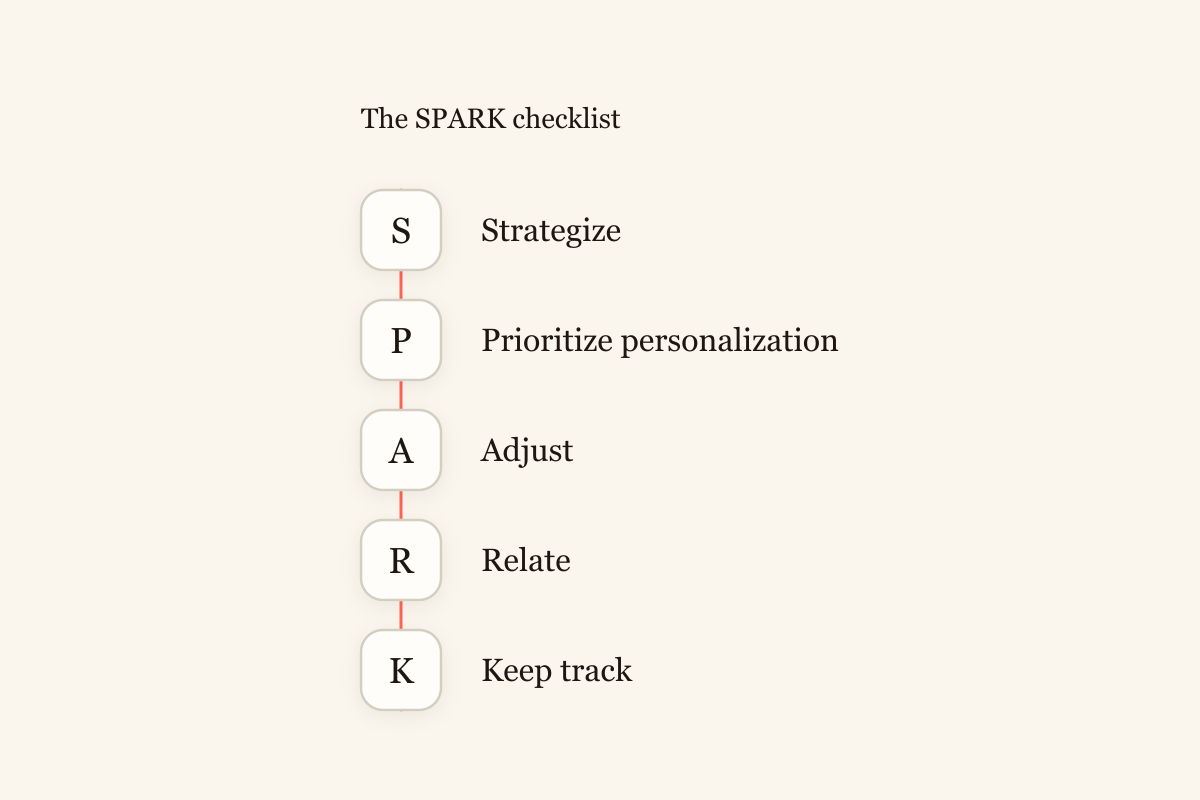
Sixteen strategies is a lot to hold in your head on the drive home from an event. SPARK is how I remember the five that move the needle most: Strategize, Prioritize personalization, Adjust, Relate, Keep track. It isn't a new framework so much as a checklist I run through before the first follow-up goes out.
S: Strategize based on value tagging
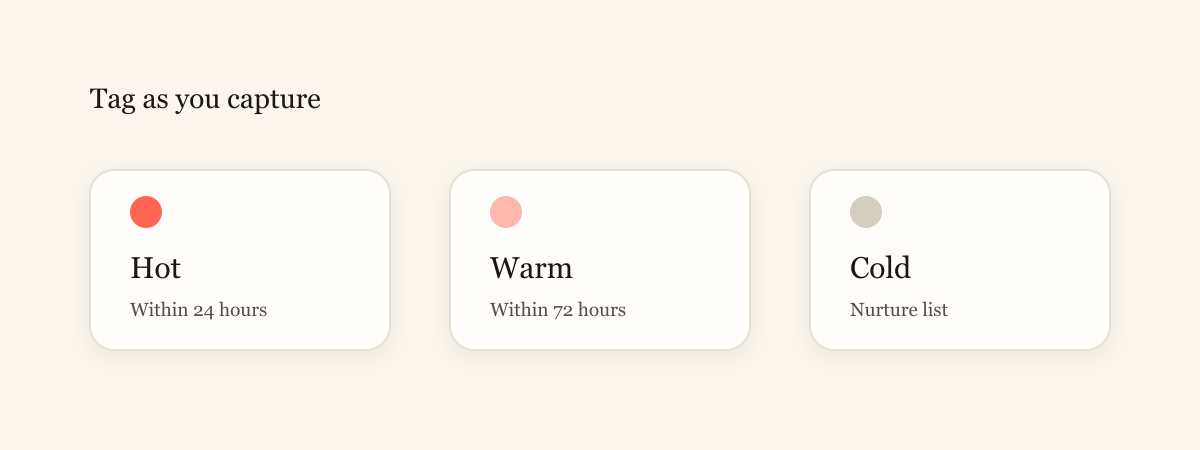
During a trade show, tag every lead you capture with a priority level (hot, warm, cold). These priorities are based on lead value, buying intent, geographical proximity, decision-making authority and other pre-determined qualifiers.
These tags are the core of your follow-up strategy. They determine not only who you contact first, but also how you contact them. A quick example:
- Hot leads: Contacted within the first 24 hours with clear steps toward a meeting or sales call.
- Warm leads: Contacted within the first 72 hours with additional content relevant to their needs and industry.
- Cold leads: Added to your passive sales cycle (for example, a newsletter mailing list).
P: Prioritize personalization over bulk messaging
Yes, you could probably send four times as many follow-ups with a bulk message. But personalization has one of the biggest impacts on follow-up success. As covered in strategy 6, even personalizing the subject line measurably lifts open rates.
Personalized follow-ups show you listened and cared about what someone said at your booth. Generic ones show you didn't.
Take the time to reference important things they mentioned in person, such as:
- Any specific problems they need to solve.
- Their industry or company.
- Services or products they showed genuine interest in.
- Their role and responsibilities.
- Their buying timeline and budget.
- Their name and any personal interests you picked up.
The key to personalizing your follow-ups is a modern lead capture app. Features like lead enrichment and AI Notetaker provide detailed context to help you personalize follow-up emails.
A: Adjust your follow-ups according to their needs
Not everyone needs a product or service straight away, and that doesn't make them a cold lead. It may just mean you need to adjust your approach to stay relevant and credible. Remember, sales timelines can stretch from four weeks to over 12 months, especially in certain industries.
You should know by the second or third email what their needs are. If they have immediate needs, match that urgency with tailored solutions. If they have plenty of time, offer industry insights that could guide their decision later.
R: Relate your offering to them and their industry
Relevance is just as important as personalization. It shows you understand their needs and their industry as they relate to your business. That reinforces your expertise not only in your products, but in their professional world.
You can demonstrate this relevance in various ways, such as:
- Sharing products and services with real-world success stories from their industry.
- Acknowledging regulatory or supply chain challenges that might disrupt their plans.
- Showing awareness of compliance requirements and production cycles when presenting future collaboration.
K: Keep track of all touchpoints until the end
You can't truly measure the impact of your work, or see a detailed ROI breakdown, without tracking every point of contact with a lead. Collect data for all touchpoints, from the first email to the last call, whether or not you close the sale.
This helps you find the strengths and weaknesses in your sales pipeline. You can analyze it to see where to improve, which helps you become more effective, increase conversion rates and boost overall event ROI.
What to do when they haven't responded after 72 hours
You've had a great conversation with a potential client at a trade show. They showed genuine interest and ticked all the boxes. You sent a follow-up email within the first day. No response. You sent another check-in, sharing another valuable resource based on your conversation. Still no response.
72 hours pass. What do you do?
First, don't panic. There are plenty of reasons they haven't responded that have nothing to do with losing interest. They could be:
- Waiting for senior leadership's go-ahead.
- Working through an email backlog.
- Dealing with other business priorities.
- Waiting for financial clarity to confirm budgets.
If you haven't received a "no thank you" yet, you still have options. This is the time for one more follow-up email, but approach it strategically. You could try:
- Reminding them of the reason they were first interested.
- Referencing a competitor or peer business that has benefited from your service or product (bonus points for a case study).
- Showing deep insight into their industry by highlighting a change that could affect their business, while presenting your service or product as a solution.
- Contacting them on LinkedIn or another professional channel.
- Asking whether there's someone else you should be contacting if they're too busy right now.
- Simply acknowledging that you're there whenever they're ready to pick the conversation back up.
None of these guarantees a response. The main thing is that you've done all you can and can now move on to other prospects.
Trade show follow-up email templates and examples
If you're stuck on how to write that first follow-up email after a trade show, here are two examples to guide you. One for hot leads, the other for warm leads. Both add personalization, acknowledge the lead's needs and showcase industry knowledge.
Hot lead follow-up email template
Subject line: [Name], some options for solving [specific problem]
Hello [Name],
I enjoyed chatting with you at [Event Name] today. I wanted to send you some more information on [specific solution], which could save your company [quantifiable amount] when dealing with [specific problem].
I think [solution] could really help your situation. We recently helped [industry-relevant company] overcome [similar situation] with [solution], and they were able to [quantifiable benefit]. I know [industry-specific problem] is common in your industry, and we've already seen great results with [solution].
Would you like to talk more about [solution]? I'm free tomorrow for a 15 or 30 minute call at [specific times]. Do either of those work to discuss [their project] and next steps?
Regards,
[Your Name]
Warm lead follow-up email template
Subject line: [Name], sharing that industry report we discussed
Hello [Name],
It was great meeting you today at [Event Name]. You mentioned you'd like to read that report on [industry topic] I was telling you about, so I wanted to send it over.
Here are the points that resonated most when I was thinking about your company:
[list of the top three or four points from the report that relate to their business needs]
I'm keen to hear what you think, especially whether these changes could pose future problems. Let me know once you've had a chance to read it. We could jump on a call to discuss any implications and opportunities with the right approach.
Regards,
[Your Name]
Follow up on trade show leads better with Blinq
Blinq is the AI contacts platform that helps teams capture, enrich and action every relationship that starts face to face. There are many event lead capture tools out there, but Blinq is the top-rated software for both lead retrieval and event lead capture on G2, a B2B tech marketplace with thousands of reviewers.
It's also rated the easiest app to use and the best free software available to event marketers on that same platform.
There are plenty of reasons Blinq has 4 million users at 500,000 companies, including 93% of the Fortune 500. One is its ability to help you follow up on leads more effectively, with AI-generated conversation summaries, data enrichment, custom qualification forms, tagging and workflow automation. You can book a demo to learn more about what it can do and how it fits your needs.
Frequently asked questions
How soon should you follow up with trade show leads?
Follow up as soon as possible after the trade show. Consider the following studies done on online lead follow ups: The landmark Lead Response Management study from InsideSales.com (now XANT) and MIT found the odds of qualifying a lead drop 21 times if you call at 30 minutes instead of five, and drop more than sixfold across the first hour alone. Harvard Business Review's research points the same way: firms that tried to make contact within an hour were nearly seven times more likely to qualify a lead than those who waited just one hour longer, and more than 60 times more likely than those who waited a day or more. The same logic applies to in-person leads - every minute you wait reduces your chances of qualifying and converting.
How do you follow up on event leads faster when you have a stack of business cards to enter?
Manual data entry is the biggest reason trade show follow-up drags on for days. The fix is a mobile lead capture app that scans any badge or business card, enriches the lead automatically and syncs it straight to your CRM, so the lead is ready to action before you leave the booth. Blinq does exactly this, and adds AI conversation summaries, so you can send a personalized follow-up in minutes instead of days.
What should you include in a trade show follow-up email?
Your follow-up email should include personalization, such as their name, role and company. Reference talking points from your booth conversation. If they expressed interest in specific products, services, resources or media, mention or share more on those. Include a clear next step, like scheduling a call or asking for their thoughts on shared content. Don't overcomplicate it: keep it concise and tailored to their needs.
How do you personalize follow-ups to everyone you met at an event?
Personalization starts with capturing context in the moment, not from memory afterward. For each person, note their name, role, the problem they raised and what they showed interest in. The fastest way to do this at scale is an app that captures conversation summaries for you, like Blinq's AI Notetaker, so every follow-up can reference the real conversation instead of a generic template.
How do you build a post-event follow-up sequence that converts leads into meetings?
Map the sequence before the event. Break the first week into windows (e.g. first 24, 48, and 72 hours), each with a purpose. Reach hot leads within the first 24 hours with a clear, low-friction next step like a short call. Send warm leads something genuinely valuable, such as a relevant case study, and introduce one next step at a time rather than pushing for the sale. Plan for at least eight touchpoints across email, phone and LinkedIn over the first two to four weeks - high-growth teams average 16 - and lead each message with value rather than a pitch.
Is it better to call, email, or connect on LinkedIn first?
Email tends to be the best channel for your first follow-up. You can personalize the message and quickly share resources, it feels less pushy than a phone call, and it gives people time and space to respond. That said, if your lead is close to a purchase, a phone call might be more effective and skip a few steps. Use that approach selectively, since it doesn't apply to most leads. LinkedIn is best used to complement an email or phone follow-up, and you may want to save it for when your email goes unanswered.
How many times should you follow up after a trade show?
More often than most exhibitors do, but not all by email. Two findings matter here. Woodpecker's analysis of email sequences found two to three follow-up emails is the sweet spot, with the fifth, sixth and seventh adding almost nothing and putting your sender reputation at risk. Call data runs the other way: IRC Sales Solutions found 95% of converted leads are reached by the sixth call attempt, yet 92% of salespeople give up after the fourth.
So the answer isn't "send more emails." It's spread your attempts across channels. High-growth organizations average 16 touchpoints per prospect within a two-to-four-week window. Cap your email sequence at two or three follow-ups, then move to phone and LinkedIn rather than sending a fourth email into the same silence.
What is the best trade show lead follow-up strategy?
Your strategy should combine speed, personalization, industry knowledge and consistency. Segment leads by priority first. Send high-value leads a follow-up within the first hour, and contact mid-value leads within the first 24 hours. Personalize your emails and show your interest and knowledge in their industry. Stay consistent, and coordinate a multi-day or multi-week follow-up plan that keeps the conversation going.
Why do trade show leads go cold, and why faster than inbound leads?
Slow, generic and inconsistent follow-ups are the usual cause of cold trade show leads. Event leads also tend to cool faster than inbound leads, because they arrive in a batch with no digital trail and often need manual entry before anyone can act, so days pass before the first touch. Inbound leads, by contrast, land in your system already, attached to a clear action like a form fill. It's one of the reasons AI-supported lead capture apps have evolved from traditional badge scanners. You can minimize the gap by capturing event leads digitally with conversation context and instant CRM sync, then following up quickly with genuine value and clear next steps.
How can AI help with trade show lead follow-up?
AI helps automate many event lead capture features, including lead qualification and prioritization. It can also help you personalize follow-ups with conversation context, and its data enrichment makes it easier to score leads by value. All of these automations reduce manual work and human error, which helps you follow up faster and more effectively.
How do you measure trade show lead follow-up success?
At the top level, you can measure follow-up success by comparing how many leads you capture against how many become customers, which gives you a conversion rate. But success usually has more levels than that. Response rates, meeting bookings, qualified leads and overall revenue increase can all measure success. You also need to factor in how much you spent capturing those leads (event, marketing and staff costs) to find the overall ROI. Learn how to measure and maximize event ROI.