



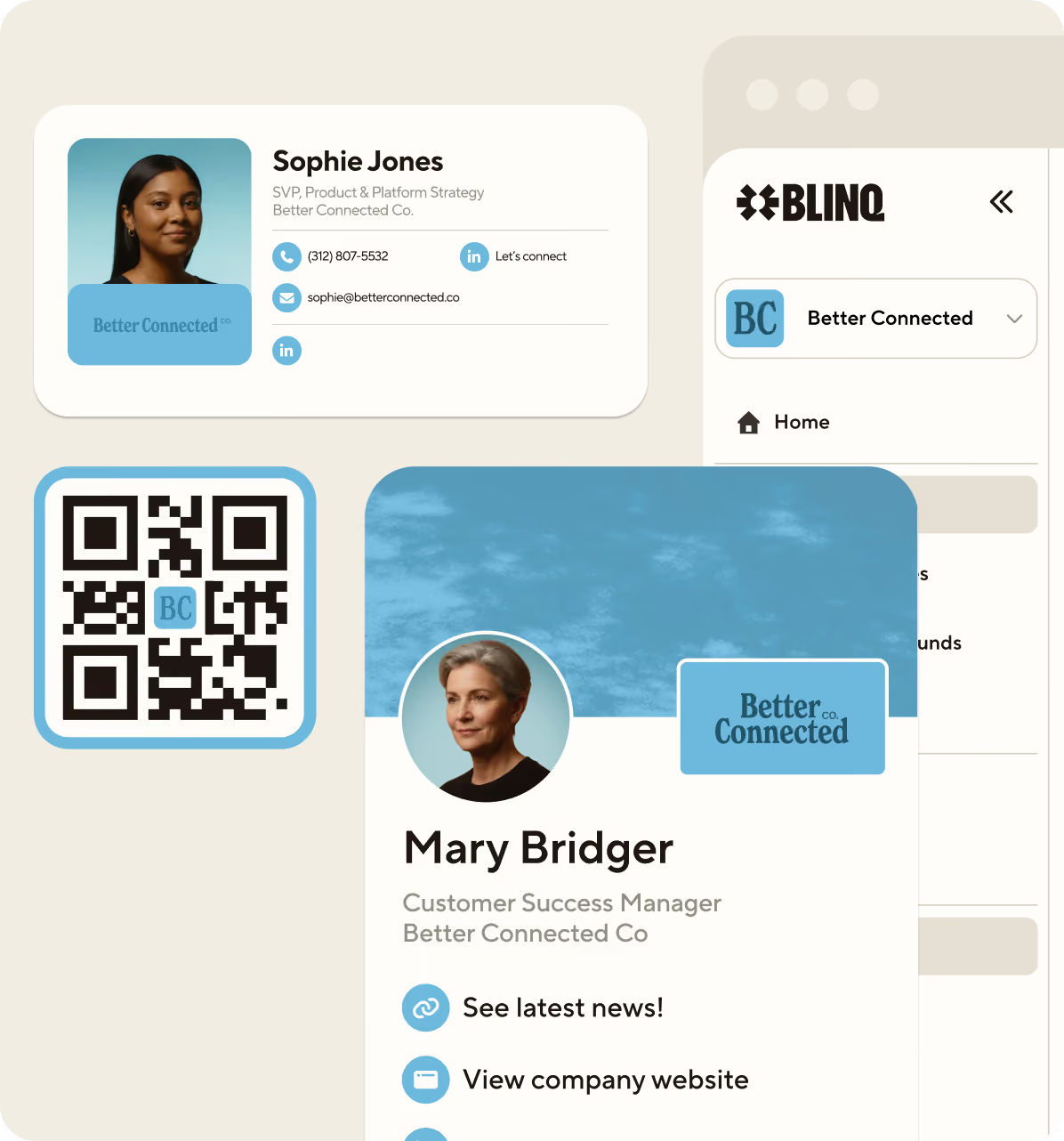
.avif)


An NFC business card is a physical card with a small passive chip inside it. Tap a phone on the card and the chip hands over a link, which opens your contact details or digital business card in the recipient's browser. There's no app for them to install and no battery in the card to charge. Because your details live online rather than on the card itself, they stay current no matter when someone taps.
Key Takeaways (TL;DR)
- One tap shares everything. An NFC business card passes your details to someone's phone the moment it touches the card, and they keep a live link instead of a paper rectangle.
- The chip holds a single link. Your details live in the digital profile that link opens, so you can change jobs or phone numbers without reprinting a thing.
- Costs are one-time for the card. Expect roughly $10 to $60 depending on material and whether or not you want a custom design, and check whether the profile behind the card needs a subscription before you buy.
- Compatibility is close to universal. iPhones since the XS read NFC tags with no app, modern Android phones do the same, and a printed QR code covers everyone else.
- Blinq NFC cards link to a free profile. Tap a new card to activate it and connect it to your Blinq digital business card in minutes; the profile stays free with no subscription.
What an NFC business card is
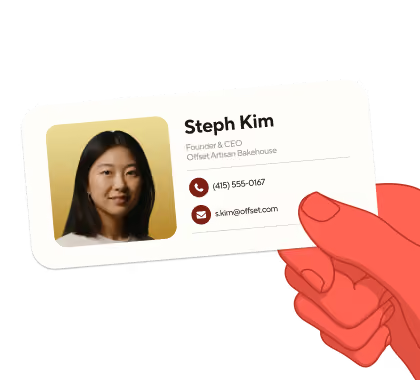
An NFC business card looks like a regular business card, usually plastic, wood, or metal, with a near field communication (NFC) chip and a thin antenna coil sealed inside. The chip stores one small record, almost always a web link. You'll also hear these called tap business cards, smart business cards, or contactless business cards. Vendors pick different names for the same chip.
A "tap business card" is the same product seen from the recipient's side: the name describes the gesture rather than the chip. Whatever a vendor calls it, if the card shares your details on contact with a phone, it's NFC doing the work.
The chip is passive. It has no battery and draws the tiny amount of power it needs from the phone that reads it, which is why a card bought today still works years from now without any maintenance. The same chips ship in other formats too: phone stickers, keychains, and wristbands all share your details the same way, though the card remains the most popular shape because it fits a habit people already have.
What happens when someone taps your card
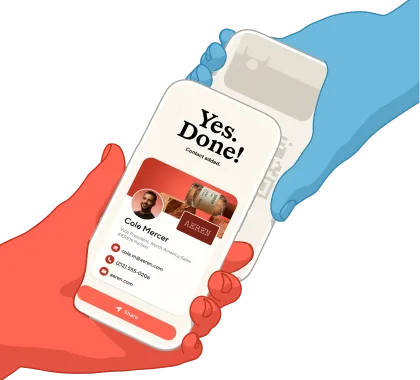
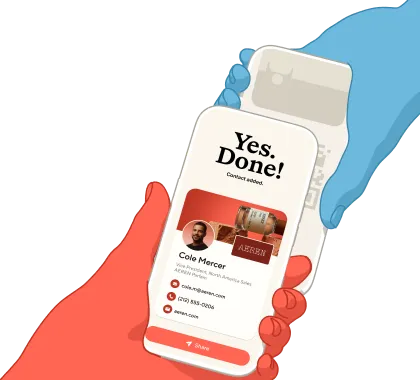
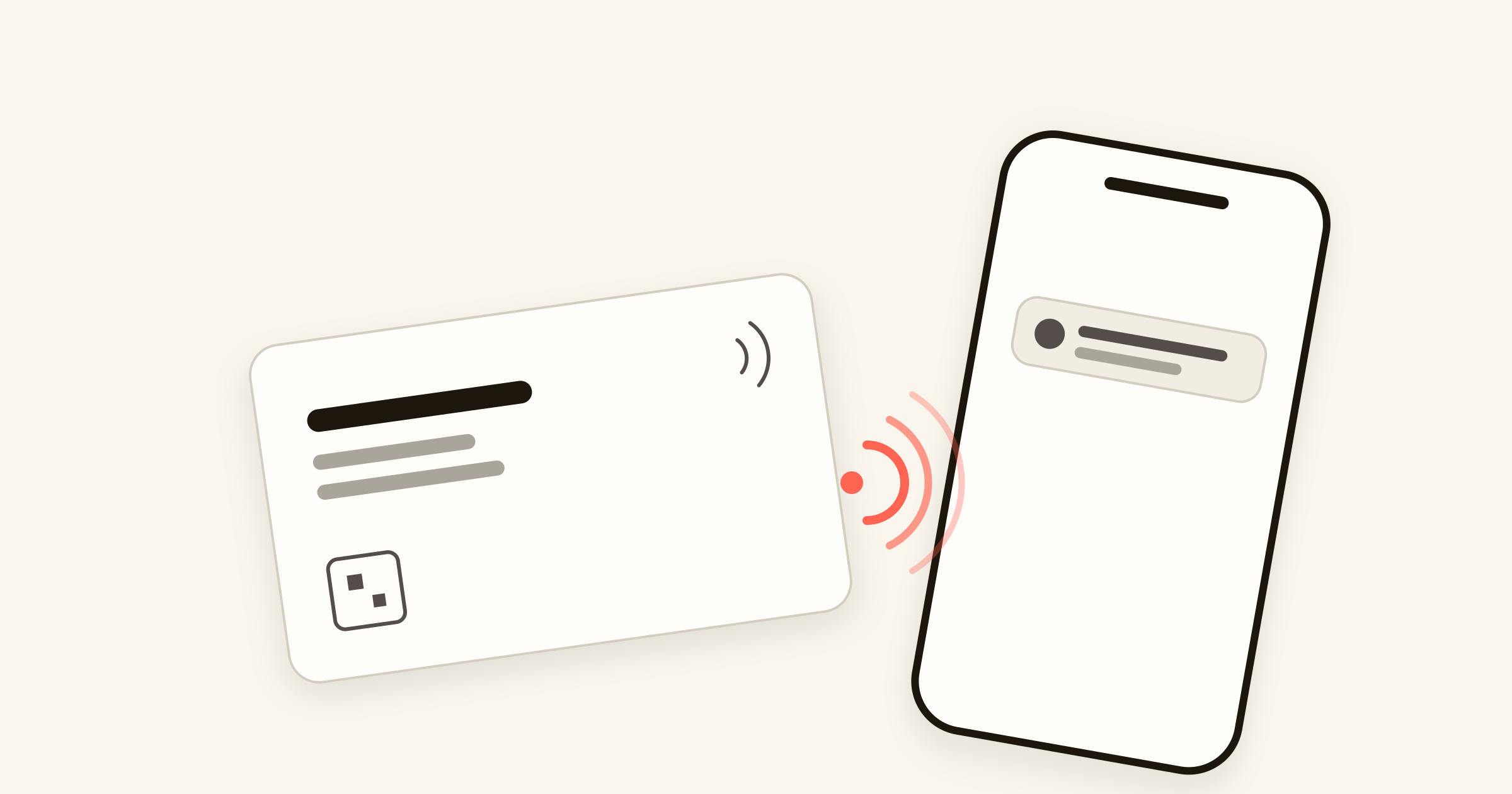
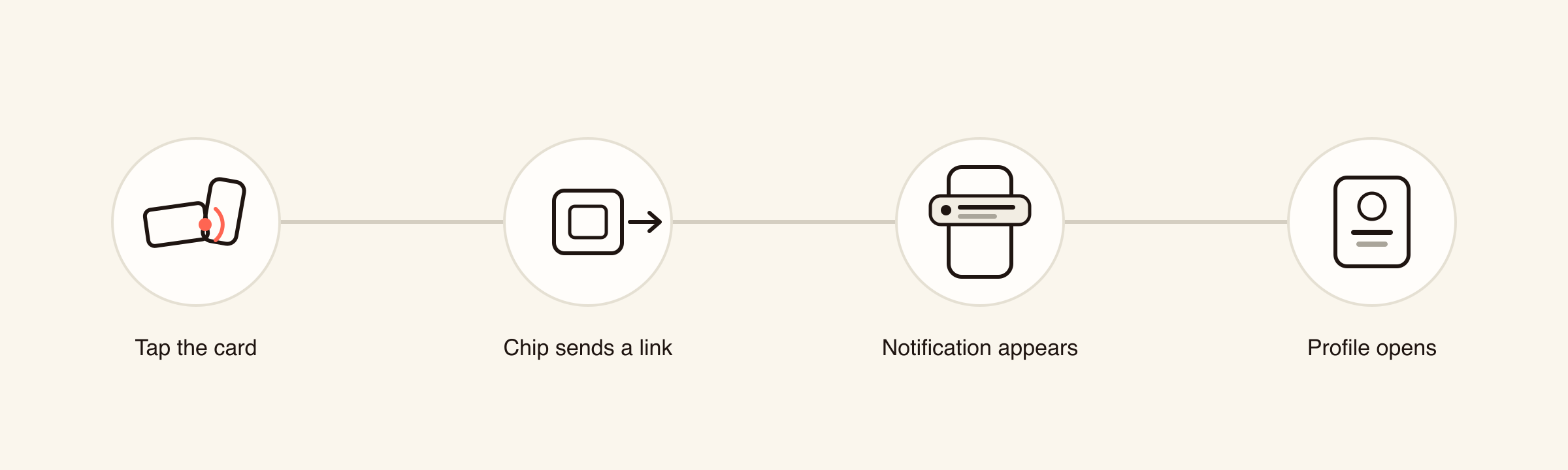
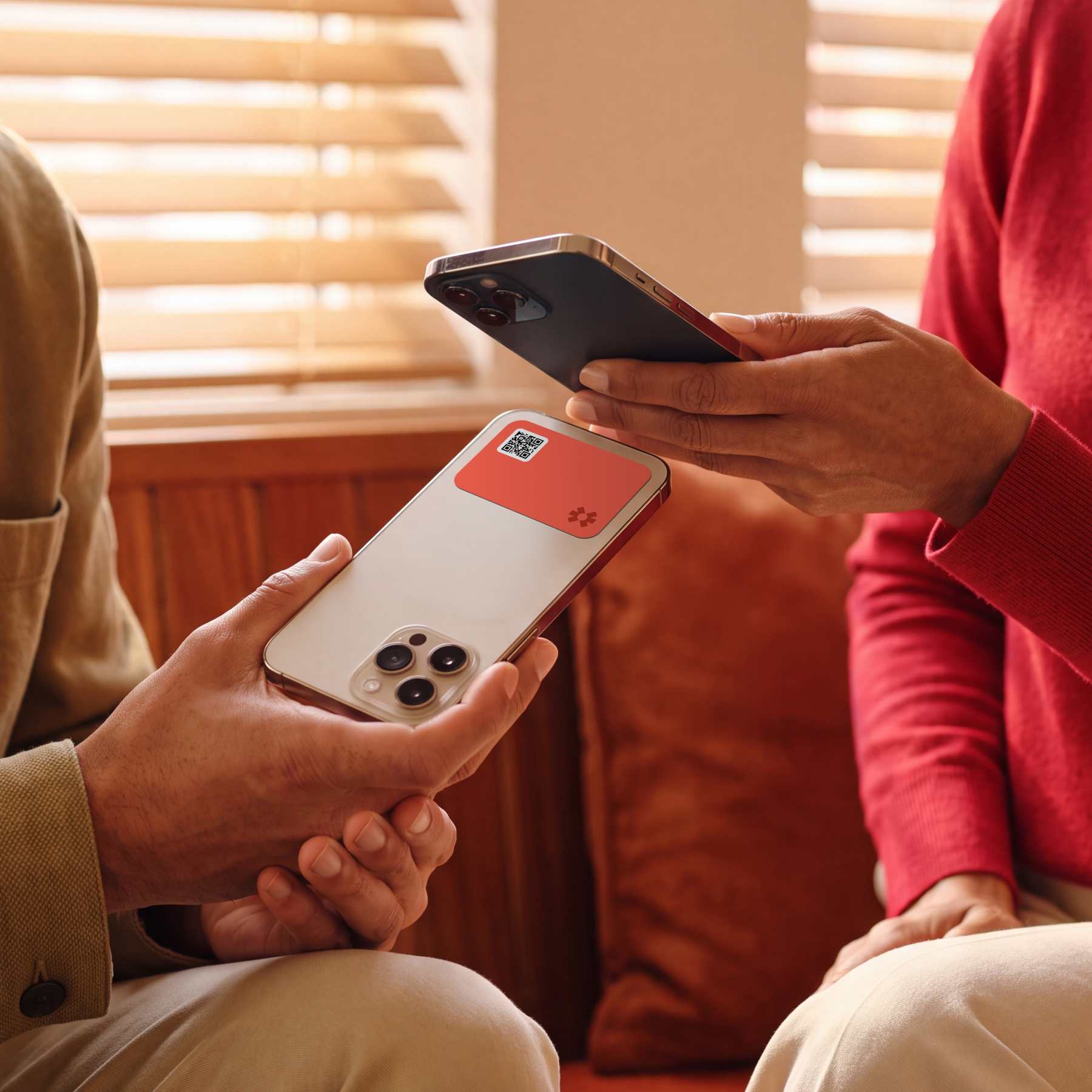
When someone taps their phone on an NFC business card, the phone's NFC reader creates a faint radio field, that field powers the chip, and the chip replies with the link it stores. The phone shows a notification, the person taps it, and your profile opens in their browser. The whole exchange takes about a second.
- The phone's NFC antenna energizes the chip through the card. NFC runs on a base frequency of 13.56 MHz with a typical range of up to 2 cm, per the NFC Forum, so the two need to nearly touch.
- The chip transmits its stored record, which for business cards is a URL.
- The phone pops a notification. iPhones from the XS onward read NFC tags in the background with no app open, per Apple's developer documentation. NFC-equipped Android phones behave the same way.
- The person taps the notification and your card or profile opens in their browser, where they can save your details to their contacts.
Most NFC business cards also carry a printed QR code, so someone with an older phone or NFC switched off scans instead of tapping. The result is identical.
The card only carries a link to your profile
An NFC business card has two parts that do different jobs. The card is the physical trigger, a chip holding one link. The profile is where your details live, on a digital business card page you edit whenever something changes. Tap the same card in five years and it opens whatever your profile says that day.
That also settles the security question. The chip itself holds nothing worth stealing: just the link, the same kind you'd put on a poster. Your phone number and email stay in the profile, off the card. A phone can read the chip only from a couple of centimeters away. And if you lose the card, you can unlink it from your profile, point it at a new one, or delete the card's profile so the link stops working entirely.
Blinq works this way. A Blinq NFC card opens the holder's Blinq digital business card, and an edit made in the app shows up the next time anyone taps. The app also keeps the context of who you meet: when you met them, where, and the notes you add, so a tap becomes the start of a record rather than a one-off exchange.
How NFC compares with QR codes and paper cards
NFC is one of several ways to hand over your details. A tap feels effortless and memorable in person, a QR code costs nothing and works on any phone with a camera, and paper needs no phone at all. A digital business card ties the digital options together: one live page you can share by QR code, link, or wallet pass, with or without a physical card.
| Sharing method | What the recipient does | Stays current? | Typical cost |
|---|---|---|---|
| NFC business card | Taps the card with their phone | Yes, the linked profile updates anytime | $10-60 one time |
| QR code | Scans the code with their camera | Yes, if it links to a live digital business card | Free to generate |
| Paper card | Keeps the card and types your details in later | No, changes mean reprints | Recurring print runs |
| Digital business card (link, QR, or wallet pass) | Opens the live card you send or show | Yes | Free on most platforms |
In practice the non-paper rows work together: the digital business card is the page your details live on, and the QR code or NFC chip is how someone gets to it. You can skip the physical card entirely and share the live page on its own.
What NFC business cards cost
Most NFC business cards cost between $10 and $60 as a one-time purchase. Material sets the price more than anything else. Blank unprinted NFC tags sell for a dollar or two each, printed PVC cards typically run $10 to $30, wood sits in the $20 to $35 band, and metal ranges from roughly $30 to $80. Fully custom branded cards price at the top of the range.
Before you buy, check what the profile behind the card costs. Some platforms charge a monthly plan before you can edit the linked profile, which turns a $30 card into a subscription. Others keep the profile free.
As a worked example, Blinq's NFC business cards are $24.99 in plastic, $29.99 in wood, and $49.99 in metal, with fully custom designs from $59.99, and the digital profile a card opens is free with no subscription required. Against a box of paper cards every reprint cycle, one card you never reprint usually wins on cost within a year or two.
How you get one set up
Two routes get you a working NFC business card. You can buy a card from a digital business card platform, create your profile, and link the card in the app in minutes. Or you can buy a blank NFC tag and write a link to it yourself with a free phone app. Buying from a platform takes about ten minutes. DIY runs cheaper, but it might take you a few hours to set up.
On the platform route, the card arrives ready to link: tap it to activate, connect it to your profile, and every tap after that opens your live details.
On the DIY route, a free writer app such as NFC Tools puts any link onto a blank tag. You supply the design, the printing, and the page the link opens.
This guide to creating an NFC business card walks through the platform setup and points to instructions for encoding your own tag.
Where NFC cards shine, and where they fall short
NFC business cards are at their best in person: a tap is fast, feels considered, and saves your details before the conversation ends. They fall short when the recipient's phone is old or thickly cased, and the card costs money where a QR code is free. If you meet new people most weeks, the trade is usually worth it.
A small share of older phones won't read the chip, and NFC has to be switched on, though modern phones keep it on by default. Following up is on you with any card format, paper included. The NFC tap just removes a step: your details are already in the other person's phone, so getting back in touch takes seconds.
If you're still weighing it up, this pros and cons breakdown goes through both sides in more detail.
Who uses NFC business cards
NFC business cards are most common in jobs built around meeting people. Sales and event teams use them widely: a card can be issued to each rep, so that every introduction lands on-brand and job titles never go out of date mid-quarter. Individual professionals carry them too. Realtors and freelancers often pick one up because the tap makes a first meeting a little more memorable.
NFC business cards are also commonly rolled out by companies at scale, where custom-branded designs are ordered in bulk and the linked profiles are managed from one place, so the whole team stays consistent. A good test for whether you need one is to count how many new people you meet in a month. If it's more than a handful, the card pays for itself in saved typing and details that stay current.
Get a card that stays current
If you want the tap without the setup, Blinq's NFC business cards arrive ready to link to a free digital business card you can update anytime. Blinq is rated 4.9 stars across 150,000+ reviews. Pick a material and add your details; whoever taps next sees the latest version.
FAQs
What's the difference between NFC and RFID?
NFC is a specialized branch of RFID. Both read a chip over a radio field without contact, but NFC runs at a single frequency (13.56 MHz) and works only at very short range by design, which is one reason phones build it in. It also supports two-way communication. RFID covers the broader family, including warehouse inventory tags read from meters away.
Do NFC business cards work without internet?
An NFC business card tap needs no internet on either phone: the phone powers the chip and reads its link on the spot. The full profile behind that link loads once the recipient has a connection. Blinq also has a true offline path: its offline card shares your name, phone, and email straight into their contacts with no internet at all, and a G2 reviewer called the offline mode "a total lifesaver for sharing your card when service is spotty."
Are NFC business cards secure?
NFC business cards are as secure as the link they carry. The chip stores no personal data and a phone has to be within a couple of centimeters to read it. How much control you get over the profile behind the link depends on the platform. Blinq, as an example, lets you change what the card shows, unlink it, or delete the profile whenever you choose, and is SOC 2 Type II certified and committed to GDPR requirements.
How long do NFC business cards last?
The chip inside an NFC business card usually outlasts the card body. NXP rates its NTAG series, the chip family in most NFC business cards, for 10 years of data retention and around 100,000 rewrites (NTAG213 specifications via Seritag). The printed card around the chip wears like any card, which is one reason metal versions exist.
How much data can an NFC business card chip hold?
An NFC business card chip holds very little data by design. Common NTAG chips carry between 144 and 888 bytes of usable memory (NTAG213 and NTAG216 specifications via Seritag), enough for a web link and not much else. That constraint is one reason the chip stores only a link to a live profile, rather than holding your details itself.
Can one NFC business card work for a whole team?
One NFC business card links to one person's profile, so a team gives each person their own card rather than sharing one. How a team manages the rollout depends on the platform. With Blinq, admins set the design once and lock the branding, each card links to its owner's profile, and every person keeps their own contact details editable.