



.avif)



Your digital business card travels everywhere you do - conferences, coffees, first meetings. If HiHello isn’t pulling its weight, it’s worth knowing what else is out there.
This guide covers the six best alternatives to HiHello when it comes to digital business cards in 2026 - what each one does well, where it falls short, and which situations it’s actually built for. We’ll start with a snapshot comparison, then go deep on each option.
Key Takeaways (TL;DR)
- Blinq is the best alternative to HiHello, offering more AI features, superior usability and greater flexibility for teams
- Blinq has a higher rating than HiHello on G2 and the App Store from thousands more professional reviews
- Blinq offers a 30-day free trial of its Business plan
- Other good alternatives to HiHello include Haystack, Wave, V1ce, Popl and Linq
- HiHello offers a solid platform for creating and sharing your digital business card but other providers are simpler, faster or more specialized
- Blinq, Popl and Linq all offer more AI features than HiHello, providing workflow automations and richer lead capture
- Wave, Blinq, Linq and V1ce offer physical NFC cards that can complement your digital profile and make in-person interactions more impactful
Comparing the Top 6 HiHello Alternatives for a Digital Business Card
Before we look at each alternative platform in more detail, it’s time for a snapshot of how they all stack up against each other and HiHello. The complete list below details each platform’s G2 rating, usability, unique features, CRM syncing capabilities and typical pricing. All of these platforms also appear in our comparison article of the best digital business card providers in 2026.
- Blinq - best overall digital business card
- Haystack - best for sustainability-focused teams
- Wave - best for simple team rollout
- V1ce - best for premium NFC cards
- Popl - best for sales teams at events
- Linq - best for analytics and data
| Provider | Best for… | G2 Ranking | G2 Reviews | UX | Unique features | Security | Team Pricing |
|---|---|---|---|---|---|---|---|
| Blinq | Overall | #1 | 4.8/5 from 8,837 reviews | High — top rated app and dashboard UX on G2 | Most ways to share; AI contact enrichment; AI notetaker | SSO, SOC 2 Type II and GDPR compliant | $4.99 per user per month |
| Wave | Simple team rollout | #4 | 4.6/5 from 859 reviews | Very intuitive | Team card management and quick deployment | SSO, SOC 2 Type II and GDPR compliant | $5.44 per user per month |
| Popl | Sales teams at events | #2 | 4.6/5 from 5,569 reviews | Busy app with excess features for most users | AI enrichment and badge scanning | SSO, SOC 2 Type II and GDPR compliant | $4 per user per month |
| Haystack | Sustainability-focused teams | #5 | 4.7/5 from 64 reviews | Simple | Eco-friendly and team management | GDPR compliant | $2.50 per user per month |
| V1ce | Premium NFC cards | Unranked | 4.9/5 from 6 reviews | Premium but simple | Luxury NFC cards with design-first approach | SSO and GDPR compliant | $101 single payment |
| Linq | Analytics and data | #7 | 4.8/5 from 554 reviews | Easy but feature-rich | Built-in analytics and landing-page style cards | GDPR compliant | $12 per month per user |
Data sourced from platform sites and reliable online sources (last updated 7 May, 2026). All prices in USD.
Comparing the Top 6 HiHello Alternatives by Price
You wouldn’t be the only business concerned about the cost of digital business card providers. These can vary greatly depending on which one you choose. While most tend to have the same pricing approach (a set monthly fee), some may work better with hardware (i.e. a physical NFC-enabled card). Others may provide free tiers or trials to let you test the platform before committing.
Here’s how the best alternatives to HiHello compare when it comes to price and approach:
| Provider | Pricing Model | Individual Pricing | Team Pricing | Free Tier |
|---|---|---|---|---|
| Blinq | Freemium + per-user subscription | $7.33 per month | $4.99 per user per month | Up to 2 cards with unlimited sharing |
| Wave | Hardware + subscription hybrid | $6.80 per month | $5.44 per user per month | Access often tied to NFC purchase |
| Popl | Freemium + tiered subscription | $6.40 per month (Pro) or $11.99 per month (Pro+) | $4 per user per month | 1 card with limited features |
| Haystack | Freemium + subscription | $4.50 per month | $2.50 per user per month | Limited cards and app-based features |
| V1ce | Hardware + subscription (light SaaS) | $66 per month | $101 single payment | No free tier |
| Linq | Freemium + subscription | $5 per month + NFC card | $12 per month per user + NFC card | Basic digital card features |
| HiHello | Freemium + subscription | $6 per month | $5 per user per month | Basic cards, limited features/scans |
Data sourced from platform sites and reliable online sources (last updated 7 May, 2026).
Where multiple plans exist, annual prices have been used to show monthly fees. All prices in USD.
Comparing the Top 6 HiHello Alternatives by User Reviews
How do you know if a digital business card brand actually works well for professionals? The easiest way to do this, aside from testing the provider yourself, is to check review from people who have already tested and used them.
Platforms like G2 and the App Store provide a significant volume of testimonials from professionals across a variety of industries. These can give you a better idea of each card’s real-world application. Don’t just rely on overall ratings; read individual reviews to see exactly what people think of the service.
The table below shows the best alternatives to HiHello compared by their user reviews on G2 and the App Store:
| Provider | G2 Rating | # of G2 Reviews | 2026 G2 Badges | App Store Rating | # of App Store Reviews |
|---|---|---|---|---|---|
| Blinq | 4.8/5 | 8,837 | Leader, Easiest to Use, Top Trending & Best Free Software | 4.9/5 | 124,814 |
| Wave | 4.6/5 | 883 | No Badges | 4.8/5 | 935 |
| Popl | 4.6/5 | 5,887 | Best Est. ROI | 4.8/5 | 97,291 |
| Haystack | 4.7/5 | 65 | No Badges | 4.3/5 | 169 |
| V1ce | 4.9/5 | 6 | No Badges | N/A | N/A |
| Linq | 4.8/5 | 554 | No Badges | 4.9/5 | 12,196 |
| HiHello | 4.6/5 | 845 | 2nd Easiest to Use (2026) | 4.9/5 | 40,581 |
Data sourced from G2 and App Store (last updated 7 May, 2026)
How We Determined Our Rankings
As the creators and providers of Blinq’s digital business card, we can draw upon our expertise and experience with the platform to offer a transparent appraisal. For the other platforms featured on this list, we have used their websites, pricing pages, user reviews, FAQs, feature lists, brochures and various other documentation to evaluate their offerings.
We intend for these rankings to be a useful guide and have tried to be as honest and transparent as possible in our reviews. We’ve ranked platforms with more valuable features, competitive pricing and positive user reviews highest.
Platform technology evolves quickly. We’ve done our best to ensure accuracy as of the date above, but recommend consulting multiple guides before making a final decision.
Best HiHello Alternative: Blinq
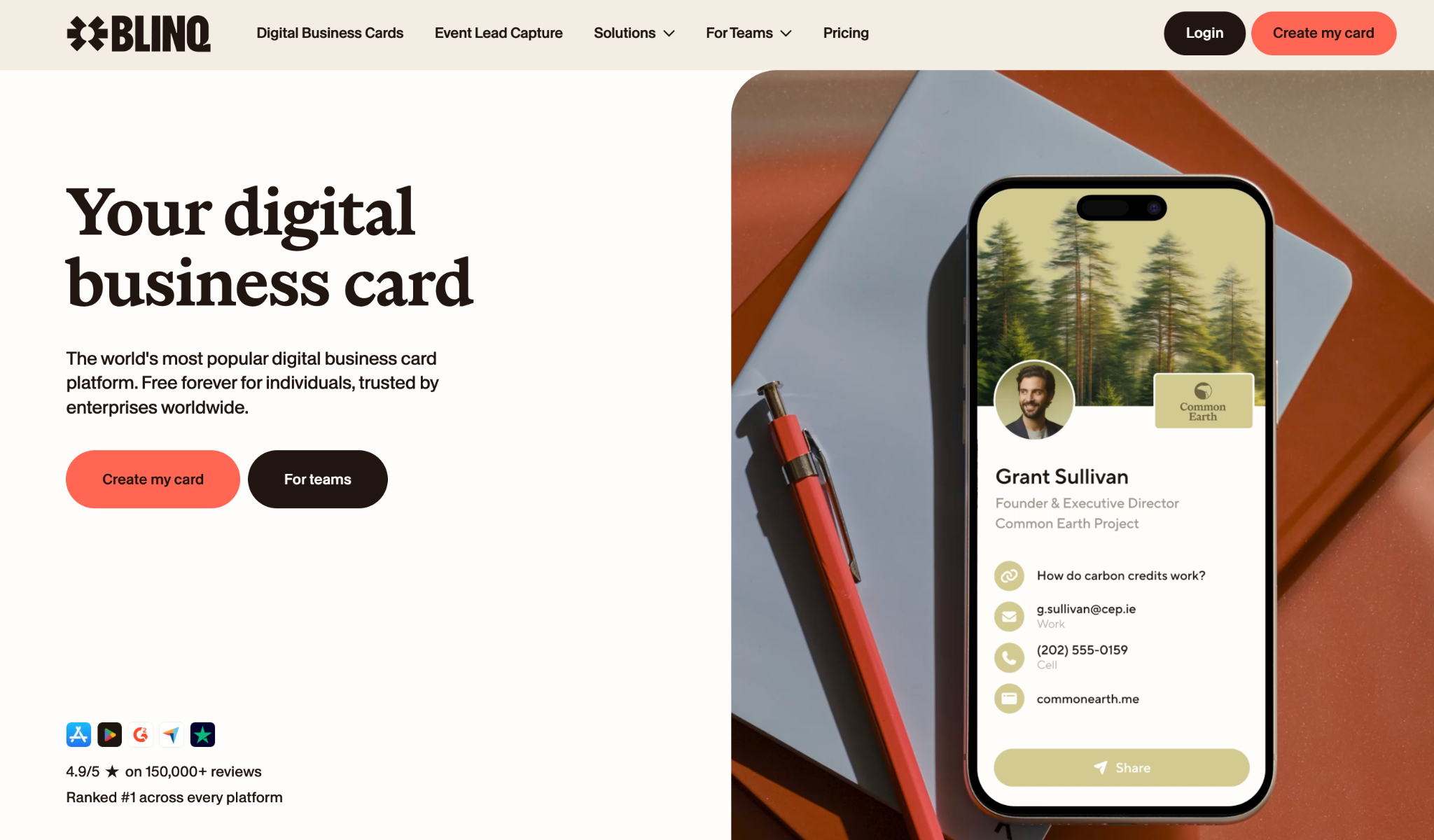
Blinq is the best alternative to HiHello for digital business cards in this modern landscape. It’s an intuitive and mobile-first provider that ensures ease of use, affordability and fast sharing for individuals, small teams and global enterprises.
Compared to HiHello, Blinq is a lot faster for everyday networking. You can set up individual and team-based digital business cards easily on the platform. Blinq also has some advanced features that make it a much more intuitive and effective contacts app than HiHello. These include AI-powered contact enrichment, AI Notetaker for conversation context and custom qualifier forms, which all help you incorporate lead capture into your networking.
Both HiHello and Blinq offer branded customizations to card design templates, as well as useful administrative controls over fields and role-based editing permissions. HiHello has a slightly more advanced customization, such as video embedding, but these don’t outweigh Blinq’s standout UI, team management and sharp, easy contact sharing.
Blinq’s additional services, such as event lead capture and dynamic email signatures, are also more established than HiHello’s equivalent offerings. Blinq is rated higher on G2 across all three products (digital business card, event lead capture and email signatures), indicating a more dependable and consistent offering that supports professionals with individual and company-wide growth. Or at the very least, makes your work life easier.
Comparing Blinq to HiHello
| Feature | Blinq | HiHello | Best Option |
|---|---|---|---|
| Easy to use and learn | Very easy and simple to set up and learn how to use. | Slightly more complex and longer to set up and learn how to use. | Blinq |
| Affordable for individuals and teams | Very affordable plans and a feature-rich free tier for individuals. Also publishes its pricing and offers a 30-day free trial of Blinq Business. | Similar pricing and free features, with a 14-day free trial on Business. | Blinq |
| Customizable and branded templates | Offers strong branding and customization for its Business and Enterprise plans. | Offers more advanced templates and branding controls, fonts, logos. | HiHello |
| Multiple sharing options | Sharable via QR codes, NFC, email and text links, email signatures and Apple Watch. | Same level of shareability. | Either Blinq or HiHello |
| AI-powered contact enrichment | Offers an AI data enrichment waterfall that ensures >95% accuracy across saved contacts. | Offers contact enrichment but it isn't as accurate or automated as Blinq. | Blinq |
| AI-generated conversation summaries | Blinq offers AI Notetaker, which generates summaries of conversations that can help with networking and lead capture. | Doesn't offer this for card holders. | Blinq |
| Native CRM integrations | Native integrations with major CRM platforms, plus over 6,000 others via Zapier. | Native CRM integrations but more limited options. | Blinq |
| Strong team management features | Advanced admin controls, including bulk provisioning, role-based permissions and team-focused templates. | Also has strong admin controls and team management capabilities. | Either Blinq or HiHello |
| Fast and simple networking | Offers quick real-world sharing. | Similar speed. | Either Blinq or HiHello |
| An NFC-enabled card | Has NFC-enabled cards for physical sharing | Relies on third-party NFC business cards | Blinq |
Cost of Blinq vs HiHello
| Provider | Free Tier | Premium/Pro | Business | Enterprise |
|---|---|---|---|---|
| Blinq | Up to 2 cards with unlimited sharing | $7.33 a month | $4.99 a month | Custom pricing |
| HiHello | Basic cards with limited features/scans | $6 a month | $5 per user a month (5-user minimum) | Custom pricing |
The difference in price between Blinq and HiHello isn’t enough to choose one over the other. HiHello is slightly more affordable for individuals on its Premium plan. However, Blinq offers a more feature-rich platform for a comparable price, giving you more value for the money you spend.
Our preference: Blinq for having more features at a similar price.
User reviews of Blinq vs HiHello
| Provider | G2 | App Store | Google Play |
|---|---|---|---|
| Blinq | 4.8/5 from 8,837 reviews | 4.9/5 from 124,814 reviews | 4.9/5 from 28,123 reviews |
| HiHello | 4.6/5 from 845 reviews | 4.9/5 from 40,581 reviews | 4.8/5 from 14,336 reviews |
Blinq has a slightly higher overall performance amongst users across G2 and Google Play. Both providers have the same performance on the App Store. Blinq has over 106,000 more user reviews than HiHello across G2, the App Store and Google Play combined. This could indicate a more popular and user-friendly platform.
Final verdict
Blinq is the best alternative to HiHello primarily because of its simpler and faster approach to contact sharing. Yet despite its more streamlined app and services, it still provides just as many enterprise-level features, including much more advanced contact enrichment and AI Notetaker, compared to HiHello.
While Blinq may not offer as much customization on its business card templates, you can still effectively present yourself and your company across a range of design options. You can also efficiently manage team cards through centralized admin control. A more feature-rich platform for a similar price, Blinq stands out for its overall value and capabilities compared to HiHello.
Key takeaway #1
Blinq provides stronger AI integrations than HiHello. Its AI-powered contact data enrichment is more accurate and automated. If you scan someone’s business card when sharing yours, Blinq’s AI will fill in any missing details using verifiable online sources that require less manual review than HiHello. Blinq also offers AI Notetaker for conversation summaries. These AI-generated notes for conversations you have with prospective clients help you follow up with more context and personalization.
Key takeaway #2
Blinq has one of the best free tiers of any digital business card provider. Individuals can create up to two cards with unlimited sharing and contact fields without paying a cent. You can also create virtual backgrounds and dynamic email signatures.
Key takeaway #3
Blinq is extremely easy to use and learn with its mobile-first approach. It’s a light and intuitive platform - fast to pick up whether you’re at an industry event or going about your regular day.
HiHello Alternative #2: Haystack
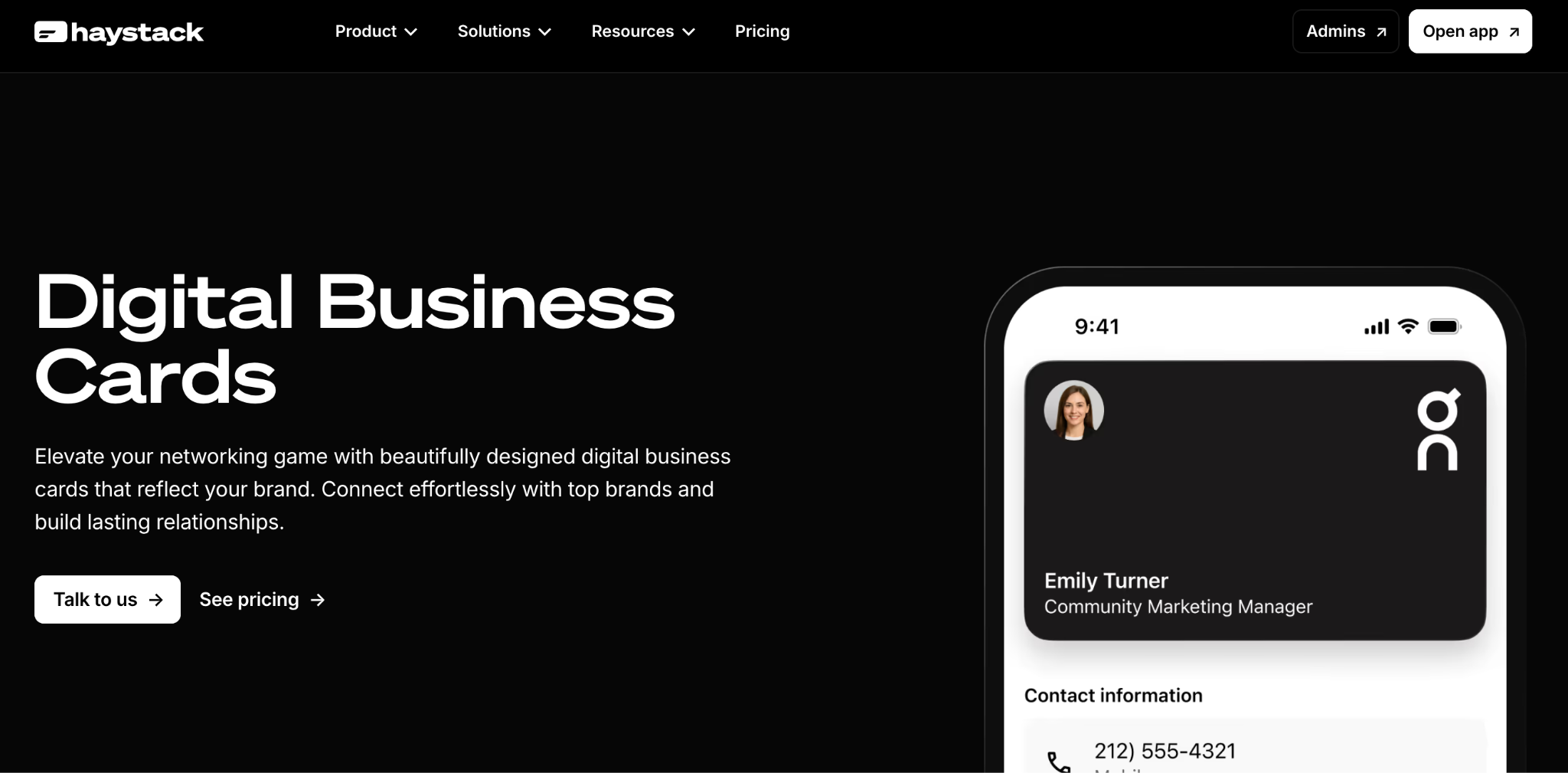
Haystack is a good alternative for companies seeking digital business cards as it’s one of the more sustainability focused providers out there. Many of these companies offer sustainable digital business cards, but Haystack goes further with its own Sustainable Development Goals (SDGs). This is something it promotes more than HiHello does.
You get a lot of similar capabilities and features with Haystack compared to HiHello, such as multiple sharing options and detailed contact management. However, Haystack is a lot more affordable (half the monthly cost for teams). It’s also more readily applicable to enterprises looking for a scalable provider with well-established team management features, including team-based engagement analytics and more granular permissions. Where it falls short compared to HiHello and other providers, like Blinq, is its lack of customization and more basic design options.
Comparing Haystack to HiHello
| Feature | Haystack | HiHello | Best Option |
|---|---|---|---|
| Easy to use and learn | A simple and clean UI that's easy to onboard across teams. | Slightly more complicated to implement with more training required for richer features. | Haystack |
| Affordable for individuals and teams | Much cheaper for individuals and teams. | More expensive each month. Double the price for teams. | Haystack |
| Customizable and branded templates | Professional design but more basic compared to HiHello. | Offers more advanced templates and branding controls, fonts, logos etc. | HiHello |
| Multiple sharing options | Sharable via QR codes, NFC and email and text links with no app required. | Has a few more sharing options, including email signatures. | Either Haystack or HiHello |
| In-depth contact management and storage | Quality contact sorting and storage, including hashtags and categorizations. | Similar level of contact management and storage. | Either Haystack or HiHello |
| Good scalability across enterprises | Built for large organizations and global rollouts. | Can scale well but isn't as effective for enterprises. | Haystack |
| Native CRM integrations | Integrates with some major CRMs. | More native CRM integrations. | HiHello |
| Strong team management features | Strong enterprise features, HR/IT integrations and centralized admin control. | Also has strong admin controls and team management but less capable for larger enterprises. | Haystack |
| Fast and simple networking | Fast and straightforward sharing. | Can feel overly slow and heavy. | Haystack |
| A sustainable company and approach to business cards | Promotes tree planting per user, paper savings and a carbon-conscious infrastructure. | Is paperless but doesn't promote any sustainability initiatives. | Haystack |
Cost of Haystack vs HiHello
| Provider | Free Tier | Premium/Pro | Business | Enterprise | Free Trial |
|---|---|---|---|---|---|
| Haystack | Limited cards and app-based features | $4.50 a month | $2.50 a month | Custom pricing | 14 days for Pro and Business |
| HiHello | Basic cards with limited features/scans | $6 a month | $5 per user a month (5-user minimum) | Custom pricing | 14-day free trial on Business |
Haystack is significantly more affordable for individuals and teams on an ongoing basis. It has a similar free tier as HiHello, but when you upgrade you could pay as much as half less than HiHello.
Our preference: Haystack for its more affordable monthly subscriptions.
User reviews of Haystack vs HiHello
| Provider | G2 | App Store | Google Play |
|---|---|---|---|
| Haystack | 4.7/5 from 65 reviews | 4.3/5 from 169 reviews | 3.7/5 from 1,539 reviews |
| HiHello | 4.6/5 from 845 reviews | 4.9/5 from 40,581 reviews | 4.8/5 from 14,336 reviews |
Haystack doesn’t have as many reviews as HiHello. While it performs better overall on G2 it has a lower rating on the App Store and Google Play. This could indicate a poorer app performance but a better overall experience for professionals.
Final verdict
Haystack is a solid alternative to HiHello, especially for brands wanting to partner with a provider who promotes their sustainability initiatives. It’s also a good low-cost option with enough features to ensure reliable networking and contact sharing. You just might have to settle for a more basic design and approach than other providers.
HiHello Alternative #3: Wave
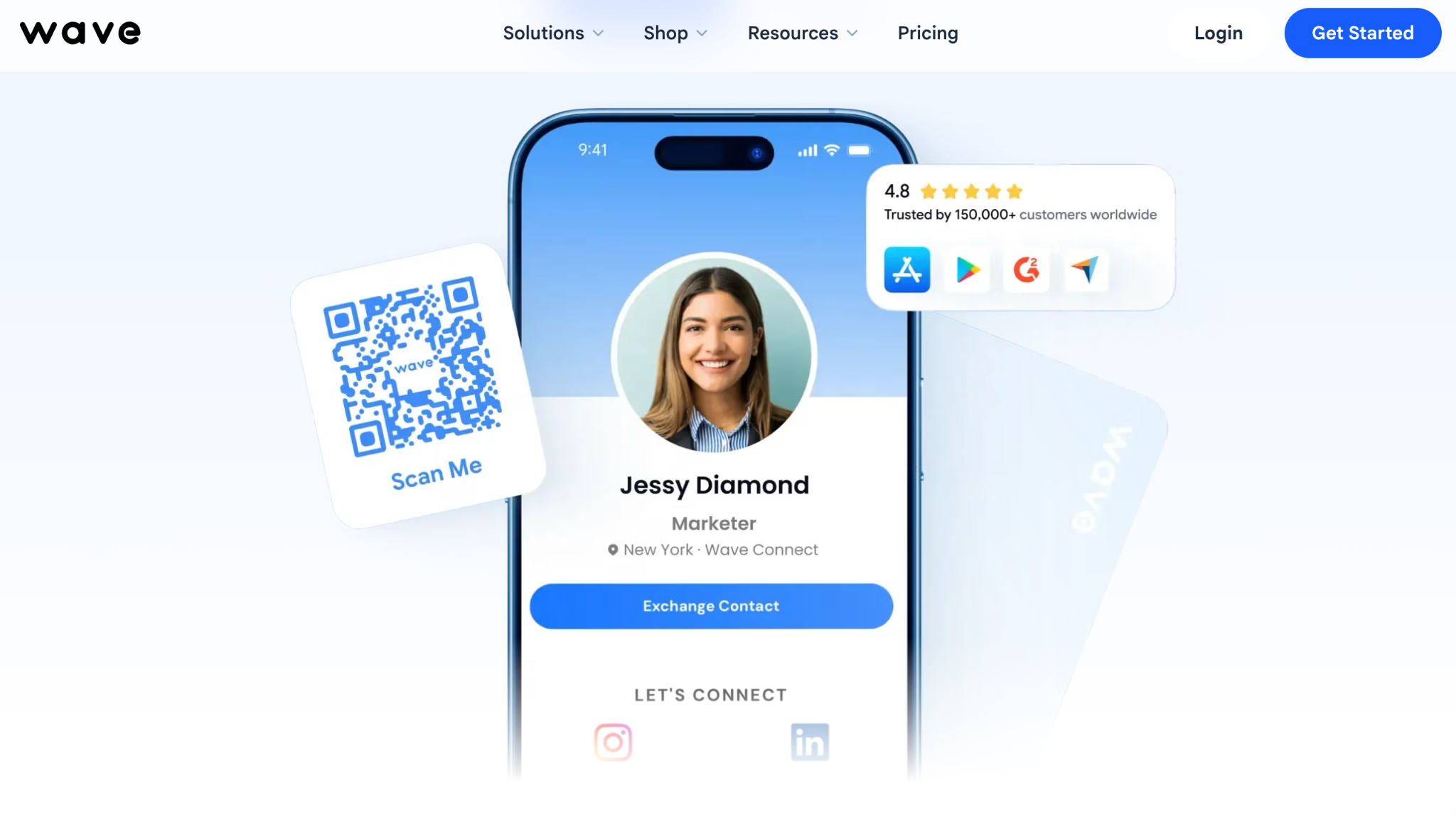
If you’re looking for a browser-first digital business card experience, Wave is a good option. This is an NFC-enabled physical card provider that prioritizes this more traditional card sharing method over a purely digital approach. This can make the experience a bit more professional and impactful, especially if you don’t want to deal with apps. It’s also a good-value provider with budget-friendly card options and relatively low monthly subscription costs.
Compared to HiHello, Wave offers a lot more features within its free tier instead of keeping them behind paywalls. This includes detailed performance analytics and tracking. It also doesn’t have any of its own branding on your card or digital profile. This can make it cleaner and a bit more professional. However, it’s lacking in-depth features and profile customizations. You may find it harder to create the business card you want and also engage your network.
Comparing Wave to HiHello
| Feature | Wave | HiHello | Best Option |
|---|---|---|---|
| Easy to use and learn | Offers a simple browser-first approach with a physical NFC-enabled card. | Slightly more complicated to implement. | Wave |
| Affordable for individuals and teams | Offers much more features in its free plan (after physical card purchase). | Keeps its most important features behind a paywall. | Wave |
| Customizable and branded templates | More standardized with an emphasis on the physical card. | Much more digital customization of business cards. | HiHello |
| Multiple sharing options | Sharable via QR codes, NFC and email and text links with no app required. | Has a few more sharing options, including email signatures but can be more complicated. | Wave |
| In-depth contact management and storage | Basic contact management. | More detailed management with CRM syncing and in-app ecosystems. | HiHello |
| Detailed analytics on performance | Provides analytics and tracking in its free plan. | Offers a similar level of analytics but behind a paywall. | Wave |
| Strong team management features | A simple rollout and effective card delivery with a free trial for teams. | Strong team management, a 14-day Business trial and a 5-user minimum. | Wave |
| Fast and simple networking | Extremely fast and effective with both physical card and digital card options. | Can feel overly slow and heavy. | Wave |
Cost of Wave vs HiHello
| Provider | Free Tier | Premium | Business | Enterprise | Free Trial |
|---|---|---|---|---|---|
| Wave | Access often tied to NFC purchase | $6.76 a month | $4.06 a month | Custom pricing | Free trial for Premium and Business |
| HiHello | Basic cards with limited features/scans | $6 a month | $5 per user a month (5-user minimum) | Custom pricing | 14-day free trial on Business |
Wave costs similar to HiHello if you’re looking at its paid tiers. However, it has a much feature-rich free tier. You have to purchase the NFC-enabled physical card, but once you’ve done this you can get more for free than HiHello.
Our preference: Wave for its more feature-rich free tier.
User reviews of Wave vs HiHello
| Provider | G2 | App Store | Google Play |
|---|---|---|---|
| Wave | 4.6/5 from 883 reviews | 4.8/5 from 935 reviews | 4.4/5 from 157 reviews |
| HiHello | 4.6/5 from 845 reviews | 4.9/5 from 40,581 reviews | 4.8/5 from 14,336 reviews |
Wave and HiHello have similar ratings online from professional appraisals. HiHello has thousands more reviews on Google Play and the App Store. However, this is because it’s purely app-focused, while Wave is more of a browser-led experience with its physical card. Because of this, the ratings on G2 will likely better reflect the overall user experience.
Final verdict
Wave is a great alternative to HiHello, especially if you want a physical card to complement your digital one. You’re not going to get the same level of customization as HiHello, but you will have a fast and sharable profile that can help you widen your network. It’s also a good option if budget is a concern, because you can set yourself up well with the free tier if you don’t need advanced reporting or engagement features.
HiHello Alternative #4: V1ce
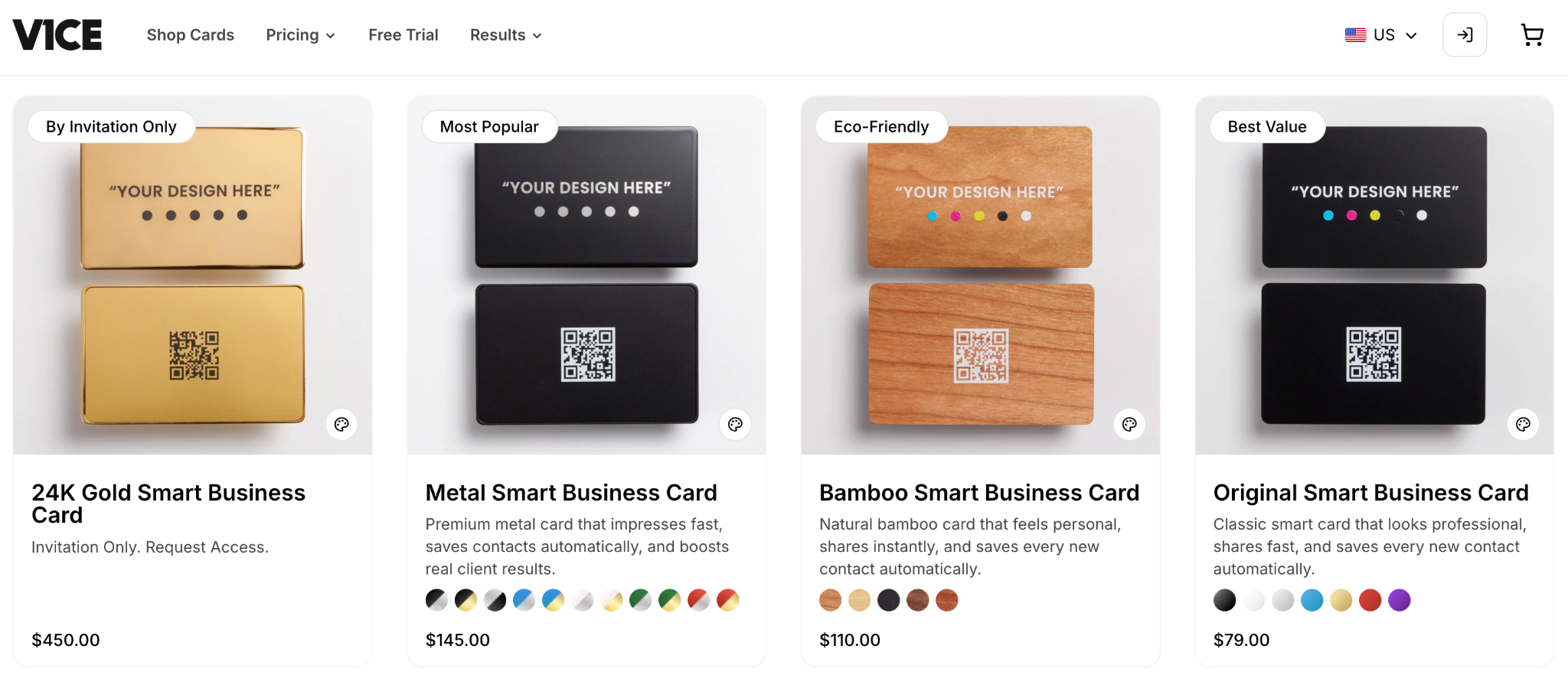
V1ce markets itself as a more premium networking and digital business card provider. The cost certainly reflects this, as you’re going to pay over twice the amount as HiHello each month for an individual Plus plan. So what exactly do you get for this amount that HiHello doesn’t provide? V1ce’s biggest difference compared to HiHello is its physical NFC-enabled card, which comes in a range of stylish and high-quality materials (bamboo, metal etc.). These can make quite the impact on your clients and network, especially when dealing with more traditional professionals.
This could be a good alternative to HiHello if you want that more executive-level aesthetic. It’s also a better option for teams focused on turning networking into opportunities for their sales pipeline. V1ce offers more automation and lead capture capabilities than HiHello, including instant CRM syncing and automated email or text follow-ups. However, V1ce has a more complex app than HiHello (you can see the latter’s emphasis on streamlining this digital space). It’s not as simple to use, but it does provide a premium, sales-focused approach.
Comparing V1ce to HiHello
| Feature | V1ce | HiHello | Best Option |
|---|---|---|---|
| Easy to use and learn | Simpler sharing but a more complicated mobile app. | Much more polished and intuitive mobile app than V1ce. | HiHello |
| Affordable for individuals and teams | Much higher upfront and ongoing costs. | More affordable payment plans. | HiHello |
| Customizable and branded templates | Both premium and customizable physical cards and digital profiles. | Strong digital customization but not as premium. | V1ce |
| AI-powered contact capturing and enrichment | Has an AI-powered card scanner and supported data enrichment. | Doesn't offer AI integrations for contact capture and enrichment. | V1ce |
| Good scalability across enterprises | Designed to scale with teams with unlimited user plans. | Can scale well but isn't as effective for enterprises. | V1ce |
| Engaging rich media | Supports the inclusion of video backgrounds and other rich media. | Also allows you to embed videos and rich media | Either V1ce or HiHello |
| Strong team management features | Feature-rich team plans with good admin controls but less of a digital focus. | Strong admin controls with a firm digital focus for onboarding, permissions, design templates etc. | HiHello |
| Fast and simple networking | Fast and straightforward sharing. | Can feel overly slow and heavy. | V1ce |
| An impactful experience for your recipients | Creates an executive-style impression with the physical card made from premium materials. | A relatively clean experience but more standardized than V1ce. | V1ce |
Cost of V1ce vs HiHello
| Provider | Free Tier | Premium/Plus | Business | Enterprise | Free Trial |
|---|---|---|---|---|---|
| V1ce | No free tier | $66 a month | $101 single payment | N/A | 30-day free trial |
| HiHello | Basic cards with limited features/scans | $6 a month | $5 per user a month (5-user minimum) | Custom pricing | 14-day free trial on Business |
V1ce is significantly more expensive than HiHello and doesn’t have a free tier. You’re really paying for this executive aesthetic, as well as advanced analytic and sales pipeline features. It might be worth the cost if you’re going to use these a lot. V1ce’s main plan could be more affordable over time, as it’s a one-off payment. Physical cards still need to be purchased individually though.
Our preference: HiHello for individuals and small teams. V1ce for large enterprises looking for a flat rate for their entire corporation.
User reviews of V1ce vs HiHello
| Provider | G2 | App Store | Google Play |
|---|---|---|---|
| V1ce | 4.9/5 from 6 reviews | N/A | N/A |
| HiHello | 4.6/5 from 845 reviews | 4.9/5 from 40,581 reviews | 4.8/5 from 14,336 reviews |
V1ce isn’t reviewed much online so it’s hard to get a clear and trustworthy idea of its service and overall user satisfaction. It has a high rating on G2, but this is from a very small sample size. You can get a more accurate read on HiHello from user reviews, while V1ce might be worth testing first with its free tier.
Final verdict
V1ce is a good alternative to HiHello if you want to prioritize overall business card aesthetic and a more traditional approach to digital business cards and networking. You also need to justify the much higher cost, but this might be easier if you’re organizing cards for a large corporation that could benefit from having a plan with unlimited users.
HiHello Alternative #5: Popl
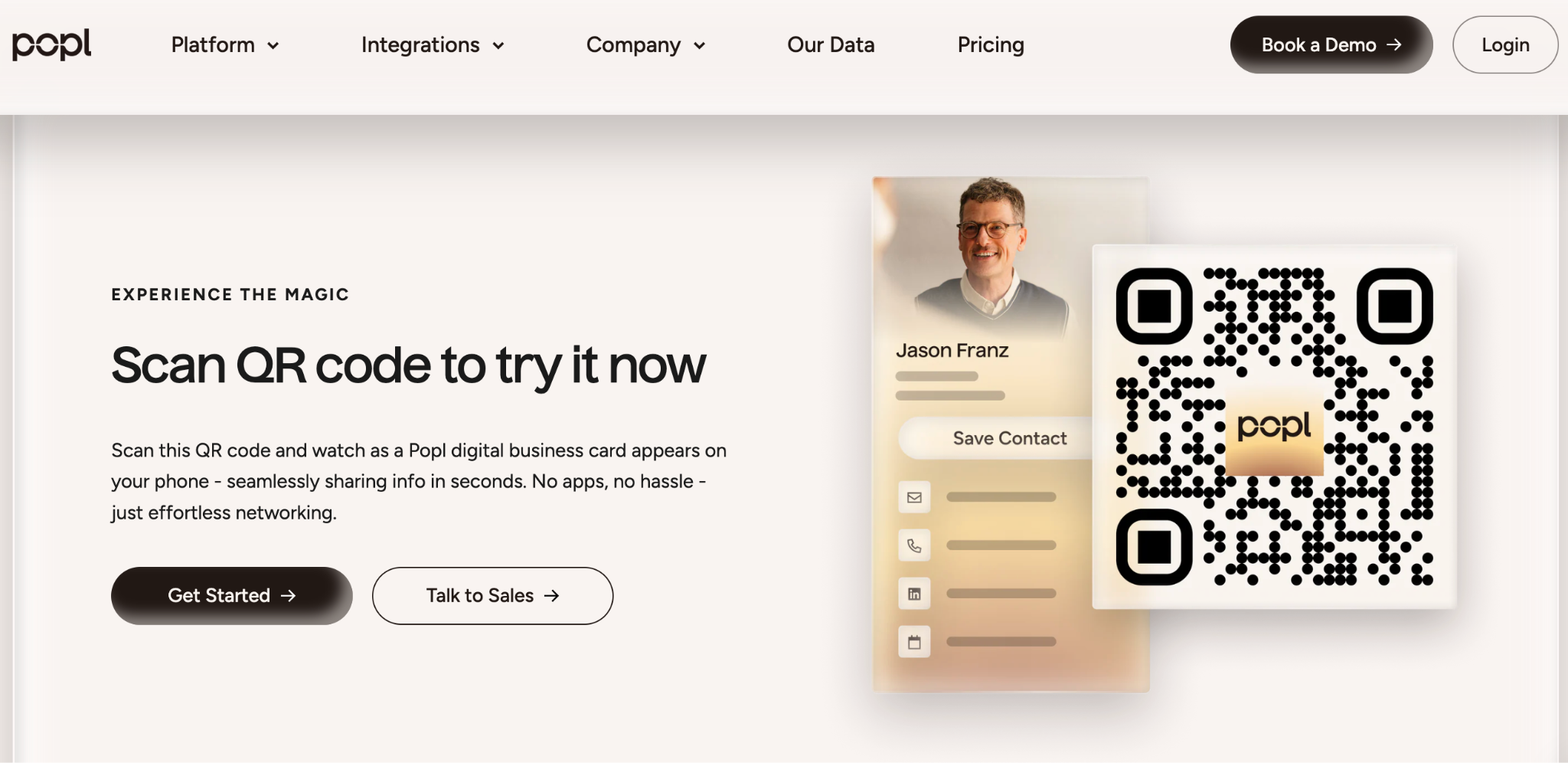
Although both Popl and HiHello offer digital business cards, they focus on very different applications. HiHello is more about simple networking and contact sharing, prioritizing card customizations and overall look. Popl, meanwhile, is focused more on sales events and utilizing your digital business card to complement your brand’s overall lead capture efforts. It does this with additional features that HiHello lacks, including AI-powered contact enrichment, event workflow automations, campaign tracking, and custom lead capture forms.
Popl falls short of HiHello when it comes to overall business card design and customization. You’ll have to settle for a more limited design that lacks certain multimedia inclusions. It can also be trickier to manage across teams than HiHello, which has more admin controls over design changes. Price can also be an issue for Popl, so you need to make the most of its sales and event features to justify choosing it as an alternative to HiHello.
Comparing Popl to HiHello
| Feature | Popl | HiHello | Best Option |
|---|---|---|---|
| Easy to use and learn | A very simple and effective UI for quick sharing. | Slightly more complex than Popl, which can make it harder to use and learn. | Popl |
| Affordable for individuals and teams | Can become more expensive for teams with a lot of users. | More affordable for individuals and teams than Popl. | HiHello |
| Customizable and branded templates | Has a solid level of customization but it's more limited compared to HiHello. | More customizations and branding options than Popl. | HiHello |
| AI-powered contact capturing and enrichment | Has AI-powered contact enrichment when scanning other cards. | Doesn't offer the same level of AI enrichment. | Popl |
| Native CRM integrations | Some of the best CRM integrations with auto-syncing and contact mapping. | Has a lot of strong integrations but not as much automation. | Popl |
| Flexible sharing | Can share your card via NFC, QR codes, links and offline mode. | Similar sharing options but doesn't work as well offline. | Popl |
| Strong team management features | Has a lot of team tools and sub-team options, including group billing. | Offers more admin controls over design and ongoing changes. | HiHello |
| Fast and simple networking | Fast and straightforward sharing. | Can feel overly slow and heavy. | Popl |
| In-depth analytics and performance tracking | Designed for sales pipeline tracking with deep ROI analytics for teams and individuals. | Has engagement analytics across cards but not as in-depth as Popl. | Popl |
Cost of Popl vs HiHello
| Provider | Free Tier | Premium/Pro and Pro+ | Business/Teams | Enterprise/ELC | Free Trial |
|---|---|---|---|---|---|
| Popl | 1 card with limited features | $6.40 a month for Pro $11.99 a month for Pro+ |
Custom pricing (quote only) | Custom pricing | Free trial on Pro and Pro+ |
| HiHello | Basic cards with limited features/scans | $6 a month | $5 per user a month (5-user minimum) | Custom pricing | 14-day free trial on Business |
Popl is a lot more expensive than HiHello for individuals wanting a premium plan. For teams, HiHello publishes per-user pricing, while Popl only quotes over a demo. Both HiHello and Popl offer a basic free tier, which gives you a digital business card with limited features.
Our preference: HiHello for a lower, published price.
User reviews of Popl vs HiHello
| Provider | G2 | App Store | Google Play |
|---|---|---|---|
| Popl | 4.6/5 from 5,887 reviews | 4.8/5 from 97,291 reviews | 4.8/5 from 16,947 reviews |
| HiHello | 4.6/5 from 845 reviews | 4.9/5 from 40,581 reviews | 4.8/5 from 14,336 reviews |
Popl has similar overall ratings online across G2, the App Store and Google Play. However, it’s worth remembering that a lot of its reviews focus more on its lead capture capabilities rather than its digital business card. That could be one reason why it has thousands more appraisals online than HiHello.
Final verdict
Popl is a good alternative to HiHello if you want to focus more on event lead capture than simple networking. It has more advanced features and capabilities for integrating professional interactions into your sales pipeline. However, these will cost more, especially for larger teams that need a lot of users. So you need to justify the higher overall cost by utilizing these tools at sales events.
HiHello Alternative #6: Linq
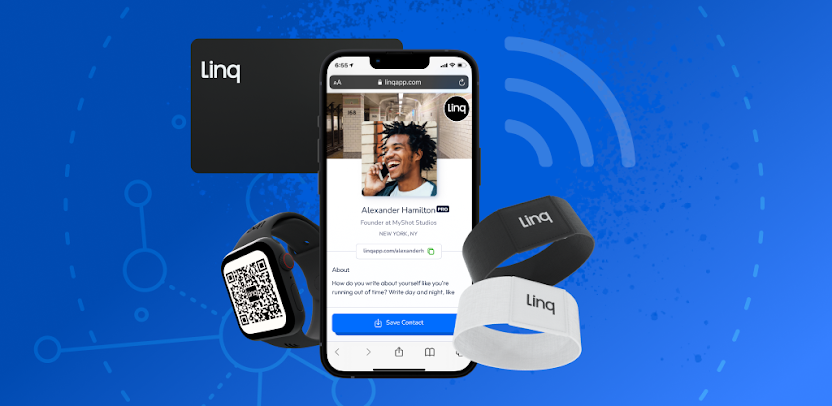
Linq is another sales-focused digital business card provider. You’re not getting the crisp design and app with Linq, but what you do get are some pretty cool sales features HiHello doesn’t offer. Linq helps you turn conversations into sales pipeline opportunities with AI-powered follow-ups, an in-built business phone, conversation recording and AI summaries, and a solid CRM infrastructure for quality contact management.
However, if you want these features, you’re going to have to also manage a much heavier and slower app when it comes to networking. It’s also more complex, requiring more onboarding for teams to get to grips with its numerous tools. It can still give you a basic digital business card for free, but where it really shines is helping you capture, manage and close leads.
Comparing Linq to HiHello
| Feature | Linq | HiHello | Best Option |
|---|---|---|---|
| Easy to use and learn | Has a solid UI but can be more complex due to its features. | A more intuitive and simpler app. | HiHello |
| Affordable for individuals and teams | Slightly more expensive than HiHello. | Is a bit cheaper than Linq. | HiHello |
| Automation around follow-ups after sharing business cards | Has strong built-in automation, including an integrated AI phone system and follow-up suggestions. | Has a strong contact management platform but not much automation or AI support. | Linq |
| AI-powered contact capturing and enrichment | Has AI-powered contact enrichment when scanning other cards. | Doesn't offer the same level of AI enrichment. | Linq |
| Native CRM integrations | Has deep CRM integrations with two-way syncing for some major platforms. | Has a lot of strong integrations but not as much automation. | Linq |
| A physical NFC-enabled card | One of Linq's core strengths, with a range of sophisticated card options. | Need to rely on third-party cards which may not align perfectly. | Linq |
| Strong team management features | Designed for sales teams but isn't as fleshed out as HiHello. | Offers more admin controls over design and ongoing changes. | HiHello |
| Great platform depth for overall networking | Has great depth with physical and digital cards, CRM integrations and a business phone number. | More focused on the digital business card so can feel less in-depth than Linq. | Linq |
| In-depth analytics and performance tracking | Designed for sales pipeline tracking with deep ROI analytics for teams and individuals. | Has engagement analytics across cards but not as in-depth as Linq. | Linq |
Cost of Linq vs HiHello
| Provider | Free Tier | Premium | Business | Enterprise | Free Trial |
|---|---|---|---|---|---|
| Linq | Basic digital card features | $7.49 a month | $6.99 a month | Custom pricing | No free trial |
| HiHello | Basic cards with limited features/scans | $6 a month | $5 per user a month (5-user minimum) | Custom pricing | 14-day free trial on Business |
Linq is a bit more expensive than HiHello, because of its additional lead capture and sales pipeline features. These AI integrations and workflow automations need to be utilized often to justify paying the extra $1.50 to $2 a month.
Our preference: HiHello for having a lower overall cost. Linq if you’re going to be doing a lot of lead capture.
User reviews of Linq vs HiHello
| Provider | G2 | App Store | Google Play |
|---|---|---|---|
| Linq | 4.8/5 from 554 reviews | 4.9/5 from 12,196 reviews | 4.6/5 from 2,658 reviews |
| HiHello | 4.6/5 from 845 reviews | 4.9/5 from 40,581 reviews | 4.8/5 from 14,336 reviews |
Linq has very similar overall ratings online as HiHello. It’s hard to differentiate them when it comes to user experience. Linq probably gets more appraisals for its lead capture capabilities than its digital business card though. Still, it’s clear that both brands provide a usable digital business card that works well for professionals.
Final verdict
You should only consider Linq as an alternative to HiHello if you’re going to utilize its numerous sales pipeline features. This can be a powerful tool for the right companies, but for others just wanting simple networking with digital business cards it could be unnecessarily complex.
Should You Choose Blinq as an Alternative to HiHello?
Most companies and individuals will benefit from choosing Blinq over HiHello, but it depends on your specific needs and priorities. Blinq’s features, pricing and capabilities need to match your business needs. While this is often the case, it may not be in your situation.
Researching these two options can help you make an informed decision. We want to give you a head start, so we’ve outlined some situations below where you may want to choose Blinq. There are also some where you may want to choose HiHello.
| Situation | Best Choice | Why? |
|---|---|---|
| You're looking for the highest-rated digital business card. | Blinq | Blinq is the leading provider on G2 and the App Store. |
| You want a simple and easy-to-learn platform that your team can use within minutes | Blinq or HiHello | Blinq and HiHello are the top two easiest apps to use on G2. Blinq is slightly easier according to users. |
| You want your digital business card to have AI features for enriched lead capture and follow-ups. | Blinq | Blinq has AI data enrichment and AI-powered conversation summaries. HiHello offers contact enrichment but no AI conversation summaries. |
| You want to try out your digital business card before committing budget. | Blinq | Blinq offers a 30-day free trial of its Business plan, against HiHello's 14 days. |
| You have limited budget to spend on your company's tech. | Blinq or HiHello | Blinq and HiHello Business plans cost the same amount and provide cards for your entire team. |
| You want the option of a physical card as well as your digital one. | Blinq | You can also purchase an NFC business card with Blinq. HiHello doesn't offer this. |
| You just want something you can share simply and quickly with people you meet. | Blinq | Blinq is slightly faster and easier to share across various methods than HiHello. |
If you’re interested in learning more about Blinq as your company’s digital business card provider, you can get in touch to book a demo and discuss next steps. We also have some helpful resources if you’re researching the best tools for you. Read our detailed comparison of the top rated digital business cards in 2026. You can also learn more about Blinq’s AI Notetaker, which can help you turn in-person conversations into business opportunities.
Frequently Asked Questions
Why would someone look for HiHello alternatives?
HiHello is one of the top digital business cards available but it doesn’t always give individuals and teams what they need for their networking. You might seek alternatives because you want a more specialized provider with stronger lead capture, workflow automations, AI integrations and deeper CRM syncing. You may also look elsewhere if you want to cut costs or use a faster, more capable networking app with offline sharing, such as a physical NFC-enabled card. Other providers, such as Blinq, provide all of this.
What are HiHello’s limitations as a digital business card?
HiHello has a lot of limitations when it comes to networking with a digital business card. It doesn’t offer a physical NFC card or equivalent hardware to complement your digital profile. It also lacks sales workflow and automation features, including AI-powered contact enrichment, AI note taking and supported follow-ups. The free tier is also limited, with many of HiHello’s advanced features behind paywalls.
Which HiHello alternatives are better for individuals?
Blinq is one of the best alternatives to HiHello for individuals. Blinq is easier to use and provides more features for networking, including AI-supported lead capture. It also has a slightly stronger free tier for individuals, which provides more value than HiHello. Wave is another good option, thanks to its no-app approach. V1ce can also benefit individuals who are happy to pay extra for an executive-style physical card.
Which HiHello alternatives are better for teams?
Blinq is one of the best HiHello alternatives for teams. The AI contacts app has more advanced team management tools, workflow automations and better overall scalability. Blinq has a solid centralized admin for controlling business card designs, role-based permissions, bulk distributions and team-specific templates. Blinq also offers detailed performance tracking and analysis, helping you optimize cards for individuals and teams. All these features and more are why it’s the best digital business card for teams. Other good options include Popl, if you want to focus on sales teams, and Haystack, if you want stronger enterprise governance and protections.
Which HiHello alternatives have physical NFC business cards?
While HiHello supports NFC sharing, it doesn’t offer its own physical cards. This can make things trickier. If you want a provider that complements your digital profile with an NFC card, you may want to choose V1ce, Linq, Wave or Blinq instead. V1ce offers the most premium materials but costs more. Linq, Wave and Blinq physical cards are much more affordable and still provide a professional aesthetic.
Do digital business card platforms offer analytics and tracking?
Most modern digital business card platforms offer detailed analytics and tracking. However, these features are usually locked behind paywalls. HiHello, Blinq, Popl, Linq, Haystack and more offer informative data for teams and individuals, including card views, saves, scans and engagement. Blinq also offers sales pipeline tracking and ROI attribution with its event lead capture tech. Wave is one of the few providers offering analytics and tracking in its free tier.
Are there free alternatives to HiHello?
You can use HiHello for free, but its tier is a bit limited when it comes to card design, sharing and overarching features. Blinq and Wave offer much better free tiers than HiHello and are great alternatives. Blinq has one of the best free tiers for individuals, giving you two digital business cards, unlimited sharing and additional services (email signatures and virtual backgrounds). Wave is also very good with its free analytics.
Which alternatives to HiHello have more AI integrations?
HiHello doesn’t focus on AI integrations and support. If you want AI-powered features, such as contact enrichment and automated follow-ups, you’ll need to look at alternatives. Linq and Popl provide AI integrations, such as data enrichment for any contacts you save. Linq also has AI-powered follow-ups and conversation summaries.
Blinq is one of the best digital business cards for AI support. It offers AI data waterfall enrichment, providing >95% accuracy for any of your contacts’ missing data. You can also capture conversation summaries with Blinq’s AI Notetaker.
Which HiHello alternatives offer the best value for money?
HiHello offers a competitive price and tends to be more affordable than most other providers. However, if you are looking for the best value for money, there are some alternatives. Wave and Blinq offers two of the best free tiers for individuals with tight budgets. They bundle more features into these free plans than HiHello. Haystack is also around half the price of HiHello for teams.
Which platform is easiest to use compared to HiHello?
HiHello is quite easy to use but you might find Blinq or Wave better for simpler and faster sharing with minimal setup. Blinq is considered the easiest app to use on G2, but HiHello is right behind it. Wave doesn’t require an app, which can make setting up harder and slower.