

.avif)



People have traced business cards all the way back to 15th-century China, when 'visiting cards' were used by aristocrats for introductions and meetings. Trade cards came into circulation in Europe during the 1600s, followed by calling cards shortly after. Considering they've been around in some form for the last seven centuries, it's fair to wonder if business cards are still relevant.
Few things last that long without losing their place. Business cards have shed some of their dominance over the centuries, but they still play an important part in professional networking. What's really changed is how we use them and the form they take.
Let's take a closer look at these historic and seemingly timeless modes of networking. It's not just a question of relevance anymore. It's about understanding why and how people use them, and how you can get more out of modern business cards for building connections.
Key Takeaways (TL;DR)
- Business cards can be physical, digital or a combination of the two.
- People still use business cards for networking, but sentiment among professionals is mixed.
- Around 88% of paper cards are thrown out within a week, which adds up to close to 8 billion cards in the trash each year.
- More people are opting for digital business cards, embracing a more sustainable and feature-rich approach to networking.
- Digital business cards remove a lot of the frustrations people have with paper cards, including waste and outdated details.
- You can make your business card more effective by going digital, adding it wherever possible, and keeping it up to date.
- Blinq is the market leader in digital business cards and event lead capture on G2.
What is a business card?
Traditionally, a business card is a physical card used by professionals for networking. These days people use physical or digital business cards, and sometimes both. A business card doesn't just hold your contact details. Those matter, but it also presents your professional persona and brand, individual or company, to people in your network.
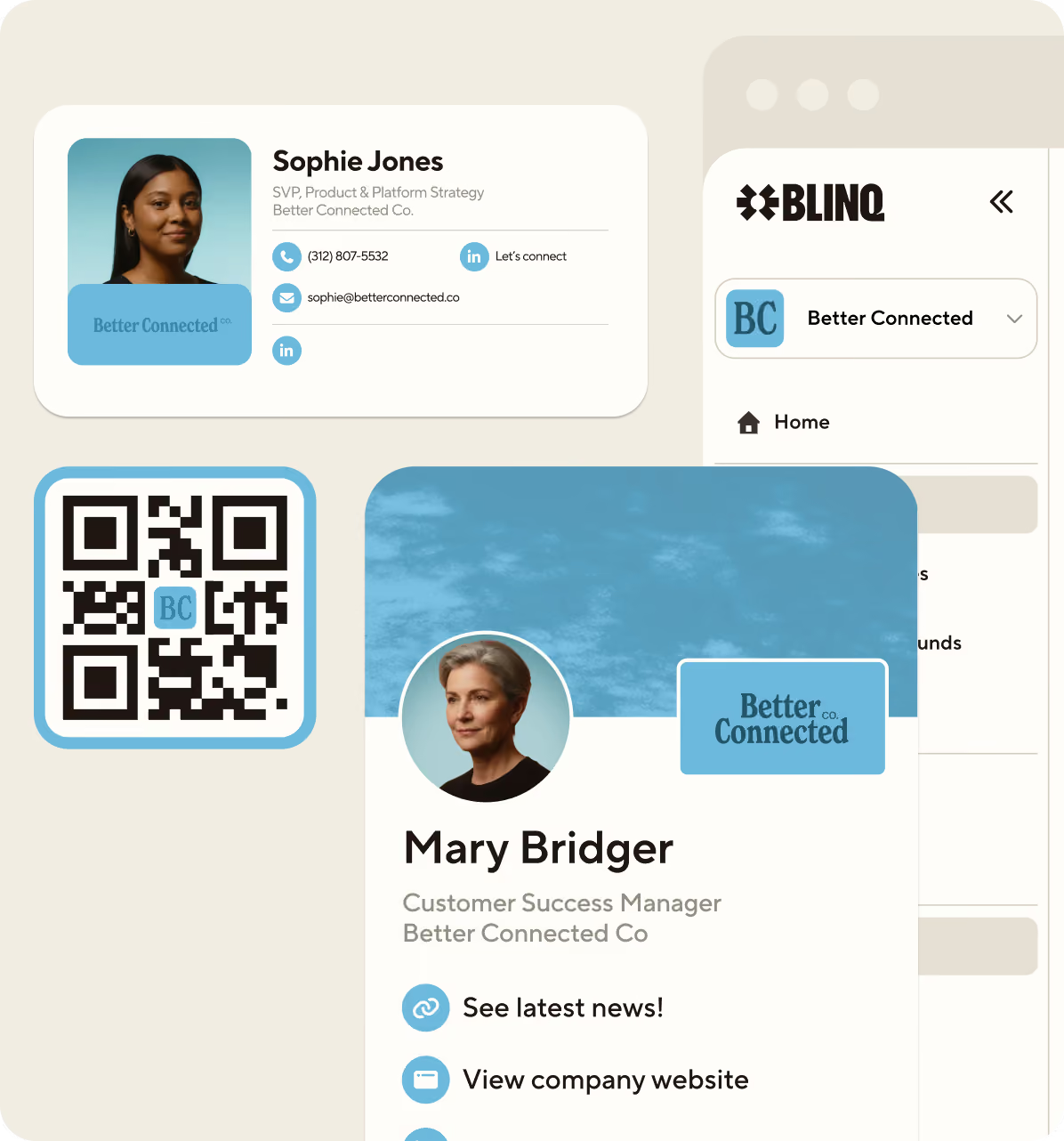
Digital cards often carry more information than physical ones, including links to websites or portfolios, social media buttons, profile photos and company logos. But whether a business card is from the 15th, 17th, 19th or 21st century, the purpose stays the same: to foster connection between professionals and help them build brand recognition and consideration.
What are business cards used for today?
Business cards serve the same purpose today as they have since they were first invented: connecting people with people. They're a great way to introduce yourself to new colleagues or prospective clients. They help you stay in touch with people you meet at industry events, or even just in your local coffee shop. And they give you an affordable, easy channel for marketing yourself, your products and your services.
In high-volume settings like conventions, business cards act as a practical lifeline, allowing quick exchanges of information without the need for technology. They also create a tangible connection during networking events, which matters in cultures that value formality and tradition.
Ways to use your business card
Here are some common, and slightly more creative, ways to bring your business card into your professional world.
- Sharing it at conferences, trade shows and other industry events.
- Exchanging it after meeting a potential client for coffee.
- Including it within your project proposal or job application.
- Sharing it with keynote speakers or presenters at trade shows to connect.
- Handing it out after one-on-one meetings or client presentations.
- Leaving it at partner businesses to help foster future work.
- Handing it around your local community to help build connections.
- Including it within the packaging of products you ship to customers.
- Sticking it on community bulletin boards.
- Including it within welcome packets for new clients, tenants or residents.
If you have a digital business card or an NFC-enabled physical card, you can enjoy even more uses, such as:
- Linking people to a digital profile that can function as your resume.
- Directing potential clients to core service or product pages online.
- Sharing promotional videos or photos.
- Reinforcing your professionalism with crisp, memorable branding.
- Sharing a link to a calendar where people can set up meetings.
- Promoting your work through featured customer testimonials.
- Including links to social media channels so people can connect with your brand.
- Turning impromptu conversations into long-lasting connections by tapping your phone against someone else's.
Do people still use business cards these days?
Yes and no. It wasn't long ago that business cards were given to most employees and handed out frequently at events, dinners, trade shows and other professional and personal interactions. Even event lead capture often relied on collecting business cards and dropping them in a glass bowl to review after the event.
Don't believe me? Read my article on the evolution of event lead capture.
But these days, a lot of professionals are forgoing business cards for more digital ways to make meaningful connections. Peter Boyd from PaperStreet Web Design said in a Forbes article that he hadn't "handed out a business card in over two years." Instead, he relies on email sharing and immediate contact to keep conversations going. Peter worries about business cards being "tossed, dropped, lost or just not referenced again," which can stop networking in its tracks.
Other professionals, such as Adam Draper from Gladiator Law Marketing, "appreciate business cards in situations they make sense." Alex Quinn from UADV, on the other hand, believes "business cards should always be handy, especially for audiences that tend to keep it old school and aren't on the social media wave."
Sentiment really is mixed on this topic. Jeff Tan from Dentsu Aegis Network insisted that business cards were still a meaningful way to connect with people in that same Forbes article. "Perhaps I'm an old-school, new-generation millennial, but I still love exchanging business cards ... There is something still meaningful and personal in giving and receiving cards when meeting people."
Martha Madero Gonzalez from GROU Crecimiento Digital highlighted how business cards help create unison between employees and companies. "Cards give people a sense of importance and an easy way to connect. It's not only a way to share information with a colleague, but it's a signature kind of tool for your employees to feel like part of your organization," she told Forbes.
So yes, business cards are still very much used in modern professional environments. But you can't expect everyone you meet to brandish a physical card, because recent data shows the approach is changing.
How business cards are being used in 2026
Business cards have been in transition for years, moving from predominantly physical cards to digital versions with more capabilities. Physical cards are still quite prevalent, but they don't have the same impact anymore. CreditDonkey reports that of the roughly 10 billion business cards printed each year, around 88% are thrown out within one week.
What's going on? Around 63% of people who get handed a business card end up throwing it away because it isn't immediately relevant. But how often do you immediately need someone's services? I've thrown away physical cards before. Chances are you have too. My reason was exactly that. I couldn't justify holding onto it when it wasn't serving an immediate purpose.
This isn't good for networking, building your brand, capturing new clients or supporting the environment. It's also one of the reasons digital business cards have become so popular. According to Research Nester, the digital business card market has surpassed US $215 million. It's expected to grow at a compound annual rate of over 12%, passing US $680 million by 2035.
While paper cards lose their effectiveness, digital ones give professionals a way to network better. Features like instant contact sharing and dynamic updates, plus the ability to add links to web pages, social media buttons and rich media, help professionals get more from their cards than ever. Performance tracking also lets people optimize their cards and see which parts resonate most with recipients.
Who's still using business cards?
Plenty of professionals still use business cards, in paper or digital form. Kristopher Jones from LSEO.com told Forbes that he believes "business cards can still make a powerful impression on prospective clients." The people using them tend to work in industries where in-person interactions happen often.
Here are some examples:
- Real estate agents
- Event marketers
- Lawyers
- Financial advisors
- Freelancers
- Creators
- Art dealers
In all of these industries, a digital card (or at least a hybrid approach) gives people more capability to support their work. Take real estate agents. You could hand out physical cards at open homes, or use a digital one that also links to a virtual tour, other property listings or a calendar for scheduling viewings. A freelance writer could link to a portfolio and social channels, photographers can add imagery for extra exposure, and art dealers could include a link to their sales and upcoming auctions.
Do business cards still work when networking?
Physical business cards can still have an impact, especially if you lean into a creative, memorable design. "Business cards that are creative and stand out aren't only sticky and memorable, but they get shared with more and more people, continuing to promote your business and brand," said Ahmad Kareh from Twistlab Marketing to Forbes.
But if you're going to invest in tangible cards, don't rely on them alone for your networking. Leila Lewis from Be Inspired PR insists that "a business card alone isn't enough. There should always be a follow-up via email or social media." That's where a secondary digital profile helps, such as a dynamic email signature where you can share extra links, information and CTAs with recipients.
Alternatively, it might be time to switch to a digital business card. Remember that 88% throw-away statistic? That's around 8 billion business cards in the trash every year. It doesn't scream effective networking.
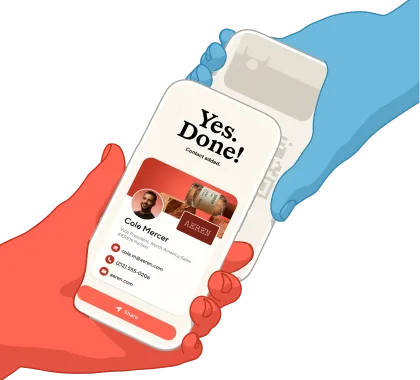
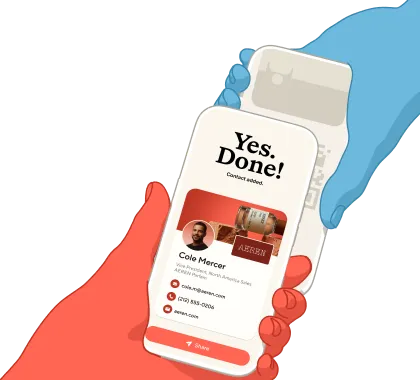
Digital business cards can work much better in both formal and informal settings. They're shareable in various ways, including tapping your phone against someone else's, using your Apple Watch, creating a text widget or generating a QR code. You could also pair your digital card with a slick NFC business card that looks great and still offers that traditional interaction for more old-school professionals.
And they don't end up in someone's wallet and eventually their trash. They get saved straight to their phone. You should still follow up afterward, but at least they'll have your card right there to bring context to your message.
Why paper business cards are declining
People simply don't interact with paper business cards the way they used to. We have far more digital avenues for connecting now. You can rely on email or platforms like LinkedIn, and when someone's searching for a service, they can do it online instead of fishing through a stack of cards.
For these reasons and more, paper business cards aren't driving the same follow-up frequency. I've already covered how people are more likely to throw out a paper card than hold onto it. There are other problems people run into, such as:
You can't update the details
Once you hand over a paper business card, you can't reach that person if your address or phone number changes. Suddenly they have outdated contact information and can't get hold of you.
Extra work for recipients
Say someone doesn't want to hold onto your card but would still add your details to their phone contacts. That takes time and effort a lot of people don't have.
Annoying to carry around
How many paper cards can you realistically carry at once? Most days you're not handing out more than one. But at trade shows and networking events, when you're meeting a lot of people, carrying a stack of cards gets annoying.
They're not infinite
You can run out of business cards at an event. What then? You fall back on giving people your email or taking theirs, and you lose the impact you had when you still had cards to hand.
Costs add up
You typically pay upwards of $50 for a box of business cards (source: Vistaprint). That can jump to over $1,000 for special designs or materials. When you run out, you pay again. When your details change, you pay again. It adds up fast.
Environmentally unsustainable
Sustainability now factors into a lot of business decisions. Paper cards don't align well with those values, especially when billions are thrown out each year. A lot of professionals want digital tools that put less strain on the planet.
Why having a business card is still important
Despite the move away from physical cards, having a business card is still a great way to present yourself and your brand. We meet a lot of people in our busy days. We can't be expected to remember them all, or even know how to get back in touch.
Sharing a business card is symbolic. It shows the other person that they matter and that you're interested in an ongoing professional relationship. It also gives you a chance to share your own work and professionalism. Networking is how many of us turn what might be inconsequential conversations into important meetings, and that's harder to do without something that leaves a lasting impression.
"Are business cards as useful as they once were? No. But they still have a place in this world," Aidan Cole from nTuitive.social told Forbes. "You can meet someone face to face and connect on social media, but odds are, you are instantly lost amongst the thousands of other 'friends' or 'followers.' A business card is a physical reminder of who you are. It can also spark a memory of the time and place you met, separating you from others."
That doesn't mean resorting to physical cards. We have a few great digital alternatives that can work even better.
Modern-day alternatives to paper business cards
There are numerous alternatives to printed business cards. Here are some that professionals are turning to:
- Digital business card – An online profile, usually shared between phones, that automatically creates a contact in someone's mobile.
- NFC business card – A single physical card with a sleek design and durable material. Tap it against someone's phone and it shares your contact details and sometimes a digital profile.
- Dynamic email signature – A customizable email signature with branding, links, social media buttons, rich media, CTAs and promotional banners.
Some professionals opt for one of these, but many use all three. That creates a networking ecosystem that helps them connect across a variety of channels.
Why people are choosing digital business cards over paper ones
Digital business cards remove a lot of the frustrations people have with paper cards. They also offer features individuals and companies use to present themselves and promote their services better. So many people already network from their phones, and digital cards fit that behavior.
Here's how digital cards remove paper-card problems while making networking more intuitive.
How to make your business card more effective
If you want to keep using a business card, or start, here are some tips for making it more effective from various professionals at Blinq.
1. Go digital
This first one is from me. For all the reasons above, the time for paper cards has passed. That version of the business card is no longer relevant, but you can still make an impact with a digital one. And if you're attached to the old-school approach, an NFC business card gives you something tangible to present in conversations while still delivering all the benefits of a digital card.
2. Put your card wherever possible
Digital cards are shareable in multiple ways, but one of the most versatile is the QR code. You can add it almost anywhere: presentation decks, your LinkedIn account, your email signature and conference badges. You can even print it onto bulletin boards, bus stops, flyers and onboarding booklets. If you use a virtual meeting background, add a QR code there too.
3. Update it regularly
Out-of-date contact details almost eliminate the chance of someone following up, so keep your information current. With a digital card, you can also update headshots, company branding, promotional banners, website links and CTAs whenever you need to.
4. Put time and effort into your design
Around 72% of professionals judge a company or individual on the quality of their business card (source: Statistic Brain Research report), which shows how much design shapes a first impression. "To me, having a quality business card equates to having a successful business," Chris Ake of Grand Apps told Forbes. Don't skimp on design. Devote the time, money and effort to make your card stand out for the right reasons.
Should you get a business card with Blinq?
Blinq is the AI contacts app for people who meet people. It also helps teams capture, enrich and action every relationship that starts face to face. The moment you meet someone, you can start building the relationship with Blinq.
Individuals can create a digital business card, email signature and virtual background for free, or subscribe for more features and customizations. Companies can pay a small monthly fee for team-wide digital business cards with automated updates and provisioning, centralized admin and greater branding control. You can also buy pre-designed or customizable NFC cards with branding.
Blinq isn't for everyone, but it does have 4 million users at 500,000 companies, including 93% of the Fortune 500. It's also number 1 in digital business cards and lead capture on G2. If you're unsure, you can create a Blinq digital business card for free to test it out. You could also read my article on the best digital business cards.
Frequently asked questions
Are business cards still worth it?
For many professionals, business cards remain worthwhile, especially those who prefer a tactile experience. The case is strongest if you do a lot of in-person meetings, like networking events, trade shows and client meetings. Digital business cards tend to be more useful than paper ones, since they offer more versatility whether you're sharing in person or virtually.
Do people actually keep the business cards you hand out?
Often, no. Around 88% of printed business cards are thrown out within a week (source: CreditDonkey), and roughly 63% of people bin a card simply because they don't need that service right now. A digital business card sidesteps the problem. Instead of a piece of card that gets lost or tossed, your details save straight to the other person's phone, so they still have them when the need does come up.
When should you hand out a business card?
It's best to hand out your card after you've built some rapport. Wait until the conversation feels meaningful, not just small talk. Handing your card over right away can create the wrong impression, like you're forcing it or treating the conversation as transactional.
What information should be on a business card?
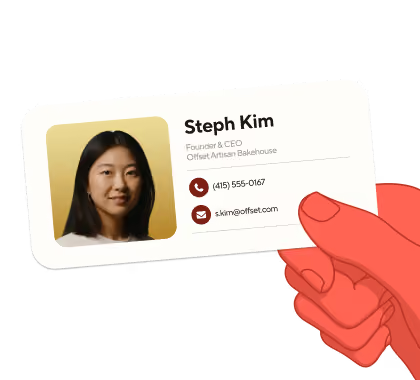
Always include the basics: your name, job title, company name and contact details (email and phone number usually suffice). Paper cards have limited space, but you can sometimes add a logo, tagline or QR code. Digital cards offer more room and flexibility for richer elements, like links to core company pages, social media profiles, a promo banner and a headshot.
Are digital business cards better than paper business cards?
Digital cards offer more features and flexibility than paper ones. That doesn't automatically make them better, since some professionals prefer making a tangible impression. If you want multiple sharing methods, instant updates, stronger branding, performance reporting and the ability to add links and rich media, a digital business card wins. If you just want a physical card to exchange contact information, a paper or NFC card might be enough.
Do digital business cards make a better first impression than paper?
It depends on the moment. A well-designed physical or NFC card can feel premium and memorable in person, which is why some professionals still swear by them. But for most people a digital card makes a stronger lasting impression. It shares instantly by tap or QR code, carries richer details like links, video and a headshot, and never ends up forgotten in a wallet. Plenty of professionals get the best of both by pairing an NFC card with a digital profile.
Are NFC business cards worth it?
Professionals who network frequently and value a hybrid approach often find NFC-enabled cards worthwhile. You can instantly share your information to someone's phone, including contact details, website links, social channels, promos and CTAs. You don't have to carry a stack of cards, but you keep that traditional, personal touch. You tend to spend more upfront, but printing costs disappear. They're also more environmentally sustainable and present you in a tech-savvy light.
What is the future of business cards?
The future of business cards is mostly digital, with some hybrid approaches involving physical cards. We've moved quickly into a deeper digital age, but people still value tangibility. Features like QR codes, NFC technology and digital contact sharing are making business cards more interactive and measurable. Expect most professionals to move away from paper cards and embrace NFC cards paired with a digital profile.