

.avif)


The best tips for networking events have almost nothing to do with working a room. After enough events spent not knowing a soul, you start to see the pattern: the people who build a real professional network play a longer game, with fewer conversations and far more follow-through. This guide pulls together 25 tips you can use at an event tomorrow, drawn from peer-reviewed research and people who network for a living.
Key Takeaways (TL;DR)
- Volume is the wrong goal. A few conversations you'd happily continue next week beat a stack of contacts you'll never message.
- Do three things before you arrive: write a 15-second intro, pick three people you want to meet, and prepare two real questions.
- Treat every conversation as the start of a friendship, and give before you ask. An introduction or a useful link earns more trust than any pitch.
- Match your move to the room. A conference, a trade show floor, a video call, and an event you'd rather skip each reward a different approach.
- Capture the context while it's fresh, then follow up within 24 to 48 hours with one specific detail from the conversation.
- Relationships compound. Staying visible between events is what turns a single meeting into a network.
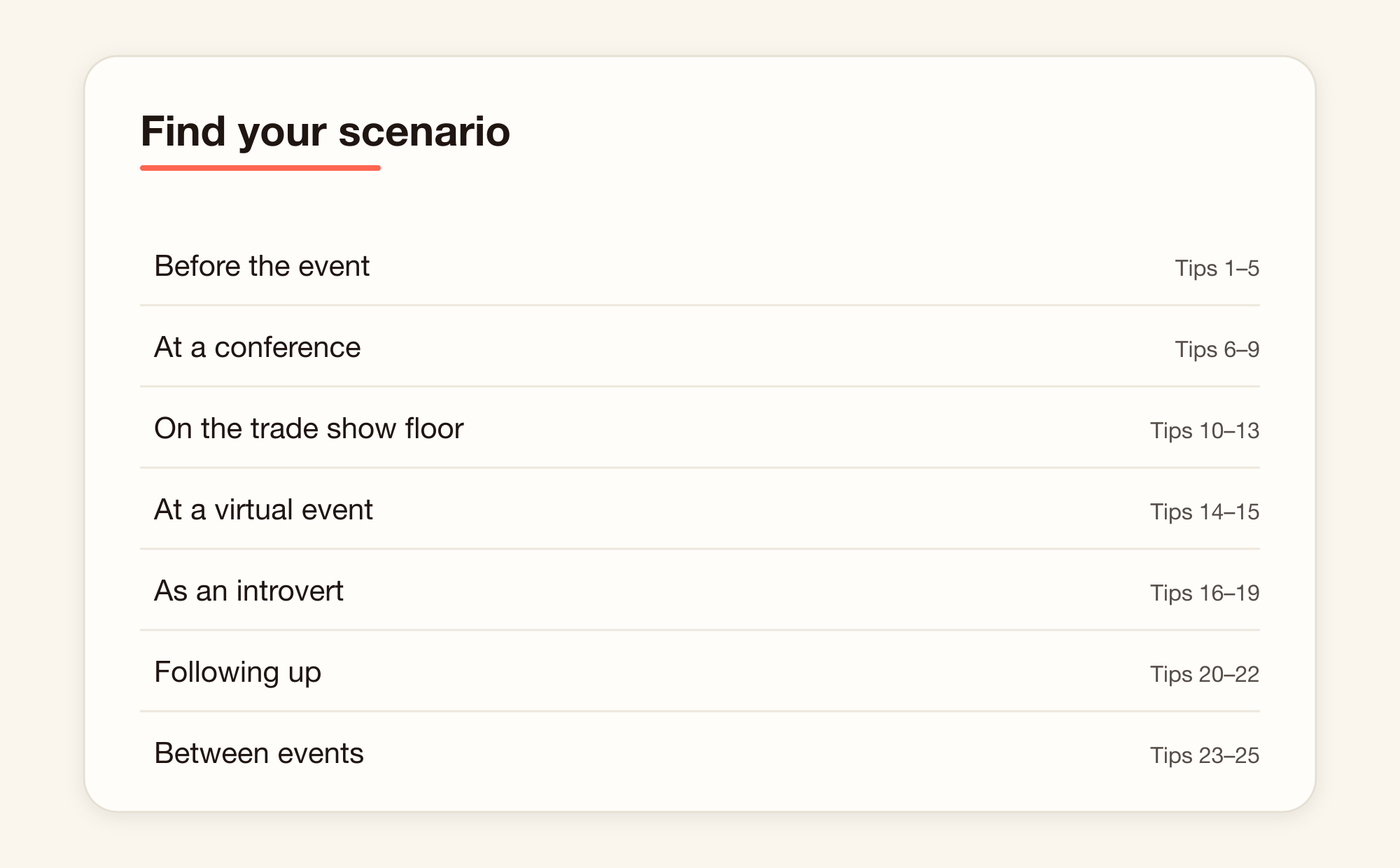
How do you prepare before a networking event? (Tips 1–5)
You can take most of the friction out of networking the night before. Write a three-headline introduction, choose three people you want to meet, prepare two genuine questions, sort out how you'll swap details, and decide what you actually want from the room. Each step takes under ten minutes, and together they trade improvisation for a plan you can lean on when the nerves arrive.
1. Write your top-three-headlines intro. The UC Davis Internship and Career Center teaches a three-part introduction: your name, your role or organization, and the most interesting thing you do in that role (Networking: How to Introduce Yourself). Treat those as your top three headlines, string them together, say it in under 15 seconds, and then ask a question back. Why it works: a short intro gets you off the stage fast, and the question you ask keeps things moving.
2. Pick three people you want to meet. Scan the attendee list or speaker lineup and choose three names before you arrive. Why it works: a specific target turns a room of strangers into a short to-do list you can actually finish.
3. Prepare two genuine questions. Ones you actually want answered, about their work, their booth, or their talk. Why it works: people relax and open up when you're curious about them, and stiffen when you launch into a pitch.
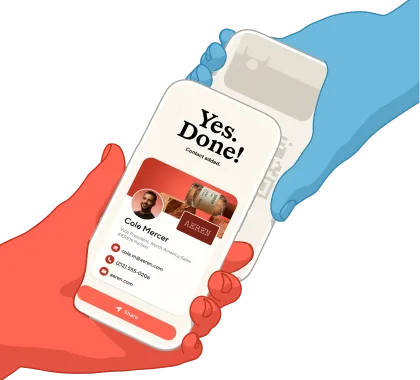
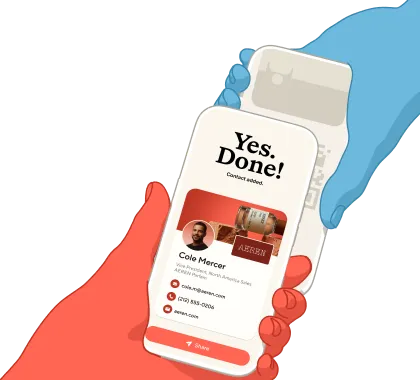
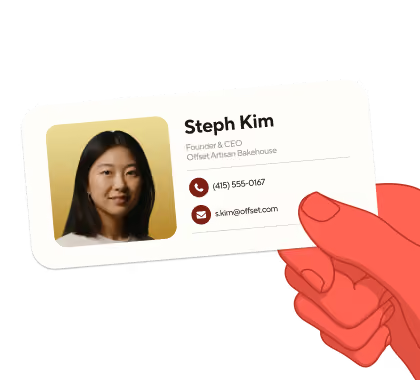
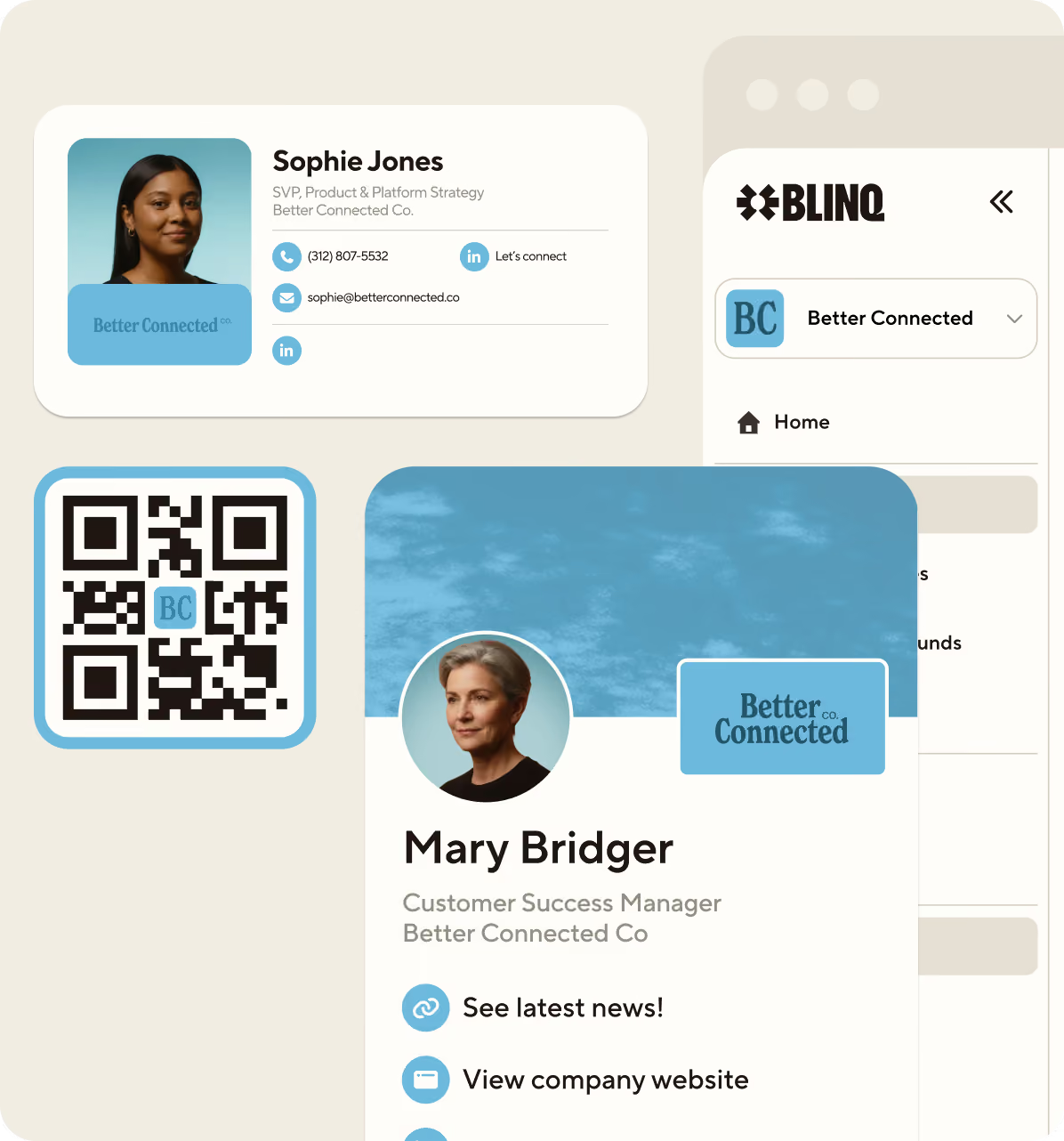
4. Set up your contact exchange before you leave home. Sort the logistics tonight so tomorrow's conversations stay conversations. A digital business card takes a few minutes to set up, and something like Blinq lets you swap details and the context of how you met in seconds, without the other person needing to download anything (free plan). Why it works: a five-second swap means the best moment of a chat is never spent spelling out an email address.
5. Decide what you want from the room. Walk in wanting to get to know people. That one shift makes conversations easier and the relationships more durable, and it takes the pressure off before you arrive. Why it works: people can feel the difference between being met and being handled, and they respond in kind.
How do you network at a conference? (Tips 6–9)
Conferences run on shared moments. You and the person next to you just sat through the same talk, so the content gives you a way in and a reason to care about each other's take. Relationships here form around ideas, and most of your best conversations happen one-to-one between sessions rather than in the keynote crush. Open with the room, keep your intro short, stay curious, and leave every conversation on a warm note.
6. Open with the room. "What did you make of that talk?" lands better than a job title. When the "so what do you do?" moment comes, give your three headlines and hand the conversation back. Why it works: shared context is the fastest route past stranger status.
7. Treat them like a future friend. Ask what they're working on and follow the thread that interests you. The School of Life makes the point that no subject is shallow in itself: depth comes from how you talk about it. Why it works: people work out fast how much you actually care, and they respond in kind.
8. Give before you get. Make the introduction or send the link while you're still standing there. Why it works: a favor done on the spot earns a reply the same evening, which gives your follow-up a live thread to land in.
9. Leave conversations on a warm note. "I set myself a goal of meeting three new people tonight, but I've really enjoyed this. Can I grab your details?" Why it works: the last 20 seconds of a conversation set the tone for the follow-up message you send later.
How do you network at a trade show? (Tips 10–13)
A trade show floor is busier and more transactional than a conference. Conversations are shorter, you're often either selling or being sold to, and names blur together by mid-afternoon. That changes the job: find the quieter windows, qualify quickly, be genuinely useful, and capture the context on the spot before the next conversation starts.
10. Work the quieter windows. The first hour and the last hour are the calmest, and the people still on the floor then actually want to talk. Why it works: conversation quality climbs as the foot traffic drops.
11. Ask what brought them to the show. Why it works: the question surfaces the project or problem behind their visit, which gives you something real to note down and follow up on.
12. Capture the context in the moment. Jot one note per person before the next conversation starts, or the details blur together by the afternoon. If stopping to write pulls you out of the conversation, a hands-free AI notetaker like Blinq's summarizes it for you, so you stay present and still remember what was said. Why it works: the note you take in the moment is the difference between "great to meet you" and a follow-up worth replying to.
13. Qualify before you scan. If you're working a booth, ask what someone is solving before you capture their badge, so you have context instead of just a bare name. Why it works: a handful of qualified conversations produce more pipeline than a pile of anonymous scans your team can't follow up on.
How do you network at a virtual event? (Tips 14–15)
Virtual events strip away the coffee line, so you make the side-channel yourself. Turn your camera on, treat the chat like a room, and move one promising exchange into a direct message within an hour of the session ending. Speed matters more online, because attention disappears the moment the call does.
14. Turn your camera on, and mind your setup. Comment, react, and ask questions in the chat and the Q&A. Get the basics right too: good lighting, a tidy background, and the camera at eye level. Why it works: on video, being visible is the equivalent of standing near the coffee.
15. Move one conversation into a direct message (DM) within the hour. Message the speaker with the specific idea you took from their talk, or the attendee whose question you liked, and suggest 20 minutes. Skip "great talk." Why it works: naming the exact idea you'll use shows you were paying attention, which is what earns a reply.
How do you network as an introvert? (Tips 16–19)
If you're an introvert, you network best when the format rewards depth over volume. Aim for a couple of real conversations, arrive early while the groups are still small, give yourself a small job, and take a breather when you need one. Loose connections carry opportunities your close circle doesn't have, and one memorable conversation is how a loose connection starts.
16. Aim for two real conversations. Set the bar at two you'd happily continue next week, and treat everything past that as a bonus. The sociologist Mark Granovetter's research on weak ties found people hear about new opportunities more often through acquaintances than close friends, because loose connections carry information your inner circle doesn't (The Strength of Weak Ties). Why it works: you're playing to your strength instead of renting someone else's.
17. Arrive early, while groups are small. Joining a two-person chat is easier than breaking into a circle of eight. Why it works: what makes joining hard is usually the size of the group, and a small group is easy to slip into.
18. Give yourself a small job. Offer to take a photo, get a round, or introduce two people you already know. Why it works: a small task replaces open-ended mingling with something to do, and it gives other people an easy reason to talk to you.
19. Take a breather before you leave. If you're flagging, step out for ten minutes: the hallway, outside, a quiet corner. You'll come back as your better self instead of forcing conversation while you're drained. Why it works: knowing you can pause makes the whole event lighter, so you stay for the moments that matter.
How do you follow up after networking? (Tips 20–22)
Follow-up is where a contact becomes a relationship, and timing plus specificity does most of the work. Send your message within 24 to 48 hours, mention the exact thing you talked about, and deliver anything you promised. Most of us have written that message in our head and let it slide at least once; the ones that actually go out are the ones people remember.
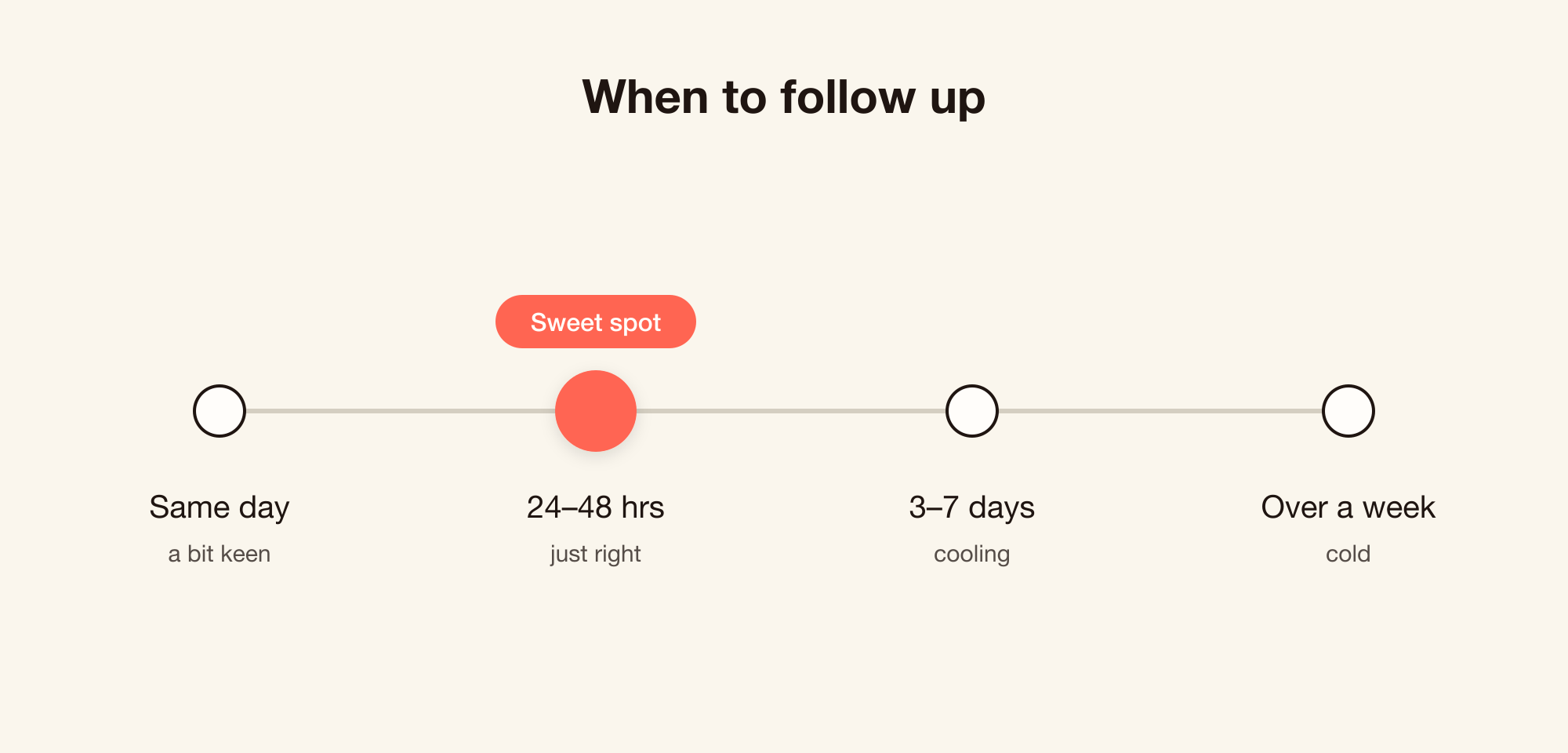
20. Use the 24–48 hour rule. Why it works: you're still fresh in their memory, but you don't look like you sprinted straight back to your laptop.
21. Follow up with specificity, and give first. Reference the exact thing you talked about, the problem they mentioned or the book they recommended, and open with the link or introduction you promised. This is where the note from Tip 12 pays off: if you captured it as you went, the details are already there when you sit down to write. Why it works: specificity proves you were listening, and keeping a small promise fast is an easy way to build trust early.
22. Play the long game. Not every conversation goes somewhere this quarter, and that's fine. Every real relationship you start widens the group of people who know what you're working on and the rooms your name comes up in. Why it works: a wider network means more chances reach you without you chasing them.
How do you keep your network warm between events? (Tips 23–25)
Networks cool between events unless you give them somewhere to live. Keep a light presence on LinkedIn so the people you've met see your name, put a quarterly check-in on the calendar for the relationships you want to keep, and re-open cold threads with the context of where you met. Fifteen minutes a week covers all three.
23. Show your work on LinkedIn. Post or comment a couple of times a week on the problems you're working through. The people you met last time see your name between events, and the ones you'll meet next time look you up before you shake hands. Why it works: a visible profile keeps the conversation going while you're out of the room.
24. Put a quarterly check-in on the calendar. Choose the 10 to 15 relationships you want to keep warm and set a recurring reminder. Send a short note tied to something specific: their launch, their talk, a link that made you think of them. Why it works: a reminder you set once means staying in touch no longer depends on you remembering to.
25. Re-open cold contacts with context. If it's been a year, lead with where you met and what you discussed, then offer something before you ask for anything. Don't over-explain the gap; naming the original conversation restores the thread, and opening with something useful gives them a reason to reply. Why it works: people care far more about the reconnection than the delay.
Why do most networking tips fail?
Most networking advice fails because it optimizes for volume: more handshakes, more badges scanned. Decades of research point the other way. Careers move through relationships, and relationships take warmth and repetition. A pile of contacts with no conversation behind them does little for either. The fix is to treat networking as the start of friendships and let the numbers follow.
Jarrod Webb, Blinq's founder, makes the same case from experience. He points to people he met casually, with no agenda, who became friends first and only later opened doors, from angel investment to career advice he couldn't have planned for. His take for anyone walking into a room of strangers: "Be human, show up, be a real person. The rest takes care of itself."
The research backs this up. Wolff and Moser's longitudinal study in the Journal of Applied Psychology tracked professionals across three annual surveys and found networking predicted both current salary and salary growth over time (Wolff & Moser, 2009). The through-line is consistent: the return comes from the relationships you actually tend.
Good first meeting? Turn it into something more. Create your free Blinq card and be ready before your next event.
FAQs
How do you network if you're shy?
Pick a format that needs less cold approaching: arrive early when groups are two people rather than eight, give yourself a small job so you have something to do, and aim for two real conversations rather than a room full of contacts. Prepare a 15-second intro and two questions in advance. Shy networkers tend to go deeper per conversation, and depth is what turns a contact into a relationship.
What do you say when networking?
Open with shared context ("what did you make of that session?") rather than a job title. When you're asked about yourself, give your top three headlines in under 15 seconds: who you are, the most interesting thing you're doing, and why you're here. Then ask a question you actually want answered. You'll get further by being curious than by reciting a pitch.
How do you start a networking conversation?
Use the room: the talk you both just watched, the food, the booth you're standing at. "What brought you to the show?" invites a story and works in almost any setting. Skip opening with your pitch. You can also start with a small give: point someone toward a session, a booth, or a person they should meet.
What are the biggest networking mistakes?
The most common one is chasing volume, lots of contacts and very few real conversations. Close behind: pitching before you've asked a single question, skipping the follow-up entirely, and following up with a generic "great to meet you" that references nothing specific. Treating people as steps to somewhere else is the mistake that costs you most, because most people can feel it in the first minute.
How soon should you follow up after a networking event?
Within 24 to 48 hours. You're still fresh in the person's memory, but the message doesn't feel rushed. Reference one specific detail from the conversation and include anything you promised, like a link or an introduction. If more than a week has passed, re-introduce yourself with the context of where you met instead of pretending no time has gone by.
How do you keep track of people you meet at networking events?
Capture the context in the moment: one note per person, before the next conversation starts. Save who they are, what you discussed, and the follow-up you promised, then keep the note attached to the contact so it's still there two days later. A free tool like Blinq lets you share your own details and keep everyone you meet, with the conversation attached, in one place, so a 20-second note becomes a relationship you can pick back up.
Is networking still worth it in 2026?
Yes, and the evidence hasn't changed direction. LinkedIn's 17-country survey of professionals found almost 80% consider networking important to career success, and 70% of people hired had a connection at the company (LinkedIn, 2017). What has changed is the tooling: software handles the capture and the reminders now, which leaves the human part, showing up and being a real person, as the whole job.