









.avif)



Rebranding is an important undertaking for companies, often those in a state of transition. When companies elect to go through a rebrand, they take on a considerable task that poses many risks if not done correctly and thoughtfully. There are so many elements to consider, from audience research and updated brand messaging to digital business cards and creative assets.
We had to consider all of these elements and more right here at Blinq when we implemented a rebrand in 2026 (learn more about our new brand). Rebranding Blinq was all about evolving the company to meet its new goals and persona. Like any rebrand, it came with its share of risks and rewards.
As Sarah Ellice-Flint, Brand Lead for Blinq, put it: “The rebrand was about catching our brand up to where the product and the company are heading. We're the AI contacts platform that captures the moment you meet someone and turns it into a relationship you can act on, and we needed an identity that could carry that ambition, not just sell a slicker way to swap details.”
Throughout this process and in the months after we’ve identified the important elements that every company should consider before rebranding. These don’t necessarily tick everything off, but they are the most important ones that we would recommend to any company considering a rebrand.
Key Takeaways (TL;DR)
- A company rebrand involves changing a business’s identity, positioning, messaging or visual image to better align with its goals, audience or market direction
- Companies should invest a lot in the research stage of a rebrand to ensure strong strategic foundations
- It’s important to get all stakeholders buying into a rebrand, especially employees
- Your new brands’ strategy and purpose needs to be defined clearly for a successful rebrand
- Invest a lot of time and resource into nailing down your new brand messaging, tone of voice and creative assets
- Digital business cards can help you promote your new brand and automatically update branding across internal and external networks
- Take time with your rebranding then roll it out as fast as possible
- Audience testing can help you refine your rebrand before launch
- The rebrand should be communicated transparently and clearly to internal and external stakeholders
- Updating legal documents ensure you protect your assets and avoid any negative legal consequences during a rebrand
- Pre- and post-rebrand performance tracking requires identifying core metrics for determining the rebrand’s success
What is rebranding?
Rebranding a business, whether it’s small or a global enterprise, is a strategic decision to tweak or completely change its identity and image. This could involve updating its messaging, visuals, branding, name, tone of voice, target audience, products, services and a lot more.
A rebrand is a marketing strategy and should align with your overarching strategy for your company’s growth. That rebranding strategy might have different intentions. It might aim to capture a new or wider audience. It might look to modernize or redefine a stagnating brand. It could also fix a damaged brand reputation. For some companies, rebranding is all about selling themselves, their products and their services better to their target audience. Ultimately, the purpose of a rebrand is to align all these marketing elements into a clear brand identity, position and message that improves performance.
Why do companies rebrand?
There are numerous reasons why companies rebrand, including natural evolution in an ever-changing market. “The primary reason organizations rebrand is growth,” writes Jim Heininger, the founder of Rebranding Experts, for Forbes. “It’s a strategy that can serve as an accelerator behind your growth plans.”
Companies may also rebrand to modernize their look and offering, target new audiences, improve customer perceptions, reposition themselves in their industry or even enter a new market. According to Forbes, you should always make sure a rebrand is going to solve your problems before starting this process.
When is the right time to rebrand?
The right time might differ depending on your company’s needs and current performance. Typically, the right time is when your current brand is no longer resonating with audiences, seeing consistent growth, representing your company’s ambitions or presenting a desirable future for business goals. It may also be the right time to rebrand if you’ve just merged companies or been acquired by another. The best time will be when this big change feels more supportive of your company’s objectives than your current state.
How to rebrand a company
Now let’s take a look at the most important things you need to do when rebranding your company. As I mentioned earlier, Blinq has recently gone through a rebrand, so we have very recent experience in what can make this process smooth and what can make it bumpy.
Bear in mind that not all of the following elements will necessarily relate to your rebrand plans. Smaller or partial rebrands don’t require such a massive overhaul of your brand’s identity. However, it’s still helpful to be aware of what you might need to tick off along the way.
1. Clarify your new brand’s strategy and purpose
A rebrand without a clear strategic direction is rarely going to be as successful as one with a set purpose. You need to know exactly why you’re rebranding. Part of this direction will be determined by the research you’ve done and the data you’ve analyzed. But it may also come down to changes in overarching ambitions or the market.
For Sarah, the most important part of Blinq's rebrand to get right was its identity. “Designing a brand that knows when to step back,” she said. “Our product sits inside other people's first impressions, so the identity had to feel premium and confident without overwhelming the people using it. When someone hands over their Blinq card, the moment belongs to them, not us. Getting that balance right was the thing I cared about most.”
The key is to think long and hard about your brand’s purpose, vision, mission and values. Re-evaluate the reasons your brand is important and why it’s going to still be important many years in the future. Ensure your internal stakeholders are on board with this revised identity and even get their input as you nail down who you are, why you work, and how you’ll exist now and in the future.
The other thing to consider is what exactly needs changing. A partial brand refresh (i.e. updating logos, colors and voice) may not require a complete overhaul of your brand’s purpose, vision, mission and values. A full rebrand, meanwhile, might need you to completely rethink these four identity traits.
2. Invest a lot in research
When it comes to research versus creative, we all know which one feels the most exciting. But the research stage of your rebrand is actually far more important than the creative. If done correctly, it will guide your entire rebrand. It will also ensure that when the curtain lifts, your changes will have a positive and long-lasting impact on performance.
Research is also where a large chunk of rebranding budget will go. First you need to identify what’s not working. This requires auditing your brand in its current state and finding the gaps in performance. You’ll need to invest in market research, running surveys and focus groups to understand how customers compare you to competitors.
Here are some ways to do this:
- In-person interviews with industry leaders.
- Focus groups with current and prospective customers.
- Conversations with internal and external stakeholders.
- Online surveys sent to employees and customers.
- Detailed reviews of competitors and what they’re doing right and wrong.
- Data analysis of consumer behavior within your industry.
- Analysis of parallel and unrelated industries for inspiration around new ideas and approaches.
Sarah broke down the research and audience testing performed for the recent Blinq rebrand, highlighting how having too many chefs in the kitchen can actually undermine the process:
“We kicked off by dogfooding Blinq with Ragged Edge at SXSW in Austin, then ran customer interviews and kept a small brains trust of customers to sense check decisions along the way.
“But I don't believe great brands come out of design by committee. The more people you invite into creative decisions, the more you regress to average. So we kept the feedback group tight and leaned into work that was divisive over work that was safe.”
3. Prioritize confidentiality
Do you remember when Warner Bros. Discovery revealed its new logo after a merger-fueled rebrand back in 2022? Unfortunately, that new logo reveal was partially spoiled by a mock-up logo getting leaked and ridiculed online, as reported by Fast Company. This is a cautionary tale about the importance of confidentiality when rebranding.
Not all your ideas will make it through the creative process. There’s no reason why these should ever be seen beyond your office. Leaks can disrupt the creative process. They can also undermine the overall impact your rebrand has when you do finally reveal your new brand identity.
While you want to communicate your rebranding openly internally, any shareable assets relating to it are best kept within a tight and trustworthy inner circle. You’ll no doubt have strategized for the ideal time to reveal the rebrand. Don’t let an avoidable leak suck the impact out of this moment.
4. Brand identity: Nail down your name, key messaging and visual identity
Depending on how much you’re changing with the rebrand, you may need to alter a lot of the core definers of your brand identity. The main identity elements you’ll need to consider are:
- Company name
- Core product names
- Key messaging (e.g. manifesto, taglines, slogans etc.)
- Brand voice and tone
- Brand logo, color scheme and fonts
- Overarching design approach
Some of these brand elements are harder to change than others. For instance, updating your brand voice and tone will require you to build out new brand guidelines for design and copy. You’ll also need to produce new marketing materials for various channels.
You may also need to enlist the services of a design agency to help with new logos and overarching designs. These agencies can provide unique creative direction that compliments the purpose, vision, mission and values you’ve cemented during your research and planning.
Changing product names will also result in changes to digital and physical marketing. This brings us to the next important thing to do when rebranding: creative assets.
5. Get your new creative assets in order
Creative assets are a core part of any rebrand. Research may build out the foundations of your new brand, but creative is how you express these foundations to the world. You’ll be surprised by how many assets there are to get in order before launch day. You need to think about physical, digital, internal and external marketing, and your core brand assets.
Certain companies will need more creative assets than others. Here’s a list of the most common types often updated when rebranding.
- A full suite of new logos (e.g. primary, secondary, social icons, vector files, stacked versions etc.)
- Primary and secondary color palettes
- Primary, secondary and website-focused fonts
- Website redesigns for banners, products, landing pages, user interface, call-to-actions and icons
- Social media redesigns covering profile and cover photos, post and story templates, banners and thumbnails
- Digital business card assets, such as logos, colors and profile photos
- Sales brochures, flyers, catalogues and one-pagers
- Pitch decks
- Booth designs and signage, event badges, merchandise and other assets for event lead capture at trade shows
- Product packaging, labels, instruction guides and shipping materials
- Multimedia for ads across social, digital, video and OOH
- Brand launch videos and graphics
- Photography for team headshots, office atmosphere and lifestyle imagery
- Internal templates for presentation decks, proposals, onboarding, invoicing and reporting
- Mobile app design and interface
As you can see, the list can quickly become one of your biggest to go through during the process. Creating the list is almost as important as creating the assets. You don’t want to leave anything off and realize it’s missing at the last minute.
6. Update legal documents
Your company’s legal identity is just as important as its public identity. Both need proper updating during a rebrand. You need to stress accuracy and industry compliance during this process. Failure to do so can result in credibility damage, financial and legal risks, or simply confusion around who and what your brand is.
Outdated details will not accurately represent your company, while contracts and invoices with your old branding will confuse your clients. These may also demonstrate a lack of professionality and organization that can diminish your reputation. You’ll also need to ensure protections for your new intellectual property, maintain clear financial records and align all legal pages (e.g. website and app).
Here are some common legal documents you might have to update during a rebrand:
- Contracts and agreements
- Privacy policies
- Terms and conditions
- Employment documents
- Invoices and receipts
- Trademark registrations
- Licensing agreements
- Vendor agreements
- Insurance documents
- Corporate filings
- NDA templates
- Proposal templates
- Email disclaimers
- Digital business cards
- Website legal pages
Updating all relevant legal documents will ensure brand consistency. It will also demonstrate a strong level of maturity and professionalism to your network.
7. Get a digital business card
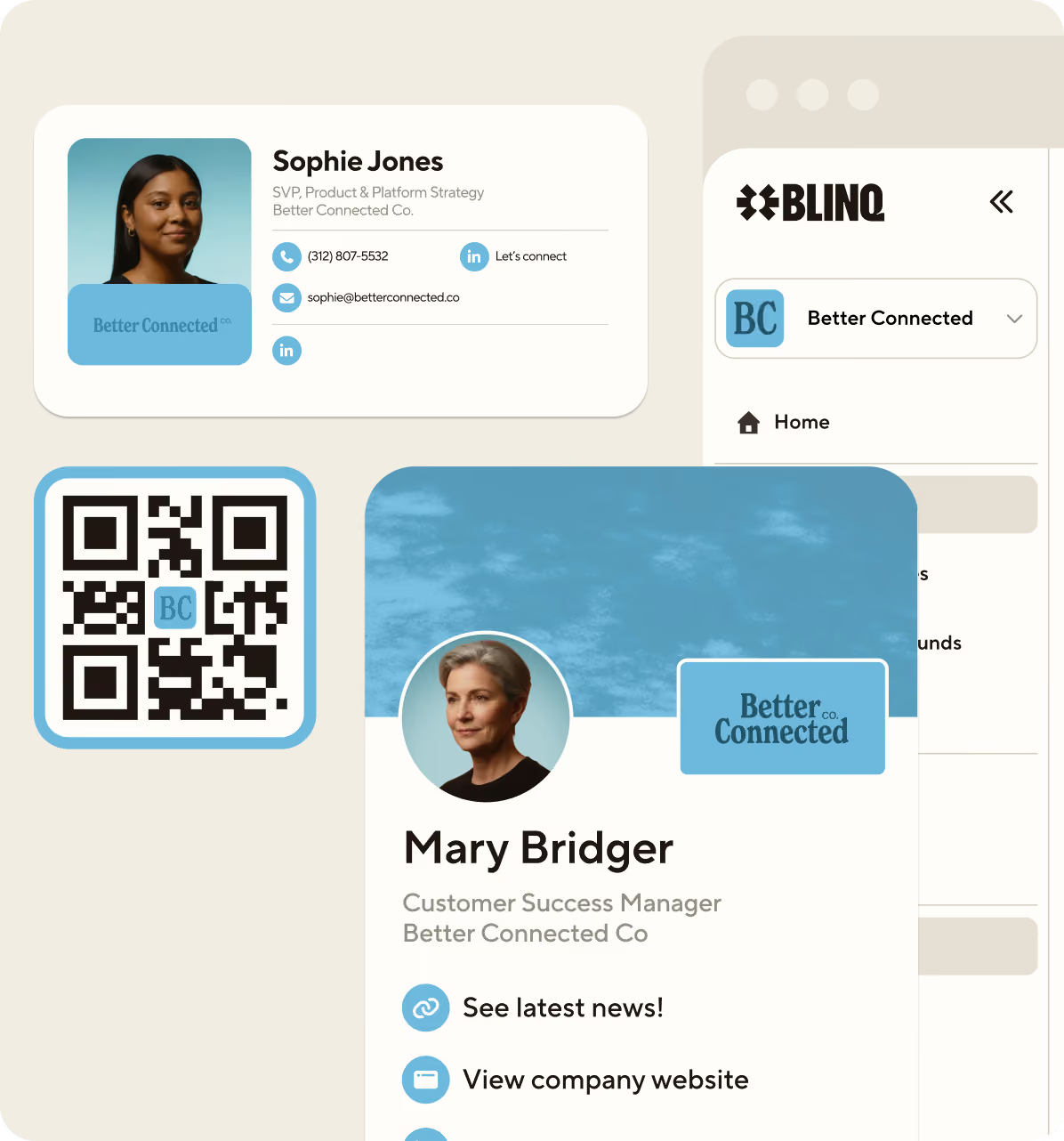
It may seem like a no-brainer, but it’s also an area a lot of companies forget about when rebranding. Digital business cards are a simple yet effective way of promoting yourself and your brand to your network. A rebrand is also a good time to make the switch from outdated paper business cards to more sustainable and dynamic digital ones.
The initial launch of your rebrand will have immediate impact, but that impact will steadily wear off as the days turn into weeks, turn into months, turn into years. Ongoing promotions, such as brand-led business cards, are what boost that impact’s longevity after the initial launch.
Choose the best digital business card provider for your needs. One that gives you the customization, team management, data analysis and lead capture tech to make this rebrand as effective and painless as possible. Here are some features you might find helpful when rebranding:
- Branded templates and customization – Your digital business card reflects your brand. Flexible branding and detailed customizations are integral for creating a professional and memorable card that builds brand awareness.
- Bulk provisioning – Whether you have a team of 20 or 200, you can save time and money with a provider who bulk provisions cards. Roll out the first iterations and future changes automatically across all team members’ business cards.
- Sub-team templates – Larger enterprises can benefit from dynamic digital business cards that offer specific templates and customizations for separate teams. This gives you greater flexibility and tailoring for specific team needs.
- Role-based permissions – One of the pitfalls of rebrands is inconsistency. You can ensure a unified and professional look by ensuring only specific people or roles can alter your card design and branding.
- Multi-sharing and universal scanning – Make it easier to get your brand out there with multiple sharing options, such as QR codes, email signatures, virtual backgrounds, Apple Wallet, widgets and your smart watch. Universal scanning of various IDs also facilitates two-way sharing, helping you build your network faster.
- Real-time updates for contacts – Company and individual details will no doubt change again at some point. You may also make small tweaks to card designs. These changes should appear for everyone who’s saved your card in the past, so you don’t have to re-share it in the future.
8. Organize company-wide brand guidelines, email signatures, and virtual backgrounds
A great accompaniment to your new digital business cards are dynamic email signatures and virtual backgrounds. These not only give you more ways to promote your company and its people, but they can also share your business cards when networking virtually.
It helps to align all three (digital business cards, email signatures and virtual meeting backgrounds) with one provider. There aren’t many who can do all three well. Blinq is an AI contacts platform that specializes in all three, plus event lead capture technology. So you can manage your company’s entire suite of networking tools via one platform.
When rebranding, it can help to have email signatures with the following features. These can reduce the manual work necessary for creating and updating them:
- Centralized admin control over templates and elements
- Google Workspace syncing
- Full color helix
- Branded customizations
- Rich media, such as headshots, company logo and promo photos
- Promotional banners
- Bulk provisioning and updates rolled out automatically
- Team-based templates
- Social media buttons
- Performance tracking
It can also help to get your company and teams aligned on their virtual backgrounds. Your designers can create a collection of backgrounds appropriate for online meetings. Once rolled out, your teams can promote the rebrand with a unified look on client-facing calls. Blinq’s virtual meeting backgrounds have the added bonus of QR codes. This feature lets you give meeting attendees a way to scan your digital business card for further networking.
9. Get your employees on board with the company's vision
Rebranding isn’t just about positioning your company better in the marketplace. Nor should it be. One of the most important parts of a rebrand is ensuring your internal ecosystem not only remains intact, but benefits from the excitement that a well-communicated rebrand can bring. Communication is key, because this is how you get your employees on board and committed to ensuring this rebrand is a success.
Yes, you will need buy-in from many different stakeholders during this process. But your employees are one of the most important. Many of them may have started working for your company because of its distinct and engaging brand identity. Changing this without open communication could make them wonder whether this is still the right place for them.
However, you plan to communicate the rebrand to employees, you need to make it as open and authentic as possible. Keep them in the loop as much as you can. Get them excited about the future of the company, but also acknowledge the changes that will happen. Don’t lean into vague corporate jargon. Be upfront and ensure all employees know the direction you’re taking the company.
This is a good time to build trust in your leadership and the brand. It’s also a good time to help employees know whether they want to stay or move on. Engaged employees who believe in your rebrand will be invaluable throughout this process.
10. Test your rebrand on relevant audiences before hitting go
Audience testing is an important step at the beginning of your rebranding process. It’s also just as important towards the end. This is the point when you’re pretty much ready to hit go on the rebrand launch. Before you do so, it’s a good idea to test your new brand once more with target audiences.
Testing at this stage is similar to what you did at the start. Focus groups, employee feedback, surveys and in-person conversations can all be helpful when refining and polishing. You may discover that your chosen logo creates the wrong impression with customers. You might realize that your font or color scheme too closely resembles another brand in an unrelated industry.
Hopefully at this point whatever you uncover during this final stage of testing doesn’t instigate massive changes. Ideally these are small and manageable tweaks that help you ensure the brand you launch will hit the right notes.
11. Create internal & external comms
Before launch day, it’s important to have all your internal and external comms ready to go. When it comes to internal comms, you’ll want to have a clear and user-friendly collection of all your new brand assets ready for employees to draw upon in their day-to-days. You can also run in-person or online training sessions on how to best use the brand guidelines.
For external comms, you’ll want to notify your closest partners and clients directly, notifying them of the impending rebrand. This may also include sharing certain assets with them, though you should stress confidentiality here to ensure no leaks. You can also get your marketing team to write up a press release for launch day. Have this ready to go when it’s time for the big announcement.
12. Ensure a smooth and fast switchover
Chances are rebranding will take longer than you think. Each step needs to be thoroughly explored, from assessing the current state of your brand to developing your new identity and preparing the launch. Forbes recently revealed that the entire process can take between 12 and 18 months, but some companies will take less or more time depending on the extent of the rebrand.
You shouldn’t rush the process, but taking too long can also be detrimental. It increases the chance of rebranding leaks to the press. It can also leave the company feeling partially in limbo, which isn’t ideal for employee morale.
The most important part of the process for speed is after the rebrand launch. Anything related to your past brand should be removed from internal and external circulation as quickly as possible. All your new assets, messaging, logos etc. should be the only elements visible. This creates a seamless transition that ensures no jarring reminders of what you once were. Only consistent and unified expressions of what you now are.
“Let the creative and identity work take the time it needs, then roll it out at startup speed,” says Sarah Ellice-Flint, Brand Lead for Blinq. “The identity is what you'll live with for years, so don't compress it. But once it's locked, close the gap between ‘we have the new brand’ and ‘the world sees it’ as fast as possible. That's where most rebrands lose momentum.”
13. Track and analyze your post-rebrand performance
Performance tracking is another element you really don’t want to forget about. It can be nerve-wracking analyzing the data – like checking your bank balance after an expensive holiday – but knowledge is far more powerful than ignorance here. Understandably, you want your rebrand to be a success. But identifying failures early on can also help you adapt and potentially resurrect a rebrand that isn’t performing as well as intended.
At this point, you should already have a clear idea of what determines the success of your rebrand. This could be any of the following goals and more:
- Increasing brand awareness
- Modernizing brand perception
- Entering a new market
- Improving lead generation
- Increasing website conversions
- Attracting enterprise customers
- Improving customer trust
- Aligning teams after a merger or acquisition
- Increasing overall profits
How you track your performance after you’ve launched the rebrand depends on which goals you’ve decided to focus on. Here are some examples of tracking based on the goals above.
When you’re tracking performance, regardless of the goals or tracking methods you want to focus on, you should time your reporting at specific stages before, during and after the rebrand.
- Before the rebrand – Creates a benchmark for your post-launch analysis.
- Immediately after the launch – Gives you an indication of the launch’s initial impact.
- 30 days after the launch – Track the rebrand’s longevity of impact.
- Three and six months after the launch – Gives you a better idea of how people are approaching your brand after the initial excitement.
- 12 months after the launch – Comparing the 12 months pre-launch versus post-launch can show you how successful the rebrand has been overall.
- Every 12 months ongoing – Some years may have variables out of your control (e.g rebrands after Covid) that skew reporting. Keep tracking your chosen metrics every 12 months for a more comprehensive picture.
Remember, successful rebrands don’t necessarily happen in one launch. You may need to refine your messaging and assets to ensure long-term success and customer adoption. Continuous measurement of performance is crucial if you want to refine your rebrand strategically.
Frequently asked questions about rebranding
What does rebranding mean?
Rebranding is updating a company’s identity through its visuals, messaging, tone of voice, customer experience, market positioning, name and overarching strategy. This is a deep and thorough business shift that aligns the company with new values and goals. A rebrand is a strategic transformation driven by clear ambitions.
You can have a partial rebrand or full rebrand. A partial rebrand is focused more on smaller changes to visuals and messaging (e.g. logos and tone of voice). A full rebrand is all encompassing and includes changes to strategy, products and market positioning.
How much does a rebrand cost?
The cost of a rebrand can vary dramatically depending on the size of the business, the scope of the changes and whether the company works with freelancers, agencies or enterprise branding firms. Expect to pay anywhere between thousands to tens of thousands of dollars. If a global enterprise is rebranding, this cost could jump up to hundreds of thousands of dollars.
You also need to factor in indirect costs (e.g. loss of search traffic, additional training, employee hiring and general operational disruption). These often crop up during the transition.
How long does a rebrand usually take?
Just like the cost, the time a rebrand takes depends on the company’s size, scope of changes and how many (if any) external companies you’re working with. Visual refreshes for small brands can take a few weeks or months to finalize. Full rebrands for global enterprises can take upwards of 18 months to complete each stage adequately.
What are the biggest risks of rebranding?
The loss of brand recognition and consideration as well as customer trust is arguably the biggest risk of rebranding. Rebranding should strategically grow your company, so losing this can derail those plans. As these members of the Young Entrepreneur Council recommended in a 2023 Forbes article, preserving the core values and brand equity customers trust in your company can help you avoid alienating loyal customers.
Other risks of rebranding include creating confusion amongst customers, losing SEO rankings and organic traffic, demoralizing employees and creating a negative customer sentiment. You also want to ensure your new brand differentiates itself enough from your old brand.
How do you communicate a rebrand to customers?
All good communication comes down to transparency, clarity and consistency. You should ensure these three traits apply throughout the entirety of your rebrand comms. This means explaining what’s changing and staying the same, why it’s happening, how it’s going to happen and what to expect going forward.
“While rebranding holds promise for a brighter future, it’s natural for customers to feel apprehensive about the changes ahead,” writes Jim Heininger, the founder of Rebranding Experts, for Forbes. “However, with clear communication and guidance from the company, navigating the transition can be a seamless experience.”
You can use a variety of channels for communicating your rebrand, including public announcements, website updates, email campaigns, social media, press releases and internal emails and presentations.
How do you measure the success of a rebrand?
The success of a rebrand is typically measured by how effectively it improves brand perception, customer engagement and business performance. You may want to consider tracking metrics like brand awareness, website traffic, branded search volume, customer sentiment, lead generation, conversion rates, revenue growth, social media engagement, customer retention and employee adoption.
Why are digital business cards important for a rebrand?
Digital business cards help companies maintain brand consistency during a rebrand. They also ensure brand-forward professional assets remain in place for networking with internal and external stakeholders.
With the right provider, your digital business cards should provide consistent branding, automatic rollouts of changes, greater professionalism, performance tracking and ongoing lead capture. They’re a lot more sustainable and automated than physical business cards, which can quickly become outdated after a rebrand.
Are digital business cards better than paper cards for a rebrand?
Digital business cards are better for a rebrand than paper cards. They provide instant updates, automatic and bulk deployment across teams, better brand consistency and integrations with sales and networking workflows. Traditional paper cards will cost you more time, money and resources to update during a rebrand. You also won’t be able to track the performance of paper cards. Digital ones, meanwhile, have built-in tracking to help you further determine the success of your rebrand.